James Brown has left the building.
Dramatic to the end, he died the day before that big Christian holiday (did he think he could upstage it? If anyone could...) and the cause of death is unknown.
Thanks.
Monday, December 25, 2006


Saturday, December 23, 2006
My Peculiar Aristocratic Title
Another of those mindless memes going around the internet. (What kind of dog are you, what's your porn star name, that sort of thing)
Actually, I like this one better, I've always wanted to be Welsh (okay not really, but still):
Hattip to D.Glenn Arthur
 | My Peculiar Aristocratic Title is: Viscountess Alana the Innocent of Old Throcking in the Hole |
Actually, I like this one better, I've always wanted to be Welsh (okay not really, but still):
| My Peculiar Aristocratic Title is: Duchess Alana the Spurious of Llanfairpwllgwyngyllgogerychwyrndrobwllllantysiliogogogoch |
Hattip to D.Glenn Arthur
Wednesday, December 20, 2006
צִיּוֹן בְּמִשְׁפָּט תִּפָּדֶה וְשָׁבֶיהָ בִּצְדָקָה*
The Forward reported yesterday that the Conservative movement is beginning the process of creating a new ethical certification system for kosher food. The ongoing shenanigans in some of the country’s largest slaughterhouses last year (and previously) prompted the movement to set up a special commission to investigate working conditions at the AgriProcessorsInc slaughterhouse in Postville, Iowa (See previous posts: Where’s the beef now? Kashrut update on Rubashkin’s; Another beef with kashrut in the news; Kashrut Brouhaha Has Legs all from earlier this year). Starting with PETA’s allegations of improper slaughter, following with federal subpoenas in connection with a criminal antitrust investigation and rounding up with allegations of improper treatment of workers, such an investigation has been long overdue.
According to the Forward,
The goal of the committee is to establish a “tsedek hekhsher,” or a oversight that includes justice as a guideline, to ensure that kosher food producers “have met a set of standards that determine the social responsibility of kosher food producers, particularly in the area of workers rights.”
This is the first time that any Jewish denomination has attempted to use labor as a guideline for certifying food and is also the first time that the Conservative movement would be involved in overseeing food nationally.
According to the Rabbinical Assembly Press release,
The idea of this committee most likely sprang from ongoing conversations within the movement which called into question exactly what it means to certify something as kosher. As we have seen, the laws of kashrut (just for one example) have recently been taken to be exclusively about following certain ritual requirements, and have had less attention paid to other related laws which guide us as Jews to have respect for animals and their comfort, let alone to paying attention to business practices of Jewish organizations and businesses. It has been profoundly disturbing to those of us who take halakhah seriously, to see that Jewish organizations and businesspeople have selectively focused on certain halakhot and felt it within their their rights to ignore others, and still to call themselves observant.
The question arises, specifically in regards to kashrut (Although I wait with bated breath to see this sort of oversight to be directed at other Jewish businesses as well), as to whether ignoring those other, not directly related halakhot, affects in any way the status of the food that is produced by those businesses. This is reflected in a quote from the Forward,
Another question arises as well: in internal discussions the question always comes up, especially for Conservative Jews: as we are trying to increase the number of people keeping kosher and taking Jewish law seriously, what do we do when one of these places comes up short? Will we drive people away from eating kosher food?
In many places in the USA, there are no other options for meat than that produced by this company. It is no small likelihood that many people will simply take a stamp of disapproval of a kosher slaughterhouse as license to stop keeping kosher. While many of our more liberal colleagues from other movements may simply shrug and say “so?” or suggest vegetarianism, this keeps Conservative rabbis up at night, as we are already engaged in a very difficult balancing act to try and cajole, persuade, encourage, even beg people to be serious about their Judaism, and that part of being serious means taking seriously commandments which aren’t always so easy, whether that means keeping kosher, or it means paying your workers a proper wage.
But I also want to say this: this is potentially what the best of the Conservative movement is about. Conservative Judaism at its best is taking halakhah seriously - not simply confining ourselves to outward observance of ritual mitzvot. This is what we should be doing: serious observance of halakhah, asking people to commit themselves to God’s service broadly; not simply to keep kosher, but also to keep laws about employment and tzaar baalei chaim. To remind people that there are no minor mitzvot - they all count.
It is surely a coincidence that this has been announced shortly after our very difficult proceedings on homosexuality, but in my opinion, there is a connection. Both these matters deeply emphasize the struggle and balancing act of God’s service. Halakhah is not always obvious, and how we keep all the mitzvot is not simple. I don’t suggest that accepting homosexuality in the way that the Dorff/Reisner/ Nevins tshuvah did is necessarily equivalent to the tzedek hekhsher, but I do think that the parallel is the amount of struggle to do good and to do right. I believe that this is step in the right direction for the Consevative movement, and I hope that this initiative will be successful; this is possibly one of the most important steps that the movement has taken in years. May it be the first of many, and may this path be one of increasing observance for Conservative Jews, just as in this season we increase light in the surrounding darkness of winter.
Forward story here
*Isaiah 1:27
Crossposted to Jewschool
According to the Forward,
The five-person commission, formed by the United Synagogue of Conservative Judaism and the Rabbinical Assembly, was created following an investigative report in the Forward, which detailed a series of allegations about the treatment of workers at the AgriProcessors plant in Postville, Iowa. Members of the Conservative panel, who visited the Iowa plant in August and September, recently issued a report stating that “there are significant issues of concern at the plant, including issues of health and safety.”
The goal of the committee is to establish a “tsedek hekhsher,” or a oversight that includes justice as a guideline, to ensure that kosher food producers “have met a set of standards that determine the social responsibility of kosher food producers, particularly in the area of workers rights.”
This is the first time that any Jewish denomination has attempted to use labor as a guideline for certifying food and is also the first time that the Conservative movement would be involved in overseeing food nationally.
According to the Rabbinical Assembly Press release,
The commission intends to continue working with these and other kosher food manufacturers to ensure adherence to Jewish values in the production of kosher food and will be conducting other site visits.
As the humane treatment of animals is at the heart of the laws surrounding kosher slaughter, further visits may include assessments of the conditions and treatment of animals. Additional study may also include an assessment of the effects of their products on the environment by these same and other food processors.
The idea of this committee most likely sprang from ongoing conversations within the movement which called into question exactly what it means to certify something as kosher. As we have seen, the laws of kashrut (just for one example) have recently been taken to be exclusively about following certain ritual requirements, and have had less attention paid to other related laws which guide us as Jews to have respect for animals and their comfort, let alone to paying attention to business practices of Jewish organizations and businesses. It has been profoundly disturbing to those of us who take halakhah seriously, to see that Jewish organizations and businesspeople have selectively focused on certain halakhot and felt it within their their rights to ignore others, and still to call themselves observant.
The question arises, specifically in regards to kashrut (Although I wait with bated breath to see this sort of oversight to be directed at other Jewish businesses as well), as to whether ignoring those other, not directly related halakhot, affects in any way the status of the food that is produced by those businesses. This is reflected in a quote from the Forward,
Reached this week, the head of the Orthodox Union’s kosher division, Rabbi Menachem Genack, applauded the Conservative movement for looking at labor issues, given the weight of Jewish law dedicated to the topic. Genack also said he had spoken with AgriProcessors and the United States Department of Agriculture about the working conditions at the plant. But Genack said that the Conservative movement should be careful not to blur the line between Jewish law regarding worker rights and Jewish law regarding the kosher standard of food.
“There are lots of social issues that are really important that could be subsumed under some sort of super certification,” Genack said. “But if we just move away from strict concerns about kashruth — if we talk about what they pay workers — these kinds of standards can be less than 100% clear.”
Another question arises as well: in internal discussions the question always comes up, especially for Conservative Jews: as we are trying to increase the number of people keeping kosher and taking Jewish law seriously, what do we do when one of these places comes up short? Will we drive people away from eating kosher food?
In many places in the USA, there are no other options for meat than that produced by this company. It is no small likelihood that many people will simply take a stamp of disapproval of a kosher slaughterhouse as license to stop keeping kosher. While many of our more liberal colleagues from other movements may simply shrug and say “so?” or suggest vegetarianism, this keeps Conservative rabbis up at night, as we are already engaged in a very difficult balancing act to try and cajole, persuade, encourage, even beg people to be serious about their Judaism, and that part of being serious means taking seriously commandments which aren’t always so easy, whether that means keeping kosher, or it means paying your workers a proper wage.
But I also want to say this: this is potentially what the best of the Conservative movement is about. Conservative Judaism at its best is taking halakhah seriously - not simply confining ourselves to outward observance of ritual mitzvot. This is what we should be doing: serious observance of halakhah, asking people to commit themselves to God’s service broadly; not simply to keep kosher, but also to keep laws about employment and tzaar baalei chaim. To remind people that there are no minor mitzvot - they all count.
It is surely a coincidence that this has been announced shortly after our very difficult proceedings on homosexuality, but in my opinion, there is a connection. Both these matters deeply emphasize the struggle and balancing act of God’s service. Halakhah is not always obvious, and how we keep all the mitzvot is not simple. I don’t suggest that accepting homosexuality in the way that the Dorff/Reisner/ Nevins tshuvah did is necessarily equivalent to the tzedek hekhsher, but I do think that the parallel is the amount of struggle to do good and to do right. I believe that this is step in the right direction for the Consevative movement, and I hope that this initiative will be successful; this is possibly one of the most important steps that the movement has taken in years. May it be the first of many, and may this path be one of increasing observance for Conservative Jews, just as in this season we increase light in the surrounding darkness of winter.
Forward story here
*Isaiah 1:27
Crossposted to Jewschool
Monday, December 18, 2006
I Hate Holiday Music
I hate holiday music. I really hate Christmas music. call me the grinch, but I just can’t bear to listen from Halloween to January to the incessant repetition of the same syrupy, sugary, indigestible brain destroying stuff. And Chanukah music. Don’t get me started. Songs about dreidels? Feh. Oh chanukah, oh chanukah? Oh, Ick. Even the so-called hip stuff that’s out there, let’s face it, mostly, what my father would kindly refer to as “dreck.”
So I am on a quest. Send me something I can listen to without gagging. It can’t be sugary, it can’t be something that a purple dinosaur would sing, and I can’t have heard it at all those public school holiday festivals as the token jewsong.
I have some hopes: I found KlezSka’s Chanukah Oh Chanukah here (hattip to Yo,Yenta!). Just because of the title, I almost didn’t listen, but yeah, it’s not bad. I admit, I laughed myself almost off the chair at the first few bars, but it grew on me pretty quickly. I actually sat through the whole thing, and thought, “hey, not bad!” I will probably listen to it again.
And please, yes, I saw the Hip Hop Hoodios video. Can someone please tell them that Sephardic Jews didn’t eat bagels (at least, not until they came here, I suppose)? That bikini- I may have to put out my eyes with a poker.
Crossposted to Jewschool
Well here's one answer, anyway: Hattip to Danya Ruttenberg/Jerusalem Syndrome!
So I am on a quest. Send me something I can listen to without gagging. It can’t be sugary, it can’t be something that a purple dinosaur would sing, and I can’t have heard it at all those public school holiday festivals as the token jewsong.
I have some hopes: I found KlezSka’s Chanukah Oh Chanukah here (hattip to Yo,Yenta!). Just because of the title, I almost didn’t listen, but yeah, it’s not bad. I admit, I laughed myself almost off the chair at the first few bars, but it grew on me pretty quickly. I actually sat through the whole thing, and thought, “hey, not bad!” I will probably listen to it again.
And please, yes, I saw the Hip Hop Hoodios video. Can someone please tell them that Sephardic Jews didn’t eat bagels (at least, not until they came here, I suppose)? That bikini- I may have to put out my eyes with a poker.
Crossposted to Jewschool
Well here's one answer, anyway: Hattip to Danya Ruttenberg/Jerusalem Syndrome!
Wednesday, November 29, 2006
Hold your nose
I'm indulging in a moment of parental pride.
Maiyan (2.5) has done the following things recently:
-Recited the Shema by himself at bedtime
-Saw a bunch of pvc tubing lying around on a soccer field and noted: "Abba, those are sukkah parts!"
-Offered to give me his entire chocolate scone (since I wasn't there, he sent it home with Abba, who probably shouldn't have bought it for him in the first place. Like he doesn't get enough junk food.)
-Pulled on my sweater towards him and insisted, "Ema, mine!" during amoment of grabby two year old ness.
-Zipped his own pj's up.
Maiyan (2.5) has done the following things recently:
-Recited the Shema by himself at bedtime
-Saw a bunch of pvc tubing lying around on a soccer field and noted: "Abba, those are sukkah parts!"
-Offered to give me his entire chocolate scone (since I wasn't there, he sent it home with Abba, who probably shouldn't have bought it for him in the first place. Like he doesn't get enough junk food.)
-Pulled on my sweater towards him and insisted, "Ema, mine!" during amoment of grabby two year old ness.
-Zipped his own pj's up.
Tuesday, November 28, 2006
Women, Know your limits!
I've been posting far too many videos lately, I know. I suppose this is just the current fad for me (Daf snippets came and went. I think I'll try to get back to that soon, as it at least has some content to it). But this is really funny, an also a really terrific conversation starter if you want to lead a class on talk about brain differences. Okay, I know not everyone who reads this blog does that, but I have, and really I wish I had had this video then!
Tuesday, November 21, 2006
Better pray for "the rapture..."
OK, I know mash-ups are now the hot thing, but still where else will you get to read a mash-up of marvel comics and one of those wacko Christian religious tracts (they also are good for sving and handing out to door-to- door political blatherers. And vice versa. REcycling is very important, and it clears out your doorway quick when you produce political materials for religious folks, too, just invite them in to hear your theory of why they need to vote for your favorite nutty local candidate, but I digress).
Just remember: Galactacus is coming!

(Tip o' the hat to BoingBoing)
Just remember: Galactacus is coming!
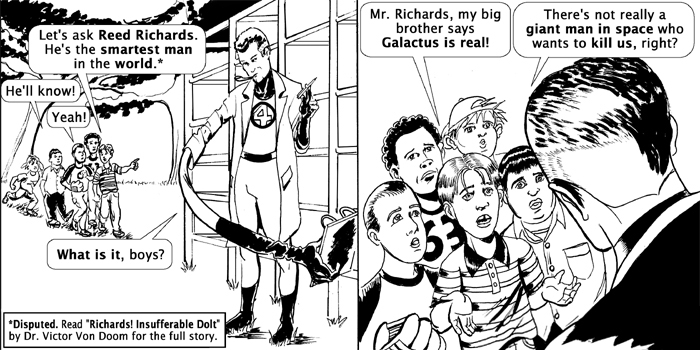
(Tip o' the hat to BoingBoing)
Friday, November 17, 2006
Complaint as Art form....no, really.
Thanks to Owlmother via Danya.
The Helsinki Complaints Choir
a choral work written by Finnish artists Tellervo Kalleinen and Oliver Kochta-Kalleinen.
The Complaints Choir invites people to complain as much as they want and to sing their complaints out loud together with fellow complainers. The first choir was organised in Birmingham followed by the Complaints Choir of Helsinki and Hamburg. The lyrics were written by the Choir, Music by Mike Hurley. Project by Tellervo Kalleinen and Oliver Kochta-Kalleinen. You can see the Birmingham choir here, but embedding is disabled. It's also got a cute little rap in the middle.
The Helsinki Complaints Choir
a choral work written by Finnish artists Tellervo Kalleinen and Oliver Kochta-Kalleinen.
The Complaints Choir invites people to complain as much as they want and to sing their complaints out loud together with fellow complainers. The first choir was organised in Birmingham followed by the Complaints Choir of Helsinki and Hamburg. The lyrics were written by the Choir, Music by Mike Hurley. Project by Tellervo Kalleinen and Oliver Kochta-Kalleinen. You can see the Birmingham choir here, but embedding is disabled. It's also got a cute little rap in the middle.
Thursday, November 16, 2006
Speaking of Punk...
Well, sort of. Danielle Dax, whom I remember from the beginning of my interest in punk, was probably not really punk at all, or just the edges (although Wikipedia sort of thinks so...)still, she was experimental, and I still don't mind listening to her music, although it doesn't quite carry the punch that made Joan Jett an icon.
Here's a taste of what I could find.
Cathouse
A Cover of Tomorrow Never Knows. Not bad!
Here's a taste of what I could find.
Cathouse
A Cover of Tomorrow Never Knows. Not bad!
Wednesday, November 15, 2006
ROCKville grrls
So now that I live in Rockville (place about which REM wrote "Don't go back to Rockville") and have for some reason once again fallen in love with the punk I was listening to, hrmm, let's say at the tail end of DC's harDCore run in the late 80's, (the origin in fact of the riot grrl movement, so no surprise that we've spawned a lot of grrls here in DC -in Dance of Days: Two Decades of Punk in the Nation's Capital, Mark Andersen says Bratmobile member Jen Smith reacted to the racially charged riots in Mount Pleasant during spring of '91 by writing, "This summer's going to be a girl riot," and that's what is thought to be the origin of the entire phenom. According to Wikipedia, "The musical birth of the Riot Grrl movement centered in Olympia, Washington where the members of Bikini Kill and Bratmobile met, but soon also encompassed Washington DC. " and there was even a riot grrl convention in DC) and started listening to it again, perhaps not quite as obsessively, I have to post that OTHER (besides myself, I mean :) )Rockville grrl icon, - Joan Jett!
Hers was the first album I ever bought for myself (I Love Rock 'n' Roll)
First in her earlier incarnation as a member of The Runaways
School Days
and later Rock 'n' roll icon with the Blackhearts
Cherry Bomb
I Hate Myself For Loving You
Bad Reputation
And for those of us who grew up listening to the Orioles on radio (watch baseball? Are you crazy? Not unless I have seat in the stands) Cal Ripkin Jr is apparently also a fan (She sang the national anthem by request of Baltimore Oriole Cal Ripkin Jr. at the game where he broke Lou Gehrig’s record).
I love Rock N Roll
Joan Jett still rules!
(If only she was Jewish, too, I could have hit all my favorite topics in one post)
Hers was the first album I ever bought for myself (I Love Rock 'n' Roll)
First in her earlier incarnation as a member of The Runaways
School Days
and later Rock 'n' roll icon with the Blackhearts
Cherry Bomb
I Hate Myself For Loving You
Bad Reputation
And for those of us who grew up listening to the Orioles on radio (watch baseball? Are you crazy? Not unless I have seat in the stands) Cal Ripkin Jr is apparently also a fan (She sang the national anthem by request of Baltimore Oriole Cal Ripkin Jr. at the game where he broke Lou Gehrig’s record).
I love Rock N Roll
Joan Jett still rules!
(If only she was Jewish, too, I could have hit all my favorite topics in one post)
Tuesday, November 14, 2006
Finally, Someone non-Jewish has to worry about this question...
"...Superior Court Judge Jeffrey Locke cited Webster's Dictionary as well as testimony from a chef and a former high-ranking federal agriculture official in ruling that Qdoba's burritos and other offerings are not sandwiches.
The difference, the judge ruled, comes down to two slices of bread versus one tortilla."
The battle has raged on for some time now (especially in areas where Jews eat lots of tortillas), about whether or not tortillas are bread. I have always held that for purposes of motzi, they are, but now that civil law has taken this on, I am relieved that the question does not rest squarely on my shoulders and that of other rabbis.
Full story here...
The difference, the judge ruled, comes down to two slices of bread versus one tortilla."
The battle has raged on for some time now (especially in areas where Jews eat lots of tortillas), about whether or not tortillas are bread. I have always held that for purposes of motzi, they are, but now that civil law has taken this on, I am relieved that the question does not rest squarely on my shoulders and that of other rabbis.
Full story here...
Jewish Girls Really Love a Good Bra
Besides, her comments already say pretty much everything I would have added (So…many…reactions…
How offensive…
How true…
Hey, Australian JGirls sure are cute…
Did I pay my Victoria’s Secret bill on time?
Do The Buggles know about this?)
More than a tip o' the hat to Yo!Yenta.
Eh, wot. It's funny. I'm such a sucker for this sortof thing. Pretend I'm not a rabbi, okay?
Friday, October 27, 2006
Does she kiss her mother with that mouth?
My own connection to dear Babs comes only through the fact that as a teenager, people used to tell me that I looked like her and that my sister did a spectacularly funny imitation of the Saturday Nightlive routine (Why we love Babs: her thighs are like butta) back when SNL was still funny. But apparently the old girl has some life in her yet.
When someone recently heckled Babs (that's Barbra Streisand to you all non-fans out there) about her comedic portrayal of George Bush, she responded quite er, forcefully, with some words that mean something nice, but are only used in a not-nice way, shall we say. Now, Revolucien has set it to a beat, and you can dance to it.
Go Babs. Not for the easily offended, or probably even those who are in the mid-range. Also it goes on just a hair too long. Link at your own risk.
When someone recently heckled Babs (that's Barbra Streisand to you all non-fans out there) about her comedic portrayal of George Bush, she responded quite er, forcefully, with some words that mean something nice, but are only used in a not-nice way, shall we say. Now, Revolucien has set it to a beat, and you can dance to it.
Go Babs. Not for the easily offended, or probably even those who are in the mid-range. Also it goes on just a hair too long. Link at your own risk.
Tuesday, October 24, 2006
Ow! Don't cut me with that edge!
I offer only a question in this post. With all the debate about Judaism's viability, in the end, for most of us it comes down to God. SO I ask you, if we are looking to the future, -and let's assume for the sake of argumentthat Judaism is surviving, and perhaps even thriving- what is the future. What are the frontiers of Jewish thought, and where is God in them. I've been asked to write on this, and I have some firm ideas, but I want to hear from you.
Write to me and tell me what you think.
Write to me and tell me what you think.
Monday, October 23, 2006
Today is apparently my day for humourous illegality

OK, no really, I'm not advocating growing pot anywhere. Especially not in your computer. But.... you've got to admire the ingenuity here.
It's as easy to love a rich man as a poor one
This post on Jewschool refers to an essay that appears this week in the New York Times (“Modern Love” ). It's a terribly sad essay, mostly because the author simply has no idea what it is she has given up. She quotes the old proverb that it's as easy to fall in love witha rich man as a poor one, and follows up with the comment that it's not easy to fall in love at all. And she's right, but also completely wrong. She's misunderstood the point of the proverb - that one should set up one's life in a way that will make it possible to live out one's values. If you want to fall in love with someone who is well-off, supposing that's your value, then don't date paupers, because paupers, too are lovable. If you think that Judaism is important, then don't date non-Jews, beause non-Jews are every bit as lovable as Jews are. The proverb is true -it's nothing to do with the person on the receiving end - it's all about the internal drive of the seeker. If you want to be a doctor, you have to at least set yourself up so that you can acquire the education, do the residency, take the exams.
But in another way she's right, and the commenter on Jewschool was way wrong.
This has nothing to do with Indie minyans. For the most part those going to the indie minyans are the success stories. The problem is that this poor woman's parents never gave her a darn thing. She had to find, as an adult, a bunch of letters in a script she could not read that were a last call across the years of people she understood not at all. But she's right; that's not a reason to be Jewish. It has, in fact, zero relationship to Judaism. It's about nazis, not about Jews. The Holocaust obsession that we have developed amongst our tribe, here, in Israel, wherever it pops up, is not only not Judaism, it is biting us, quite sharply, on the A**.
Every person told that the Holocaust has something to do with Judaism is being misled about what Judaism is. It is no more Judaism than being kneaded is what it means to be wheat (not all wheat is kneaded into bread, and even if it were, that's tnot the defining characteristic). It's just a historical accident. It's not even an unprecedented one - in scope only is it staggering, not in intent. Our ancestors already struggled -more than once, by the way- with meaning to come out of senseless slaughter (just take a good look at our canonical writings - say, the Talmud, on the destruction of the Temple), every person who goes around saying that God has something special to answer for can be forgivin only if they themselves were directly affected by the loss, because grief is a great burden, but those of us who were one step removed ought to be reexamining (at most) our traditions, laws and writings for the meaning, which has been struggled with often before.
It makes me sad to see people like this poor woman, who is completely innocent of not what THE meaning of Judaism is, but of any meaning of Judaism. In my opinion, she is quite right to have married her Dubliner - those people who claim that Judaism is racist for not marrying out are correct - when they are talking about those who refuse to marry non-Jews *just because they're Jewish, but they don't know anything about Judaism.*
Jewish life has a purpose. Without that purpose then we are not anything more than Italians, or Irish, or people with any other interesting accent -lacking the accent, after assimilation, there isn't anything special about our heritage. Bagels and lox is not Judaism (not even, forgive me, whitefish). The holocaust is not Judaism. Israel (the state) is not even Judaism (although it is a necessary part of Judaism, as a place, and as people living in a place, and as our brothers and sisters, as our inheritance from God, but that inheritance comes with a price - it's not free). I'm not going to spell out what the mission is here - that takes more than a few sentences, because if it were easy, why would you need an entire nation set apart to do it?- but you can't do it without knowledge. The knowledge doesn't *have* to be instilled early - many have chosen new souls and joined themselves to our people -in fact, some of them have become the greatest and most holy of our people. But like learning a language, fluency can be dependant upon an early start - the earlier the better. This poor girl in the article - is a mute, when it comes to Judaism, who can only at best, hear the words echoing from an earlier time, but not speak back. She is no longer able to be part of the conversation between her ancestors and God.
But in another way she's right, and the commenter on Jewschool was way wrong.
This has nothing to do with Indie minyans. For the most part those going to the indie minyans are the success stories. The problem is that this poor woman's parents never gave her a darn thing. She had to find, as an adult, a bunch of letters in a script she could not read that were a last call across the years of people she understood not at all. But she's right; that's not a reason to be Jewish. It has, in fact, zero relationship to Judaism. It's about nazis, not about Jews. The Holocaust obsession that we have developed amongst our tribe, here, in Israel, wherever it pops up, is not only not Judaism, it is biting us, quite sharply, on the A**.
Every person told that the Holocaust has something to do with Judaism is being misled about what Judaism is. It is no more Judaism than being kneaded is what it means to be wheat (not all wheat is kneaded into bread, and even if it were, that's tnot the defining characteristic). It's just a historical accident. It's not even an unprecedented one - in scope only is it staggering, not in intent. Our ancestors already struggled -more than once, by the way- with meaning to come out of senseless slaughter (just take a good look at our canonical writings - say, the Talmud, on the destruction of the Temple), every person who goes around saying that God has something special to answer for can be forgivin only if they themselves were directly affected by the loss, because grief is a great burden, but those of us who were one step removed ought to be reexamining (at most) our traditions, laws and writings for the meaning, which has been struggled with often before.
It makes me sad to see people like this poor woman, who is completely innocent of not what THE meaning of Judaism is, but of any meaning of Judaism. In my opinion, she is quite right to have married her Dubliner - those people who claim that Judaism is racist for not marrying out are correct - when they are talking about those who refuse to marry non-Jews *just because they're Jewish, but they don't know anything about Judaism.*
Jewish life has a purpose. Without that purpose then we are not anything more than Italians, or Irish, or people with any other interesting accent -lacking the accent, after assimilation, there isn't anything special about our heritage. Bagels and lox is not Judaism (not even, forgive me, whitefish). The holocaust is not Judaism. Israel (the state) is not even Judaism (although it is a necessary part of Judaism, as a place, and as people living in a place, and as our brothers and sisters, as our inheritance from God, but that inheritance comes with a price - it's not free). I'm not going to spell out what the mission is here - that takes more than a few sentences, because if it were easy, why would you need an entire nation set apart to do it?- but you can't do it without knowledge. The knowledge doesn't *have* to be instilled early - many have chosen new souls and joined themselves to our people -in fact, some of them have become the greatest and most holy of our people. But like learning a language, fluency can be dependant upon an early start - the earlier the better. This poor girl in the article - is a mute, when it comes to Judaism, who can only at best, hear the words echoing from an earlier time, but not speak back. She is no longer able to be part of the conversation between her ancestors and God.
Thursday, October 12, 2006
Wish I'd thought of it first....
The Sukkot Shake
OK, I stole this from Yo! Yenta who herself posted it pretty quickly from another source, but hey, dang, it's great! This is the best of the high holiday flicks I've seen yet!
OK, I stole this from Yo! Yenta who herself posted it pretty quickly from another source, but hey, dang, it's great! This is the best of the high holiday flicks I've seen yet!
Thursday, October 05, 2006
Baruch Dayan Emet
A friend informed me this morning that my former classmate Abby Spivak died. Abby and I weren't close - we knew each other from being in school together, from having mutual friends, and eating quite a few shabbat dinners together. Nevertheless, at a seminary as small as Ziegler, even people you don't know well, you know pretty well.
I have a class A bullshit detector. It's very sensitive. I can detect bullshit at 30 paces in a dark room of a perfume factory. Abby never set it off. Not once. Abby was one of the genuinely sweetest souls I have ever encountered. Sometimes things she said were naive, but her naivete was not the kind that comes from stupidity. Perhaps it was the Gillman second naivete. I'm not precisely sure, but I know that she spent a lot of her time as a rabbinical student - and long before- workingwith the very ill -AIDS patients - before AIDS was trendy, with children with very special needs, and with those who were ill.
Abby spent the last few years in and out of hospitals, having far too many surgeries on a body that she had struggled with even before she knew the extent of her illness. She was not, ultimately, able to be ordained, but Abby was certainly, and without question a rav.
In the Torah, Noah is described as an "Ish tzadik tamim b'dorotaiv" a righteous man, wholehearted in his generation. What is this tamim? Later, Jacob is described as an ish tam - a person unable to deceive - it seems to me that when we call a person "tam" we mean that they are undivided. Their insides match their outsides, they are genuine. Abby spent her life ministering to the very ill, to those who struggled to live, whose lives were difficult. Her own was no piece of cake, either, and she surely knew, after all that time spent with the ill and the dying, what the future held for her, but her soul was filled with light, and whatever has happened to her body, her "tam-ness," that wholeness that she brought to the world, continues to live and shine.
I have a class A bullshit detector. It's very sensitive. I can detect bullshit at 30 paces in a dark room of a perfume factory. Abby never set it off. Not once. Abby was one of the genuinely sweetest souls I have ever encountered. Sometimes things she said were naive, but her naivete was not the kind that comes from stupidity. Perhaps it was the Gillman second naivete. I'm not precisely sure, but I know that she spent a lot of her time as a rabbinical student - and long before- workingwith the very ill -AIDS patients - before AIDS was trendy, with children with very special needs, and with those who were ill.
Abby spent the last few years in and out of hospitals, having far too many surgeries on a body that she had struggled with even before she knew the extent of her illness. She was not, ultimately, able to be ordained, but Abby was certainly, and without question a rav.
In the Torah, Noah is described as an "Ish tzadik tamim b'dorotaiv" a righteous man, wholehearted in his generation. What is this tamim? Later, Jacob is described as an ish tam - a person unable to deceive - it seems to me that when we call a person "tam" we mean that they are undivided. Their insides match their outsides, they are genuine. Abby spent her life ministering to the very ill, to those who struggled to live, whose lives were difficult. Her own was no piece of cake, either, and she surely knew, after all that time spent with the ill and the dying, what the future held for her, but her soul was filled with light, and whatever has happened to her body, her "tam-ness," that wholeness that she brought to the world, continues to live and shine.
Wednesday, October 04, 2006
לְךָ דֻמִיָּה תְהִלָּה
Over the not yet too distant Yamim Noraim, I was taken by something I hadn't noticed previously. I don't quite know why not, it's pretty obvious when you start looking forit: Everywhere you look in the readings for not just Yom Kippur, but over the yamim noraim, the silence is palpable.
God is silent, prophets are silent, we are silent. What kindof silence is this, and why? Why is everyone so quiet?
The first two lines of the Yom Kippur reading come from Leviticus 16:1-2;
1 The Lord spoke to Moses after the death of the two sons of Aaron who died when they drew too close to the presence of the Lord. 2 The Lord said to Moses:
Tell your brother Aaron that he is not to come at will into the Shrine behind the curtain, in front of the cover that is upon the ark, lest he die; for I appear in the cloud over the cover
פרשת אחרי מות[ א וַיְדַבֵּר יְהוָֹה אֶל־מֹשֶׁה אַֽחֲרֵי מוֹת שְׁנֵי בְּנֵי אַֽהֲרֹן בְּקָרְבָתָם לִפְנֵֽי־יְהוָֹה וַיָּמֻֽתוּ: ב וַיֹּאמֶר יְהֹוָה אֶל־מֹשֶׁה דַּבֵּר אֶל־אַֽהֲרֹן אָחִיךָ וְאַל־יָבֹא בְכָל־עֵת אֶל־הַקֹּדֶשׁ מִבֵּית לַפָּרֹכֶת אֶל־פְּנֵי הַכַּפֹּרֶת אֲשֶׁר עַל־הָֽאָרֹן וְלֹא יָמוּת כִּי בֶּֽעָנָן אֵֽרָאֶה עַל־הַכַּפֹּֽרֶת:
These lines refer to a story that actually occurred three parshiot earlier (in the regular yearly cycle) the story of the death of Aaron’s sons in parshat shemini, which appers here:
Leviticus Chapter 10
1. And Nadav and Abihu, the sons of Aaron, took each of them his censer, and put fire in it, and put incense on it, and offered strange fire before the Lord, which he commanded them not. 2. And there went out fire from the Lord, and devoured them, and they died before the Lord. 3. Then Moses said to Aaron, This is what the Lord spoke, saying, I will be sanctified in them that come near to me, and before all the people I will be glorified. And Aaron held his peace.
וַיִּקְחוּ בְנֵֽי־אַֽהֲרֹן נָדָב וַֽאֲבִיהוּא אִישׁ מַחְתָּתוֹ וַיִּתְּנוּ בָהֵן אֵשׁ וַיָּשִֹימוּ עָלֶיהָ קְטֹרֶת וַיַּקְרִיבוּ לִפְנֵי יְהוָֹה אֵשׁ זָרָה אֲשֶׁר לֹא צִוָּה אֹתָֽם: ב וַתֵּצֵא אֵשׁ מִלִּפְנֵי יְהוָֹה וַתֹּאכַל אוֹתָם וַיָּמֻתוּ לִפְנֵי יְהוָֹֽה: ג וַיֹּאמֶר מֹשֶׁה אֶֽל־אַֽהֲרֹן הוּא אֲשֶׁר־דִּבֶּר יְהוָֹה | לֵאמֹר בִּקְרֹבַי אֶקָּדֵשׁ וְעַל־פְּנֵי כָל־הָעָם אֶכָּבֵד וַיִּדֹּם אַֽהֲרֹֽן:
What is the relationship between these two parts of the same story? And what have they to do with Yom Kippur?
Aaron held his peace. Really what is says is "vayidom Aharon."
The first part of the story of Aaron’s sons ends with Aaron’s silence. וַיִּדֹּם אַֽהֲרֹֽן
The word "yidom" is from duma, or dumiya, both words referring to silence, or stillness.There are many words for silence in the Torah and Talmud. The Talmud for example offers the famous axiom in Baba metzia 37b
שתיקה כהודאה
Sometimes rendered Shtika k’hodaya damya – silence is like consent. Shtika – meaning quiet.
The medieval commentator Sforno teaches “When a person has the ability to protest and remains silent, his silence is similar to verbal consent. When you do not say something to disagree, it is as if you agree with what was said or done.”
And in fact some commentators accept this as Aaron’s response – his silence is assent to God’s awesomeness and power – he is accepting the fate of his sons as an act of submission.
We find an equivalence between this word shtika and that verb we find in Aaron’s response. In the Talmud Megilah 18a, we find the following:
דרש רבי יהודה איש כפר גבוריא, ואמרי לה איש כפר גבור חיל: מאי דכתיב )תהלים ס"ה( לך דמיה תהלה ־ סמא דכולה משתוקא. כי אתא רב דימי אמר: אמרי במערבא: מלה ־ בסלע, משתוקא ־ בתרין.
R. Judah a man of Kefar Gibboraya, or, as some say, of Kefar Gibbor Hayil, gave the following homily: What is meant by the verse, For you silence is praise?
The best medicine of all is silence.
When R. Dimi came, he said: In the West they say: A word is worth a sela', silence two sela's.
But how could this be applied to our situation? The verse quotes above from psalms is usually translated in context something like “Praise awaits You (O Lord, In Zion)” but here the word dumiya is translated as silence, rendering our verse: "To You, silence is praise" (Psalms 65:2)
לְךָ דֻמִיָּה תְהִלָּה
Onkelus renders the term Vayidom in our story as "silence:" Aharon was silent. However there is another tradition as referenced in the Torah shlemah with an alternative reading of the Targum; instead of ushatik - silence, "Ushavach Aharon" - Aharon praised God.
The Rambam (commentary to the Mishna, Avot 3:3, Kapach Edition) cites this reading of the Targum.
The Rambam compares this verse to Melachim I, 19:12 "And after the earthquake a fire; but the Lord was not in the fire; and after the fire a still (D'mamah) small voice" - clearly not silence, but perhaps implying stillness or a sense of serenity and a revelation. Rambam understands the term as denoting a quiet or secretive communication; if this is silence then it is a silence with sound. Likewise the Rambam teaches that this is the understanding of the use of the word "vayidom" in connection with Aharon: "Ushavach Aharon" - Aharon softly praised God.
This approach is supported by a passage in the Sifri (Piska 58) that compares the verse in Melachim ("...and after the fire a still (D'mamah) small voice") and the phrase "Vayidom Aharon": According to the Sifri, both indicate a type of revelation. To paraphrase the Sifri, "when God speaks, man is silent". Aharon's silence seems to be a response to some Divine statement; what emerged was an inaudible word of praise.
But I find this at best far fetched. To me, Aaron's silence is the silence of the cowed. We love to sy, "Speak truth to power" but what about whenthe power is God - or at least, inthis case, Moses representing what he thiks God's opinion is.
I remember as a child, occasionally I would do something that my father did not like, and his response to was to yell questions like "What do you think you were doing?!" at me. Of course, there is no possible rational answer to such a question, but that's in part because the asker isn't really seeking information, but simply trying to impress upon you what they think you ought to have done.
Rashi links the silence of Aharon with a revelation, explaining that Aharon remained silent - something which was extremely difficult to do - and was consequently rewarded for his silence:
"And Aharon was silent" - He received a reward for his silence; and what was the reward he received? That the subsequent Divine address was made to him alone and not to Moshe also for to him alone was spoken the section (10:8-11) dealing with those who are intoxicated by wine.(4) (See Zevachim: 115b) [Rashi 10:3]
IN my opinion, this at least recognizes that Aaron was not silencing himself internally, not open to some great revelation, achieving great heights, but instead was permorming a kind of submission to God's will, understood or not.
The Ba'al haTurim points out that the only other time in Tanach that the word "Vayidom" is used with the same spelling is to be found in the book of Yehoshua:
"And the sun stood still, and the moon stayed" (Yehoshua 10:13)
The Talmud teaches that Moshe is compared to the sun:
"The countenance of Moshe was like that of the sun; the countenance of Yehoshua was like that of the moon." (Bava Batra 75a)
It's an interesting image, the two men unnaturally still, as if the sun and moon had ceased to move. Some have interpreted this connection as offering the idea that onthis one occasino Aaron rose to the heights of Moses, similar to Rambam's idea, but I think that this is unlikely. Rather, let's say the sun and moon actually stood still - what would that mean - that the earth had stopped rotating, and the moon's orbit becme fixed; this is not a scenario in which life on earth can remain very long. A stopped earth woudl quickly become uninhabitable, and it is this image that I take away: Aaron stunned into immobility, and Moses staring at him, also struck - until he stammers out some sort of foolishnes about God's will, and everyone is freed to go on, however damaged, the earth again begins to turn, the moon, to orbit.
I think that in fact, the dumiya of Aaron is more related to two other Biblical silences. The first is from the first Book of Kings.
Kings I
19:11. And he said, Go out, and stand upon the mount before the Lord. And, behold, the Lord passed by, and a great and strong wind tore the mountains, and broke in pieces the rocks before the Lord; but the Lord was not in the wind; and after the wind an earthquake; but the Lord was not in the earthquake; 12. And after the earthquake a fire; but the Lord was not in the fire; and after the fire a still small voice.
יא וַיֹּאמֶר צֵא וְעָֽמַדְתָּ בָהָר לִפְנֵי יְהֹוָה וְהִנֵּה יְהֹוָה עֹבֵר וְרוּחַ גְּדוֹלָה וְחָזָק מְפָרֵק הָרִים וּמְשַׁבֵּר סְלָעִים לִפְנֵי יְהֹוָה לֹא בָרוּחַ יְהֹוָה וְאַחַר הָרוּחַ רַעַשׁ לֹא בָרַעַשׁ יְהֹוָֽה: יב וְאַחַר הָרַעַשׁ אֵשׁ לֹא בָאֵשׁ יְהֹוָה וְאַחַר הָאֵשׁ קוֹל דְּמָמָה דַקָּֽה:
The second is from the close of the book of Jonah, the haftarah for mincha on Yom Kippur.
Here are the last two chapters of Jonah – the whole book is only four, and there are only 21 lines, so although I won't include the whole story, thisis short enough to keep, so you don't have to go running off to look it up.:
Yona Chapter 3
1. And the word of the Lord came to Jonah the second time, saying: Arise!
2. Go to Nineveh, that great city, and proclaim to it the message that I bid you.
3. And Jonah arose, and went to Nineveh, according to the word of the Lord. And Nineveh was an exceedingly great city, three days’ journey in extent.
4. And Jonah began to go into the city, going a day’s journey, and he cried, and said, Another forty days, and Nineveh shall be overthrown.
5. And the people of Nineveh believed God, and proclaimed a fast, and put on sackcloth, from the greatest of them to the least of them.
6. And word came to the king of Nineveh, and he arose from his throne, and he took off his robe, and covered himself with sackcloth, and sat in ashes.
7. And he caused it to be proclaimed and published through Nineveh by the decree of the king and his nobles, saying: Neither man, beast, herd or flock should taste anything! They should not feed nor drink water!
8. And let man and beast be covered with sackcloth, and cry mightily to God; let them turn everyone from his evil way, and from the violence that is in their hands.
9. Who can tell if God may yet turn and repent, and turn away from his fierce anger, so that we perish not?
10. And God saw their doings, that they turned from their evil way; and God repented of the evil, which he had said that he would do to them; and he did not do it.
Yona Chapter 4
1. And this displeased Jonah exceedingly, and he was very angry.
2. And he prayed to the Lord, and said, I pray you, O Lord, is this not what I said when I was still in my country? Therefore I hastened to flee to Tarshish; for I knew that you are a gracious God, and merciful, slow to anger, and of great kindness, and that you repent of the evil.
3. Therefore now, O Lord, take, I pray you, my life from me; for it is better for me to die than to live.
4. Then says the Lord, Do you do well to be so angry?
5. And Jonah went out of the city, and sat on the east side of the city, and there he made himself a booth, and sat under it in the shadow, till he should see what would become of the city.
6. And the Lord God appointed a castor oil plant, and made it grow over Jonah, that it might be a shadow over his head, to save him from his distress. And Jonah was exceedingly glad of the plant.
7. And, when dawn came up the next day, God appointed a worm, and it attacked the plant so that it withered.
8. And it came to pass, when the sun rose, that God appointed a hot east wind; and the sun beat down upon the head of Jonah, so that he fainted, and wished to die, and said, It is better for me to die than to live.
9. And God said to Jonah: Do you do well to be so angry for the plant? And he said: I do well to be so angry, even to death.
10. Then the Lord said, You had concern for the plant, for which you did not labor, nor did you make it grow; which came up in a night, and perished in a night;
11. And should I not spare Nineveh, that great city, where there are more than one hundred and twenty thousand persons who cannot discern between their right hand and their left hand; and also much cattle?
In the JPS Bible Commentary on the book of Jonah, Uriel Simon writes: "The designation of Jonah as the haftarah for the Afternoon Service of the Day of Atonement (B. Megillah 31a) reflects the view that this book depicts the concept of repentance so starkly and completely that it can stir hearers to repent their ways and even modify their conduct."1Uriel Simon, The JPS Bible Commentary: Jonah (Phila-delphia: The Jewish Publication Society of America, 1999), vii.
The book of Jonah in Nevi'im (Prophets) is shorter than most other books in the Hebrew Scriptures. A mere four chapters in length, the book ends with Jonah's silence -- and the reader is waiting for him to respond.
And the story ends. Jonah is silent. What does his silence mean? Is שתיקה כהודאה ?
It is possible to interpret Jonah's silence as repentance?
On Yom Kippur, we read the entire book including Jonah's silence. Even though the rabbis include Jonah's silence as part of the Yom Kippur reading, the rabbis appended Micah 7:18-20 to the end of Jonah: "Who is like you, forgiving iniquity and pardoning the transgression of the remnant of Your people? You do not maintain anger forever, but You delight in lovingkind-ness. You will again have compassion upon us, subduing our sins, casting all of our sins into the depths of the sea. You will show faithfulness to Jacob and enduring love to Abraham as You promised our fathers from days of old." By appending this Micah text, the rabbis made it appear as if Jonah is no longer silent.
But our original text doesn't tell us what Jonah thinks. Although God isn't silent, Jonah certainly is. And unlike the silence of Aaron we don't have the silence spelt out - it is simply an absence. Itis curioustht these two passages are linked by the Tanchuma to the Akedah directly. It essentially says thatJonah is a sulky little brat, expecting happiness - whyy shold he behappy, when even God's great friend, Abraham, was not?
Let’s go back to that section from the book of Kings for a minute.
This time, I want to bring a little more of the passage:
ט וַיָּֽבֹא־שָׁם אֶל־הַמְּעָרָה וַיָּלֶן שָׁם וְהִנֵּה דְבַר־יְהֹוָה אֵלָיו וַיֹּאמֶר לוֹ מַה־לְּךָ פֹה אֵֽלִיָּֽהוּ: י וַיֹּאמֶר קַנֹּא קִנֵּאתִי לַֽיהֹוָה | אֱלֹהֵי צְבָאוֹת כִּֽי־עָֽזְבוּ בְרִֽיתְךָ בְּנֵי יִשְֹרָאֵל אֶת־מִזְבְּחֹתֶיךָ הָרָסוּ וְאֶת־נְבִיאֶיךָ הָֽרְגוּ בֶחָרֶב וָֽאִוָּתֵר אֲנִי לְבַדִּי וַיְבַקְשׁוּ אֶת־נַפְשִׁי לְקַחְתָּֽהּ: יא וַיֹּאמֶר צֵא וְעָֽמַדְתָּ בָהָר לִפְנֵי יְהֹוָה וְהִנֵּה יְהֹוָה עֹבֵר וְרוּחַ גְּדוֹלָה וְחָזָק מְפָרֵק הָרִים וּמְשַׁבֵּר סְלָעִים לִפְנֵי יְהֹוָה לֹא בָרוּחַ יְהֹוָה וְאַחַר הָרוּחַ רַעַשׁ לֹא בָרַעַשׁ יְהֹוָֽה: יב וְאַחַר הָרַעַשׁ אֵשׁ לֹא בָאֵשׁ יְהֹוָה וְאַחַר הָאֵשׁ קוֹל דְּמָמָה דַקָּֽה: יג וַיְהִי | כִּשְׁמֹעַ אֵֽלִיָּהוּ וַיָּלֶט פָּנָיו בְּאַדַּרְתּוֹ וַיֵּצֵא וַֽיַּֽעֲמֹד פֶּתַח הַמְּעָרָה וְהִנֵּה אֵלָיו קוֹל וַיֹּאמֶר מַה־לְּךָ פֹה אֵֽלִיָּֽהוּ: יד וַיֹּאמֶר קַנֹּא קִנֵּאתִי לַֽיהֹוָה | אֱלֹהֵי צְבָאוֹת כִּֽי־עָֽזְבוּ בְרִֽיתְךָ בְּנֵי יִשְֹרָאֵל אֶת־מִזְבְּחֹתֶיךָ הָרָסוּ וְאֶת־נְבִיאֶיךָ הָֽרְגוּ בֶחָרֶב וָֽאִוָּתֵר אֲנִי לְבַדִּי וַיְבַקְשׁוּ אֶת־נַפְשִׁי לְקַחְתָּֽהּ: טו וַיֹּאמֶר יְהֹוָה אֵלָיו לֵךְ שׁוּב לְדַרְכְּךָ מִדְבַּרָה דַמָּשֶֹק וּבָאתָ וּמָֽשַׁחְתָּ אֶת־חֲזָאֵל לְמֶלֶךְ עַל־אֲרָֽם
9. And he came there to a cave, and lodged there; and, behold, the word of the Lord came to him, and he said to him, What are you doing here, Elijah? 10. And he said, I have been very zealous for the Lord God of hosts; for the people of Israel have forsaken your covenant, thrown down your altars, and killed your prophets with the sword; and I am the only one left; and they seek my life, to take it away. 11. And he said, Go out, and stand upon the mount before the Lord. And, behold, the Lord passed by, and a great and strong wind tore the mountains, and broke in pieces the rocks before the Lord; but the Lord was not in the wind; and after the wind an earthquake; but the Lord was not in the earthquake; 12. And after the earthquake a fire; but the Lord was not in the fire; and after the fire a still small voice. 13. And it was so, when Elijah heard it that he wrapped his face in his mantle, and went out, and stood in the entrance of the cave. And, behold, there came a voice to him, and said, What are you doing here, Elijah? 14. And he said, I have been very zealous for the Lord God of hosts; because the people of Israel have forsaken your covenant, thrown down your altars, and killed your prophets with the sword; and I am the only one left; and they seek my life, to take it away. 15. And the Lord said to him, Go, return on your way to the wilderness of Damascus; and when you come, anoint Hazael to be king over Aram; 16. And Jehu the son of Nimshi shall you anoint to be king over Israel; and Elisha the son of Shaphat of Abelmeholah shall you anoint to be prophet in your place.
What do you notice that’s odd about the passage?
The curious thing is that God doesn’t really respond, quite, to Elijah’s complaint. He wants God to make it better and stop people from persecuting him, but does God promise this? Later in the verse, God promises Elijah the idolators will be killed but he doesn’t really offer any safety to Elijah, at least not obviously
Rabbi Noton Sternhartz talks a bit about silence in his
Likutei Halachos, Hilchos Shabbos, Halachos 6 and 7
http://www.nachalnovea.com/breslovcenter/articles/article_shabboswithin.html
This is good advice for all the difficulties we may encounter: we should simply nullify ourselves for a time, and remind ourselves of the Ultimate Reality. Anyone in the world, without exception, can accomplish this, and thus merge into the Infinite Divine Light. It is impossible to explain this further; for "everyone must understand according to what remains in his heart" (Zohar I, 103b). Nevertheless, all Israel believes that this is the ultimate spiritual goal, and our hope for all eternity. Every person, whatever he may be, whatever may happen to him, can nullify himself to God, even in the midst of his confusions and problems. This is the paradigm of Shabbos, the paradigm of rest (sh'visah) and cessation. Through this, we can destroy all disturbing thoughts, all intellectual entanglements and false wisdoms, and direct all of our doings toward the Ultimate Reality that is beyond time and change. This is the aspect of Shabbos and the principle that "the mind is nourished first." That is, our eating and mundane activities, even the necessity of attending to our physical needs, should be directed to the Shabbos alone: to true wisdom and the Essence of the mind.
For the Shabbos transcends speech yet all speech comes forth from the Shabbos. It is the supernal silence above speech, the paradigm of "the fence for wisdom (chochmah) is silence" (Avos 3:13). Kabbalistically, this corresponds to the Sefirah of Kesser ("Divine Crown"). In terms of our Divine service, it corresponds to the quality of waiting. For speech is bound up with the Sefirah of Chochmah (wisdom), as the verse states, "God will give wisdom, from His mouth..." (Proverbs 2:6). However, [wisdom and speech] spring forth from the Sefirah of Kesser, the transcendent silence, the "fence for wisdom." This is why we must be silent before we speak, when we need to collect our thoughts. Similarly, we must pause between words, however slightly. As our sages state, "If a word is worth one coin, silence is worth two" (Megilla 18a); for silence is both the source of speech and its tikkun (spiritual rectification). This concept also is suggested by the verse that refers to "a wise man (chacham) among the silent, understanding whispered mysteries" (Isaiah 3:3). Thus, speech is elicited from the paradigm of the Shabbos that corresponds to the Sefirah of Kesser, the aspect of the "covering of coverings," which is the mystery of silence.
I don't really know how to finish here. We have recently become interested as Jews inmeditatin and eastern -especially Buddhist- spirituality. IN these religions, silence, quiet mind, meditation, are positive goods, the eradication of the self and the conquering of desire. But I'm not sure that -despite Rabbi Noton's words- thatsilence is much more complex than we wantto credit. Silence is not always quiet mind, and even if one might find it good, in my opinion, byu labelling silence as an unmitigated positive, we lose track of theother kinds of silence that we encounter in our lives: the silence of oppression, the silence of fear, thesilence of shock - and all of these are silences that we live with in this imperfect world.
On the other hand, we often talk about God’s silence when we have to struggle with difficult things, but I think it’s worth also thinking about our own. We are silent all the time, to God, and though we often try to cast it as neutral, or even positive, I think more often, when we say silence is worth two selas, we are covering up shtika k’hodaya- we are covering up our acquiescence in the way things are. I wonder what Aaron might have said to God, what protest he might have made in his heart?
I also wonder, if that lack of protest is in fact, why in our reading on Yom Kippur morning, the memoy of Aaron’s silence is revisited, if not mentioned. And how does God respond to Aaron’s silence on Yom Kippur morning?
The Lord said to Moses:
Tell your brother Aaron that he is not to come at will into the Shrine behind the curtain, in front of the cover that is upon the ark, lest he die; for I appear in the cloud over the cover
Then he gives him explicit directions as to how he can come into the holy of holies…with the sacrifices not only for the people, but first for himself. SO perhaps our last question should be, what is God’s response to Aaron’s silence?
It’s worth noting that the connection between Yom Kippur and silence falls in another way as well.
VII. Psalm 115 (17) (is one place among others) which we read daily, makes explicit the connection between silence and death
. יז לֹֽא־הַמֵּתִים יְהַֽלְלוּ־יָהּ וְלֹא כָּל־יֹרְדֵי דוּמָֽה
17. The dead cannot praise the Lord, nor can any who go down into silence.
Yom Kippur makes that tension evident
But perhaps the most profound connection between death and Yom Kippur is the mysterious claim The Talmud makes for both of them. Yom Hakippurim atzmo m'caper, u'mitah mcaperet. Both Yom Kippur and death themselves, atone. We say the vidui, the final confession, on two occasions in our lives -- on Yom Kippur and on the day of our death. The word for atonement -- caparah -- means a covering over. Death is a covering over. And Jonah, Abraham and Aaron, all in their silence are covered over, in their pain, in their protest, and maybe we in ours, on Yom Kippur, when we are shocked into silence, are also staring death in the face, struck mute, our hearts struck mute, made silent so that we can face death, and in silence and pain, find forgiveness.
God is silent, prophets are silent, we are silent. What kindof silence is this, and why? Why is everyone so quiet?
The first two lines of the Yom Kippur reading come from Leviticus 16:1-2;
1 The Lord spoke to Moses after the death of the two sons of Aaron who died when they drew too close to the presence of the Lord. 2 The Lord said to Moses:
Tell your brother Aaron that he is not to come at will into the Shrine behind the curtain, in front of the cover that is upon the ark, lest he die; for I appear in the cloud over the cover
פרשת אחרי מות[ א וַיְדַבֵּר יְהוָֹה אֶל־מֹשֶׁה אַֽחֲרֵי מוֹת שְׁנֵי בְּנֵי אַֽהֲרֹן בְּקָרְבָתָם לִפְנֵֽי־יְהוָֹה וַיָּמֻֽתוּ: ב וַיֹּאמֶר יְהֹוָה אֶל־מֹשֶׁה דַּבֵּר אֶל־אַֽהֲרֹן אָחִיךָ וְאַל־יָבֹא בְכָל־עֵת אֶל־הַקֹּדֶשׁ מִבֵּית לַפָּרֹכֶת אֶל־פְּנֵי הַכַּפֹּרֶת אֲשֶׁר עַל־הָֽאָרֹן וְלֹא יָמוּת כִּי בֶּֽעָנָן אֵֽרָאֶה עַל־הַכַּפֹּֽרֶת:
These lines refer to a story that actually occurred three parshiot earlier (in the regular yearly cycle) the story of the death of Aaron’s sons in parshat shemini, which appers here:
Leviticus Chapter 10
1. And Nadav and Abihu, the sons of Aaron, took each of them his censer, and put fire in it, and put incense on it, and offered strange fire before the Lord, which he commanded them not. 2. And there went out fire from the Lord, and devoured them, and they died before the Lord. 3. Then Moses said to Aaron, This is what the Lord spoke, saying, I will be sanctified in them that come near to me, and before all the people I will be glorified. And Aaron held his peace.
וַיִּקְחוּ בְנֵֽי־אַֽהֲרֹן נָדָב וַֽאֲבִיהוּא אִישׁ מַחְתָּתוֹ וַיִּתְּנוּ בָהֵן אֵשׁ וַיָּשִֹימוּ עָלֶיהָ קְטֹרֶת וַיַּקְרִיבוּ לִפְנֵי יְהוָֹה אֵשׁ זָרָה אֲשֶׁר לֹא צִוָּה אֹתָֽם: ב וַתֵּצֵא אֵשׁ מִלִּפְנֵי יְהוָֹה וַתֹּאכַל אוֹתָם וַיָּמֻתוּ לִפְנֵי יְהוָֹֽה: ג וַיֹּאמֶר מֹשֶׁה אֶֽל־אַֽהֲרֹן הוּא אֲשֶׁר־דִּבֶּר יְהוָֹה | לֵאמֹר בִּקְרֹבַי אֶקָּדֵשׁ וְעַל־פְּנֵי כָל־הָעָם אֶכָּבֵד וַיִּדֹּם אַֽהֲרֹֽן:
What is the relationship between these two parts of the same story? And what have they to do with Yom Kippur?
Aaron held his peace. Really what is says is "vayidom Aharon."
The first part of the story of Aaron’s sons ends with Aaron’s silence. וַיִּדֹּם אַֽהֲרֹֽן
The word "yidom" is from duma, or dumiya, both words referring to silence, or stillness.There are many words for silence in the Torah and Talmud. The Talmud for example offers the famous axiom in Baba metzia 37b
שתיקה כהודאה
Sometimes rendered Shtika k’hodaya damya – silence is like consent. Shtika – meaning quiet.
The medieval commentator Sforno teaches “When a person has the ability to protest and remains silent, his silence is similar to verbal consent. When you do not say something to disagree, it is as if you agree with what was said or done.”
And in fact some commentators accept this as Aaron’s response – his silence is assent to God’s awesomeness and power – he is accepting the fate of his sons as an act of submission.
We find an equivalence between this word shtika and that verb we find in Aaron’s response. In the Talmud Megilah 18a, we find the following:
דרש רבי יהודה איש כפר גבוריא, ואמרי לה איש כפר גבור חיל: מאי דכתיב )תהלים ס"ה( לך דמיה תהלה ־ סמא דכולה משתוקא. כי אתא רב דימי אמר: אמרי במערבא: מלה ־ בסלע, משתוקא ־ בתרין.
R. Judah a man of Kefar Gibboraya, or, as some say, of Kefar Gibbor Hayil, gave the following homily: What is meant by the verse, For you silence is praise?
The best medicine of all is silence.
When R. Dimi came, he said: In the West they say: A word is worth a sela', silence two sela's.
But how could this be applied to our situation? The verse quotes above from psalms is usually translated in context something like “Praise awaits You (O Lord, In Zion)” but here the word dumiya is translated as silence, rendering our verse: "To You, silence is praise" (Psalms 65:2)
לְךָ דֻמִיָּה תְהִלָּה
Onkelus renders the term Vayidom in our story as "silence:" Aharon was silent. However there is another tradition as referenced in the Torah shlemah with an alternative reading of the Targum; instead of ushatik - silence, "Ushavach Aharon" - Aharon praised God.
The Rambam (commentary to the Mishna, Avot 3:3, Kapach Edition) cites this reading of the Targum.
The Rambam compares this verse to Melachim I, 19:12 "And after the earthquake a fire; but the Lord was not in the fire; and after the fire a still (D'mamah) small voice" - clearly not silence, but perhaps implying stillness or a sense of serenity and a revelation. Rambam understands the term as denoting a quiet or secretive communication; if this is silence then it is a silence with sound. Likewise the Rambam teaches that this is the understanding of the use of the word "vayidom" in connection with Aharon: "Ushavach Aharon" - Aharon softly praised God.
This approach is supported by a passage in the Sifri (Piska 58) that compares the verse in Melachim ("...and after the fire a still (D'mamah) small voice") and the phrase "Vayidom Aharon": According to the Sifri, both indicate a type of revelation. To paraphrase the Sifri, "when God speaks, man is silent". Aharon's silence seems to be a response to some Divine statement; what emerged was an inaudible word of praise.
But I find this at best far fetched. To me, Aaron's silence is the silence of the cowed. We love to sy, "Speak truth to power" but what about whenthe power is God - or at least, inthis case, Moses representing what he thiks God's opinion is.
I remember as a child, occasionally I would do something that my father did not like, and his response to was to yell questions like "What do you think you were doing?!" at me. Of course, there is no possible rational answer to such a question, but that's in part because the asker isn't really seeking information, but simply trying to impress upon you what they think you ought to have done.
Rashi links the silence of Aharon with a revelation, explaining that Aharon remained silent - something which was extremely difficult to do - and was consequently rewarded for his silence:
"And Aharon was silent" - He received a reward for his silence; and what was the reward he received? That the subsequent Divine address was made to him alone and not to Moshe also for to him alone was spoken the section (10:8-11) dealing with those who are intoxicated by wine.(4) (See Zevachim: 115b) [Rashi 10:3]
IN my opinion, this at least recognizes that Aaron was not silencing himself internally, not open to some great revelation, achieving great heights, but instead was permorming a kind of submission to God's will, understood or not.
The Ba'al haTurim points out that the only other time in Tanach that the word "Vayidom" is used with the same spelling is to be found in the book of Yehoshua:
"And the sun stood still, and the moon stayed" (Yehoshua 10:13)
The Talmud teaches that Moshe is compared to the sun:
"The countenance of Moshe was like that of the sun; the countenance of Yehoshua was like that of the moon." (Bava Batra 75a)
It's an interesting image, the two men unnaturally still, as if the sun and moon had ceased to move. Some have interpreted this connection as offering the idea that onthis one occasino Aaron rose to the heights of Moses, similar to Rambam's idea, but I think that this is unlikely. Rather, let's say the sun and moon actually stood still - what would that mean - that the earth had stopped rotating, and the moon's orbit becme fixed; this is not a scenario in which life on earth can remain very long. A stopped earth woudl quickly become uninhabitable, and it is this image that I take away: Aaron stunned into immobility, and Moses staring at him, also struck - until he stammers out some sort of foolishnes about God's will, and everyone is freed to go on, however damaged, the earth again begins to turn, the moon, to orbit.
I think that in fact, the dumiya of Aaron is more related to two other Biblical silences. The first is from the first Book of Kings.
Kings I
19:11. And he said, Go out, and stand upon the mount before the Lord. And, behold, the Lord passed by, and a great and strong wind tore the mountains, and broke in pieces the rocks before the Lord; but the Lord was not in the wind; and after the wind an earthquake; but the Lord was not in the earthquake; 12. And after the earthquake a fire; but the Lord was not in the fire; and after the fire a still small voice.
יא וַיֹּאמֶר צֵא וְעָֽמַדְתָּ בָהָר לִפְנֵי יְהֹוָה וְהִנֵּה יְהֹוָה עֹבֵר וְרוּחַ גְּדוֹלָה וְחָזָק מְפָרֵק הָרִים וּמְשַׁבֵּר סְלָעִים לִפְנֵי יְהֹוָה לֹא בָרוּחַ יְהֹוָה וְאַחַר הָרוּחַ רַעַשׁ לֹא בָרַעַשׁ יְהֹוָֽה: יב וְאַחַר הָרַעַשׁ אֵשׁ לֹא בָאֵשׁ יְהֹוָה וְאַחַר הָאֵשׁ קוֹל דְּמָמָה דַקָּֽה:
The second is from the close of the book of Jonah, the haftarah for mincha on Yom Kippur.
Here are the last two chapters of Jonah – the whole book is only four, and there are only 21 lines, so although I won't include the whole story, thisis short enough to keep, so you don't have to go running off to look it up.:
Yona Chapter 3
1. And the word of the Lord came to Jonah the second time, saying: Arise!
2. Go to Nineveh, that great city, and proclaim to it the message that I bid you.
3. And Jonah arose, and went to Nineveh, according to the word of the Lord. And Nineveh was an exceedingly great city, three days’ journey in extent.
4. And Jonah began to go into the city, going a day’s journey, and he cried, and said, Another forty days, and Nineveh shall be overthrown.
5. And the people of Nineveh believed God, and proclaimed a fast, and put on sackcloth, from the greatest of them to the least of them.
6. And word came to the king of Nineveh, and he arose from his throne, and he took off his robe, and covered himself with sackcloth, and sat in ashes.
7. And he caused it to be proclaimed and published through Nineveh by the decree of the king and his nobles, saying: Neither man, beast, herd or flock should taste anything! They should not feed nor drink water!
8. And let man and beast be covered with sackcloth, and cry mightily to God; let them turn everyone from his evil way, and from the violence that is in their hands.
9. Who can tell if God may yet turn and repent, and turn away from his fierce anger, so that we perish not?
10. And God saw their doings, that they turned from their evil way; and God repented of the evil, which he had said that he would do to them; and he did not do it.
Yona Chapter 4
1. And this displeased Jonah exceedingly, and he was very angry.
2. And he prayed to the Lord, and said, I pray you, O Lord, is this not what I said when I was still in my country? Therefore I hastened to flee to Tarshish; for I knew that you are a gracious God, and merciful, slow to anger, and of great kindness, and that you repent of the evil.
3. Therefore now, O Lord, take, I pray you, my life from me; for it is better for me to die than to live.
4. Then says the Lord, Do you do well to be so angry?
5. And Jonah went out of the city, and sat on the east side of the city, and there he made himself a booth, and sat under it in the shadow, till he should see what would become of the city.
6. And the Lord God appointed a castor oil plant, and made it grow over Jonah, that it might be a shadow over his head, to save him from his distress. And Jonah was exceedingly glad of the plant.
7. And, when dawn came up the next day, God appointed a worm, and it attacked the plant so that it withered.
8. And it came to pass, when the sun rose, that God appointed a hot east wind; and the sun beat down upon the head of Jonah, so that he fainted, and wished to die, and said, It is better for me to die than to live.
9. And God said to Jonah: Do you do well to be so angry for the plant? And he said: I do well to be so angry, even to death.
10. Then the Lord said, You had concern for the plant, for which you did not labor, nor did you make it grow; which came up in a night, and perished in a night;
11. And should I not spare Nineveh, that great city, where there are more than one hundred and twenty thousand persons who cannot discern between their right hand and their left hand; and also much cattle?
In the JPS Bible Commentary on the book of Jonah, Uriel Simon writes: "The designation of Jonah as the haftarah for the Afternoon Service of the Day of Atonement (B. Megillah 31a) reflects the view that this book depicts the concept of repentance so starkly and completely that it can stir hearers to repent their ways and even modify their conduct."1Uriel Simon, The JPS Bible Commentary: Jonah (Phila-delphia: The Jewish Publication Society of America, 1999), vii.
The book of Jonah in Nevi'im (Prophets) is shorter than most other books in the Hebrew Scriptures. A mere four chapters in length, the book ends with Jonah's silence -- and the reader is waiting for him to respond.
And the story ends. Jonah is silent. What does his silence mean? Is שתיקה כהודאה ?
It is possible to interpret Jonah's silence as repentance?
On Yom Kippur, we read the entire book including Jonah's silence. Even though the rabbis include Jonah's silence as part of the Yom Kippur reading, the rabbis appended Micah 7:18-20 to the end of Jonah: "Who is like you, forgiving iniquity and pardoning the transgression of the remnant of Your people? You do not maintain anger forever, but You delight in lovingkind-ness. You will again have compassion upon us, subduing our sins, casting all of our sins into the depths of the sea. You will show faithfulness to Jacob and enduring love to Abraham as You promised our fathers from days of old." By appending this Micah text, the rabbis made it appear as if Jonah is no longer silent.
But our original text doesn't tell us what Jonah thinks. Although God isn't silent, Jonah certainly is. And unlike the silence of Aaron we don't have the silence spelt out - it is simply an absence. Itis curioustht these two passages are linked by the Tanchuma to the Akedah directly. It essentially says thatJonah is a sulky little brat, expecting happiness - whyy shold he behappy, when even God's great friend, Abraham, was not?
Let’s go back to that section from the book of Kings for a minute.
This time, I want to bring a little more of the passage:
ט וַיָּֽבֹא־שָׁם אֶל־הַמְּעָרָה וַיָּלֶן שָׁם וְהִנֵּה דְבַר־יְהֹוָה אֵלָיו וַיֹּאמֶר לוֹ מַה־לְּךָ פֹה אֵֽלִיָּֽהוּ: י וַיֹּאמֶר קַנֹּא קִנֵּאתִי לַֽיהֹוָה | אֱלֹהֵי צְבָאוֹת כִּֽי־עָֽזְבוּ בְרִֽיתְךָ בְּנֵי יִשְֹרָאֵל אֶת־מִזְבְּחֹתֶיךָ הָרָסוּ וְאֶת־נְבִיאֶיךָ הָֽרְגוּ בֶחָרֶב וָֽאִוָּתֵר אֲנִי לְבַדִּי וַיְבַקְשׁוּ אֶת־נַפְשִׁי לְקַחְתָּֽהּ: יא וַיֹּאמֶר צֵא וְעָֽמַדְתָּ בָהָר לִפְנֵי יְהֹוָה וְהִנֵּה יְהֹוָה עֹבֵר וְרוּחַ גְּדוֹלָה וְחָזָק מְפָרֵק הָרִים וּמְשַׁבֵּר סְלָעִים לִפְנֵי יְהֹוָה לֹא בָרוּחַ יְהֹוָה וְאַחַר הָרוּחַ רַעַשׁ לֹא בָרַעַשׁ יְהֹוָֽה: יב וְאַחַר הָרַעַשׁ אֵשׁ לֹא בָאֵשׁ יְהֹוָה וְאַחַר הָאֵשׁ קוֹל דְּמָמָה דַקָּֽה: יג וַיְהִי | כִּשְׁמֹעַ אֵֽלִיָּהוּ וַיָּלֶט פָּנָיו בְּאַדַּרְתּוֹ וַיֵּצֵא וַֽיַּֽעֲמֹד פֶּתַח הַמְּעָרָה וְהִנֵּה אֵלָיו קוֹל וַיֹּאמֶר מַה־לְּךָ פֹה אֵֽלִיָּֽהוּ: יד וַיֹּאמֶר קַנֹּא קִנֵּאתִי לַֽיהֹוָה | אֱלֹהֵי צְבָאוֹת כִּֽי־עָֽזְבוּ בְרִֽיתְךָ בְּנֵי יִשְֹרָאֵל אֶת־מִזְבְּחֹתֶיךָ הָרָסוּ וְאֶת־נְבִיאֶיךָ הָֽרְגוּ בֶחָרֶב וָֽאִוָּתֵר אֲנִי לְבַדִּי וַיְבַקְשׁוּ אֶת־נַפְשִׁי לְקַחְתָּֽהּ: טו וַיֹּאמֶר יְהֹוָה אֵלָיו לֵךְ שׁוּב לְדַרְכְּךָ מִדְבַּרָה דַמָּשֶֹק וּבָאתָ וּמָֽשַׁחְתָּ אֶת־חֲזָאֵל לְמֶלֶךְ עַל־אֲרָֽם
9. And he came there to a cave, and lodged there; and, behold, the word of the Lord came to him, and he said to him, What are you doing here, Elijah? 10. And he said, I have been very zealous for the Lord God of hosts; for the people of Israel have forsaken your covenant, thrown down your altars, and killed your prophets with the sword; and I am the only one left; and they seek my life, to take it away. 11. And he said, Go out, and stand upon the mount before the Lord. And, behold, the Lord passed by, and a great and strong wind tore the mountains, and broke in pieces the rocks before the Lord; but the Lord was not in the wind; and after the wind an earthquake; but the Lord was not in the earthquake; 12. And after the earthquake a fire; but the Lord was not in the fire; and after the fire a still small voice. 13. And it was so, when Elijah heard it that he wrapped his face in his mantle, and went out, and stood in the entrance of the cave. And, behold, there came a voice to him, and said, What are you doing here, Elijah? 14. And he said, I have been very zealous for the Lord God of hosts; because the people of Israel have forsaken your covenant, thrown down your altars, and killed your prophets with the sword; and I am the only one left; and they seek my life, to take it away. 15. And the Lord said to him, Go, return on your way to the wilderness of Damascus; and when you come, anoint Hazael to be king over Aram; 16. And Jehu the son of Nimshi shall you anoint to be king over Israel; and Elisha the son of Shaphat of Abelmeholah shall you anoint to be prophet in your place.
What do you notice that’s odd about the passage?
The curious thing is that God doesn’t really respond, quite, to Elijah’s complaint. He wants God to make it better and stop people from persecuting him, but does God promise this? Later in the verse, God promises Elijah the idolators will be killed but he doesn’t really offer any safety to Elijah, at least not obviously
Rabbi Noton Sternhartz talks a bit about silence in his
Likutei Halachos, Hilchos Shabbos, Halachos 6 and 7
http://www.nachalnovea.com/breslovcenter/articles/article_shabboswithin.html
This is good advice for all the difficulties we may encounter: we should simply nullify ourselves for a time, and remind ourselves of the Ultimate Reality. Anyone in the world, without exception, can accomplish this, and thus merge into the Infinite Divine Light. It is impossible to explain this further; for "everyone must understand according to what remains in his heart" (Zohar I, 103b). Nevertheless, all Israel believes that this is the ultimate spiritual goal, and our hope for all eternity. Every person, whatever he may be, whatever may happen to him, can nullify himself to God, even in the midst of his confusions and problems. This is the paradigm of Shabbos, the paradigm of rest (sh'visah) and cessation. Through this, we can destroy all disturbing thoughts, all intellectual entanglements and false wisdoms, and direct all of our doings toward the Ultimate Reality that is beyond time and change. This is the aspect of Shabbos and the principle that "the mind is nourished first." That is, our eating and mundane activities, even the necessity of attending to our physical needs, should be directed to the Shabbos alone: to true wisdom and the Essence of the mind.
For the Shabbos transcends speech yet all speech comes forth from the Shabbos. It is the supernal silence above speech, the paradigm of "the fence for wisdom (chochmah) is silence" (Avos 3:13). Kabbalistically, this corresponds to the Sefirah of Kesser ("Divine Crown"). In terms of our Divine service, it corresponds to the quality of waiting. For speech is bound up with the Sefirah of Chochmah (wisdom), as the verse states, "God will give wisdom, from His mouth..." (Proverbs 2:6). However, [wisdom and speech] spring forth from the Sefirah of Kesser, the transcendent silence, the "fence for wisdom." This is why we must be silent before we speak, when we need to collect our thoughts. Similarly, we must pause between words, however slightly. As our sages state, "If a word is worth one coin, silence is worth two" (Megilla 18a); for silence is both the source of speech and its tikkun (spiritual rectification). This concept also is suggested by the verse that refers to "a wise man (chacham) among the silent, understanding whispered mysteries" (Isaiah 3:3). Thus, speech is elicited from the paradigm of the Shabbos that corresponds to the Sefirah of Kesser, the aspect of the "covering of coverings," which is the mystery of silence.
I don't really know how to finish here. We have recently become interested as Jews inmeditatin and eastern -especially Buddhist- spirituality. IN these religions, silence, quiet mind, meditation, are positive goods, the eradication of the self and the conquering of desire. But I'm not sure that -despite Rabbi Noton's words- thatsilence is much more complex than we wantto credit. Silence is not always quiet mind, and even if one might find it good, in my opinion, byu labelling silence as an unmitigated positive, we lose track of theother kinds of silence that we encounter in our lives: the silence of oppression, the silence of fear, thesilence of shock - and all of these are silences that we live with in this imperfect world.
On the other hand, we often talk about God’s silence when we have to struggle with difficult things, but I think it’s worth also thinking about our own. We are silent all the time, to God, and though we often try to cast it as neutral, or even positive, I think more often, when we say silence is worth two selas, we are covering up shtika k’hodaya- we are covering up our acquiescence in the way things are. I wonder what Aaron might have said to God, what protest he might have made in his heart?
I also wonder, if that lack of protest is in fact, why in our reading on Yom Kippur morning, the memoy of Aaron’s silence is revisited, if not mentioned. And how does God respond to Aaron’s silence on Yom Kippur morning?
The Lord said to Moses:
Tell your brother Aaron that he is not to come at will into the Shrine behind the curtain, in front of the cover that is upon the ark, lest he die; for I appear in the cloud over the cover
Then he gives him explicit directions as to how he can come into the holy of holies…with the sacrifices not only for the people, but first for himself. SO perhaps our last question should be, what is God’s response to Aaron’s silence?
It’s worth noting that the connection between Yom Kippur and silence falls in another way as well.
VII. Psalm 115 (17) (is one place among others) which we read daily, makes explicit the connection between silence and death
. יז לֹֽא־הַמֵּתִים יְהַֽלְלוּ־יָהּ וְלֹא כָּל־יֹרְדֵי דוּמָֽה
17. The dead cannot praise the Lord, nor can any who go down into silence.
Yom Kippur makes that tension evident
But perhaps the most profound connection between death and Yom Kippur is the mysterious claim The Talmud makes for both of them. Yom Hakippurim atzmo m'caper, u'mitah mcaperet. Both Yom Kippur and death themselves, atone. We say the vidui, the final confession, on two occasions in our lives -- on Yom Kippur and on the day of our death. The word for atonement -- caparah -- means a covering over. Death is a covering over. And Jonah, Abraham and Aaron, all in their silence are covered over, in their pain, in their protest, and maybe we in ours, on Yom Kippur, when we are shocked into silence, are also staring death in the face, struck mute, our hearts struck mute, made silent so that we can face death, and in silence and pain, find forgiveness.
Subscribe to:
Posts (Atom)