Um, ALright, alright,
I suppose now that I'm back from vacation I'm due for a blog post anyway. Danya tagged me for this crazy (as she puts it) meme thing. Uh, thank you Daniel Dennet.
Here goes:
Number of books I own
Also no idea: I have merged my bookshelves with those of the partner, which makes things even more confusing (and not to mention the now growing collection of children's books - he's only 14 months and can't yet read, but that doesn't really stop us), but let's see, we have 4 full size book cases in the living room, plus one of those narrow ones, two full bokcases in the dining room, the closet in the study holds a rather dangerous set of wireshelves that is meant to replace the extremely large bookcase that the movers destroyed last summer, there's a large bookcase inthe hallway and one in the bedroom. Plus two of my bookcases at work hold books that belong to me. How many? Um.
A lot.
Lots of Sfarim (holy books in Hebrew or Aramaic), plus lots of Jew central theorizing in English. Also much feminist stuff and a remnant of what used to be an enormous collection of philosophy (used to be mostly philosophy of science, now leans more heavily toward history of philosophy. I STILL regret giving away all those books to the philosophy library at UMD when I moved to LA. Still, I can only shudder at the thought of having to move them, too). There's also a good assortment of poetry (I prefer poets who don't write anything longer than two pages, but there are a few collections of things like Icelandic sagas/eddas), and some fiction - mostly brain candy, but a few good things like all of Sherman Alexie's short story collections. If there's high praise for him that's missing, consider it given here. Wow.
Last book I read:
And finished?
plane fodder for my vacation trip to PUerto Rico (which, travelling with a toddler, I managed to stretch out over three flights D.C. - Puerto Rico; Puerto Rico- Los Angeles; Los Angeles- D.C. *sigh* I wonder how old he'll be before I can finish a book on a flight again). Complete and utter brain candy. I don't actually remember the title, but it was some sort of mystery bought in an airport bookstore.
For something with a title I can recall, we will have to go to Shake Hands with the Devil enormously depressing and very important book about the Rwanda genocide. I'm currently working on the Paul Fenton translation of The Treatise of the Pool by Ovadiah Maimonides (yes, that family. He's the grandson. Apparently both the son and grandson took an interest in Sufism and tried to reclaim it (well, that's what they said they were doing) as the practices of Judaism of old.
Also Sufi Women Mystics. Yes, there's a trend there. Who'd have believed I'd ever take an interest in mysticism. *sigh* Don't let my former philosophy professors know about this, okay? It's bad enough I'm doing religion at all. Maybe I could tell them that I'm working my way through William James or something.
Last purchased:
Treatise of the Pool. I've been trying very hard not to buy too many books. It's a prerequisite to keeping my marriage together. Since I bought a bunch recently, I'm trying not to buy any more for a while. It's tough, though, since the local library doesn't really carry much in the way of Judaica. ALthough I would like to know when Steinsaltz is going to finish up his Hebrew translation of the talmud. Come on, we're waiting. It's been years since the last volume - what happened? If you finish I'll buy them, I promise!
Books that mean a lot to me:
Okay, we've already got the Judaica theme down, so count in my talmud, halachic works of various sorts, chassidut and commentaries, etc.
Carol Tavris' The Mismeasure of Woman: a really important work that lays out empirically the crap that floats around disguised as science about women and men.
Yehuda Amichai - assorted bits from various books. I love the way he folds in God and Judaism and biblical imagery into his questioning, iconoclastic poetry. If anyone makes it into a siddur in the next generation, it should be him (and not Marcia Falk. Feh.)
Also, Marge Piercy's work, which is what started me reading poetry when I was in high school.
Sherman Alexie's collections of short stories. The man writes like a human being. If human beings would let themselves be human. His characters are sweet, but not mawkish. The character who immediately comes to mind is a husband who pees sitting down on the toilet because it doesn't cost him anything to do it, and it makes his wife happy. And also loves basketball. Among other good qualities.I have to admit I'm not super mad about his poetry,a lthugh someof it is good, and his novels don't make me swoon, but he may be the best living American writer of short stories today.
Ursula LeGuin's Earthsea series. I read these as a teenager, and I think that they're the most Jewish of the fantasy novels out there. The word is the thing, and not a symbol that can be translated. To speak is to make. Let there be light: and there was light. Forget Hary Potter (although I enjoy those books) and the Narnia books of C.S. Lewis (he couldn't fool me, I knew that whole Lion/Emperor overseas is some sort of Christological thing), LeGuin, dspite a somewhat less than feminist slant in her earlier books was somehow empowering. And her other books are great too, especialy in their examination of gender and culture.
I probably have to come back to this.
Tag five more:
Geez.
I'll definitely have to come back to this.
Wednesday, July 13, 2005


Thursday, June 16, 2005
I *heart* tefillin
I've never understood why everyone doesn't love the mitzvah of tefilin. I've always thought of it as one of the most profound and also open to metaphor of all the daily obligations. I think of them sometimes as trellis - either my body as the trellis and tefillin as the plant, or the tefillin as the trellis and my body as the plant. My chaver Scott teaches a terrific lesson on tefillin as compass. And I love the various gemaras on tefillin - today's just happens to bring up this gem:
Shabbat 49a
Rabbi Yannai said: Tefillin demand a pure body, like Elisha, the man of wings. What does this mean?-Abaye said: That one must not pass wind while wearing them; Raba said: That one must not sleep in them. And why is he called the man of wings’? Because the wicked Roman government once proclaimed a decree against Israel that whoever donned tefillin should have his brains pierced through; yet Elisha put them on and went out into the streets. [When] a quaestor saw him, he fled before him, whereupon he gave pursuit. As he overtook him he [Elisha] removed them from his head and held them in his hand. ‘What is that in your hand?’ he demanded. ‘The wings of a dove,’ was his reply. He stretched out his hand and lo! they were the wings of a dove. Therefore he is called ‘Elisha the man of the wings’. And why the wings of a dove rather than that of other birds? Because the Congregation of Israel is likened to a dove, as it is said, as the wings of a dove covered with silver: just as a dove is protected by its wings, so is Israel protected by the precepts.
And here is my attempt as tefilin midrash:
Tefillin
A leather vine of tefillin trellises up my arm
Every morning, like Jonah’s gourd grown up overnight
Into shade, fruiting a pomegranate box:
At the forehead a crown,
At its wrist, a blossom.
Then into the morning of the parched earth
The vine unwraps, the fruit falls.
I imagine it breaking open (Split by the hot sun,
As though the rays were a knife blade,
Or ripeness a spoon)
Into four sections inside of ivory paper
Watercolored with wine stains
And crowded with seed rows of garnet script letters
Ink wet and shining as though just dipped
Off the quill.
Each morning the vine regrows
The gourd, shade from the sun
Unmerited, unrequested grace
The chance to learn forgiveness.
The taste of each word falls on my tongue
Like raindrops wrapped in parchment
Briefly resisting the bite,
And then bursting sweetness with an underlying musk
The seed kernel left caught in the teeth:
Prayer.
(C. 2001)
Shabbat 49a
Rabbi Yannai said: Tefillin demand a pure body, like Elisha, the man of wings. What does this mean?-Abaye said: That one must not pass wind while wearing them; Raba said: That one must not sleep in them. And why is he called the man of wings’? Because the wicked Roman government once proclaimed a decree against Israel that whoever donned tefillin should have his brains pierced through; yet Elisha put them on and went out into the streets. [When] a quaestor saw him, he fled before him, whereupon he gave pursuit. As he overtook him he [Elisha] removed them from his head and held them in his hand. ‘What is that in your hand?’ he demanded. ‘The wings of a dove,’ was his reply. He stretched out his hand and lo! they were the wings of a dove. Therefore he is called ‘Elisha the man of the wings’. And why the wings of a dove rather than that of other birds? Because the Congregation of Israel is likened to a dove, as it is said, as the wings of a dove covered with silver: just as a dove is protected by its wings, so is Israel protected by the precepts.
And here is my attempt as tefilin midrash:
Tefillin
A leather vine of tefillin trellises up my arm
Every morning, like Jonah’s gourd grown up overnight
Into shade, fruiting a pomegranate box:
At the forehead a crown,
At its wrist, a blossom.
Then into the morning of the parched earth
The vine unwraps, the fruit falls.
I imagine it breaking open (Split by the hot sun,
As though the rays were a knife blade,
Or ripeness a spoon)
Into four sections inside of ivory paper
Watercolored with wine stains
And crowded with seed rows of garnet script letters
Ink wet and shining as though just dipped
Off the quill.
Each morning the vine regrows
The gourd, shade from the sun
Unmerited, unrequested grace
The chance to learn forgiveness.
The taste of each word falls on my tongue
Like raindrops wrapped in parchment
Briefly resisting the bite,
And then bursting sweetness with an underlying musk
The seed kernel left caught in the teeth:
Prayer.
(C. 2001)
Shavuot
Shavuot 2005
We are wandering in the wilderness. We have been wandering, not just for the
weeks to get to Sinai. Although Shavuot marks the date when we were given the Torah, it
is far from the end of our travels.
Perhaps wilderness in the time of the Israelites was not so different than now. Not
a desert of nothingness, but a place where with every need satisfied, the Israelites took
God for granted. They thought they understood God..
And so we read the Torah portion:
Exodus 20 15-17:
15. And all the people saw the thunderings, and the lightnings, and the sound of the
shofar, and the mountain smoking; and the people saw it, and shook, and stood far away.
16. And they said to Moses, Speak with us, and we will hear; but let not God speak with
us, lest we die.
17. And Moses said to the people, Fear not; for God has come to test you, and that awe of
Him will be upon your faces, so that you do not sin.
Rashi explains:
øåàéí àú ä÷åìåú. øåàéï àú äðùîò, ùàé àôùø ìøàåú áî÷åí àçø
)îëéìúà ô"è(
That our verse teaches that the people "saw the sounds, which would be impossible
elsewhere."
All this time, and after all these miracles, Israel still had the sense that God is somehow
not that big a deal. If we think of God at all, we think of God a a kind of big parent, or
maybe some amorphous provider. It's clear from the Torah, that our ancestors were just
like us. They thought about God in terms of what they knew already, or didn't think
much about God, except when they were in fear. They thought they knew God, what God
was. So the time comes for the giving of Torah, and finally, revealed to them a bit of
God's true self. A self which is wholly unlike anything a human being can comprehend. A
self which causes people to be able to see the sounds that God spoke.
Finally, it sinks in. God is not a human being. God is not to be comprehended as
one human understands another, and yet, God still loves us, and desires a relationship
with us. How does a human nation relate to something so utterly beyond our
comprehension? How can it be possible? How can we even understand what such a
relationship might be? And it is this realization that causes the people to shake with fear
and awe and to say to Moses: Speak with us, and we will hear; but let not God speak with
us, lest we die. That is, You, Moshe, are a human being, at least. We don't know how it is
that you can understand God's visual speech, but when you speak we hear it, like we hear
any human speech, so please, stand between us and God, because this God, we suddenly
understand, is not human, and the utter alien-ness of God could kill us.
but Moshe, no doubt smiling to himself, told them not to be afraid àÇìÎúÌÄéøÈàåÌ
ëÌÄé ìÀáÇÍòÂáåÌø ðÇñÌåÉú àÆúÀëÆí- Fear not; for God has come to test you, and that awe of Him
will be upon your faces, so that you do not sin. Their awe is what God is seeking. Rashi
explains Moshe's words:
)ìáòáåø ðñåú àúëí. ìâãì àúëí áòåìí, ùéöà ìëí ùí áàåîåú ùäåà áëáåãå ðâìä òìéëí ( ðñåú.
ìùåï äøîä åâãåìä, ëîå äøéîå ðñ )éùòéä ñá, é.(, àøéí ðñé )ùí îè, ëá.(, åëðñ òì äâáòä )ùí
ì, éæ.(,: ë ùäåà æ÷åó:
He says, Don't read nasot as "test" but as "exalt". God has raised you up through your
awe. When you finally understand that God is something other, that is when you finally
will have gained knowledge greater than that of other nations. Moshe continues: åÌáÇÍòÂáåÌø
úÌÄäÀéÆä éÄøÀàÈúåÉ òÇìÎôÌÀðÅéëÆí ìÀáÄìÀúÌÄé úÆÍçÁèÈÍàåÌ: and that awe of Him will be upon your
faces, so that you do not sin.
åáòáåø úäéä éøàúå. òì éãé ùøàéúí àåúå éÈøàåÌé åÌîÀàËéÌÈí, úãòå ëé àéï
æåìúå, åúéøàå îôðéå:
That is, by your having seen this fearsome, awesome speech, which confused your limited
human senses, left you stumbling around in confusion, holding your aching heads and
afraid because your body appears to have betrayed you, it has shown you that your senses
are limited, revealed to you that there are experiences in the universe by which your
senses are overwhelmed, made clear to you that our senses don't see the full range of
color or hear the full range of sound, that the particles and waves that make up the
universe have frequencies which we can't access, and when we try, they confound us.
We are wandering in the desert still because we do not know God.
We think we know God-
In the daily shacharit, we say v’erastich li…I betroth you… and you shall know God. We
are betrothed but we do not know God -yet.
Today is Shavuot. We stand at the mountain. Do we want to know God?
God is so utterly alien that to know God means putting aside ourselves entirely.
Ridding ourselves of our desires and attempting to experience God… there is only one
way to do it, and we have the instructions. It is the Torah, written and oral: tanakh and
talmud.
Maimonides tells us that we can know God only for what God is not: any attempt to
describe God in human language by necessity will fail, so how can we know God?
We can know God through God’s actions: God acting in the world. We can know God
through relationship: tefila( prayer), and study -as one rabbi said: when I pray I speak to
God, when I study, God speaks to me
We can know God by living with God day in and day out, just as one comes to know a
beloved through immersing oneself in one’s life with the beloved, Through the
persistence of every day life, not just special occasions. One can't know the ocean by
dipping in one's toes at the beach: you have to spend your life going into its depths. It
must be feared, because it is dangerous, and its beauty gazed at. To know a few of its
creatures hardly counts as knowledge, and yet to know everything is beyond us - still if
we decide to live with the ocean at our feet every day, go out to sea every morning, eat it's
fruit and bathe in its waters, maybe, just maybe, we can begin to understand something
small about the ocean.
And if the ocean, that tiny creation on one planet in a single solar system is so amazingly
complex and beyond us, than surely to know God requires at least as much dedication as
to know the ocean.
Do we want to know God?
Are we up to the job?
It’s not easy. It means commitment: Commitment and obligation.
It means staying the course when it’s boring, or unpopular.
It means remembering God not only in foxholes, not only at weddings, and not even only
on shabbat, but at every morsel of food we put into our mouths, remembering that God
brought it to us and made us able to eat it, and so making sure that the food is holy: not
eating milk and meat together, not eating treif meat, it means blessing the food before we
put it in your mouth, and thanking God for it after we have eaten and been satisfied.
It means being Jewish requires us to do things differently than other people, to be holy in
all our actions, and sometime doing things that are just about us and God, and not about
anyone else, like Shabbat and holidays.
We stand at the foot of the mountain today. We have the chance to meet God face to face.
Will we take it?
Can we be holy?
We are wandering in the wilderness. We have been wandering, not just for the
weeks to get to Sinai. Although Shavuot marks the date when we were given the Torah, it
is far from the end of our travels.
Perhaps wilderness in the time of the Israelites was not so different than now. Not
a desert of nothingness, but a place where with every need satisfied, the Israelites took
God for granted. They thought they understood God..
And so we read the Torah portion:
Exodus 20 15-17:
15. And all the people saw the thunderings, and the lightnings, and the sound of the
shofar, and the mountain smoking; and the people saw it, and shook, and stood far away.
16. And they said to Moses, Speak with us, and we will hear; but let not God speak with
us, lest we die.
17. And Moses said to the people, Fear not; for God has come to test you, and that awe of
Him will be upon your faces, so that you do not sin.
Rashi explains:
øåàéí àú ä÷åìåú. øåàéï àú äðùîò, ùàé àôùø ìøàåú áî÷åí àçø
)îëéìúà ô"è(
That our verse teaches that the people "saw the sounds, which would be impossible
elsewhere."
All this time, and after all these miracles, Israel still had the sense that God is somehow
not that big a deal. If we think of God at all, we think of God a a kind of big parent, or
maybe some amorphous provider. It's clear from the Torah, that our ancestors were just
like us. They thought about God in terms of what they knew already, or didn't think
much about God, except when they were in fear. They thought they knew God, what God
was. So the time comes for the giving of Torah, and finally, revealed to them a bit of
God's true self. A self which is wholly unlike anything a human being can comprehend. A
self which causes people to be able to see the sounds that God spoke.
Finally, it sinks in. God is not a human being. God is not to be comprehended as
one human understands another, and yet, God still loves us, and desires a relationship
with us. How does a human nation relate to something so utterly beyond our
comprehension? How can it be possible? How can we even understand what such a
relationship might be? And it is this realization that causes the people to shake with fear
and awe and to say to Moses: Speak with us, and we will hear; but let not God speak with
us, lest we die. That is, You, Moshe, are a human being, at least. We don't know how it is
that you can understand God's visual speech, but when you speak we hear it, like we hear
any human speech, so please, stand between us and God, because this God, we suddenly
understand, is not human, and the utter alien-ness of God could kill us.
but Moshe, no doubt smiling to himself, told them not to be afraid àÇìÎúÌÄéøÈàåÌ
ëÌÄé ìÀáÇÍòÂáåÌø ðÇñÌåÉú àÆúÀëÆí- Fear not; for God has come to test you, and that awe of Him
will be upon your faces, so that you do not sin. Their awe is what God is seeking. Rashi
explains Moshe's words:
)ìáòáåø ðñåú àúëí. ìâãì àúëí áòåìí, ùéöà ìëí ùí áàåîåú ùäåà áëáåãå ðâìä òìéëí ( ðñåú.
ìùåï äøîä åâãåìä, ëîå äøéîå ðñ )éùòéä ñá, é.(, àøéí ðñé )ùí îè, ëá.(, åëðñ òì äâáòä )ùí
ì, éæ.(,: ë ùäåà æ÷åó:
He says, Don't read nasot as "test" but as "exalt". God has raised you up through your
awe. When you finally understand that God is something other, that is when you finally
will have gained knowledge greater than that of other nations. Moshe continues: åÌáÇÍòÂáåÌø
úÌÄäÀéÆä éÄøÀàÈúåÉ òÇìÎôÌÀðÅéëÆí ìÀáÄìÀúÌÄé úÆÍçÁèÈÍàåÌ: and that awe of Him will be upon your
faces, so that you do not sin.
åáòáåø úäéä éøàúå. òì éãé ùøàéúí àåúå éÈøàåÌé åÌîÀàËéÌÈí, úãòå ëé àéï
æåìúå, åúéøàå îôðéå:
That is, by your having seen this fearsome, awesome speech, which confused your limited
human senses, left you stumbling around in confusion, holding your aching heads and
afraid because your body appears to have betrayed you, it has shown you that your senses
are limited, revealed to you that there are experiences in the universe by which your
senses are overwhelmed, made clear to you that our senses don't see the full range of
color or hear the full range of sound, that the particles and waves that make up the
universe have frequencies which we can't access, and when we try, they confound us.
We are wandering in the desert still because we do not know God.
We think we know God-
In the daily shacharit, we say v’erastich li…I betroth you… and you shall know God. We
are betrothed but we do not know God -yet.
Today is Shavuot. We stand at the mountain. Do we want to know God?
God is so utterly alien that to know God means putting aside ourselves entirely.
Ridding ourselves of our desires and attempting to experience God… there is only one
way to do it, and we have the instructions. It is the Torah, written and oral: tanakh and
talmud.
Maimonides tells us that we can know God only for what God is not: any attempt to
describe God in human language by necessity will fail, so how can we know God?
We can know God through God’s actions: God acting in the world. We can know God
through relationship: tefila( prayer), and study -as one rabbi said: when I pray I speak to
God, when I study, God speaks to me
We can know God by living with God day in and day out, just as one comes to know a
beloved through immersing oneself in one’s life with the beloved, Through the
persistence of every day life, not just special occasions. One can't know the ocean by
dipping in one's toes at the beach: you have to spend your life going into its depths. It
must be feared, because it is dangerous, and its beauty gazed at. To know a few of its
creatures hardly counts as knowledge, and yet to know everything is beyond us - still if
we decide to live with the ocean at our feet every day, go out to sea every morning, eat it's
fruit and bathe in its waters, maybe, just maybe, we can begin to understand something
small about the ocean.
And if the ocean, that tiny creation on one planet in a single solar system is so amazingly
complex and beyond us, than surely to know God requires at least as much dedication as
to know the ocean.
Do we want to know God?
Are we up to the job?
It’s not easy. It means commitment: Commitment and obligation.
It means staying the course when it’s boring, or unpopular.
It means remembering God not only in foxholes, not only at weddings, and not even only
on shabbat, but at every morsel of food we put into our mouths, remembering that God
brought it to us and made us able to eat it, and so making sure that the food is holy: not
eating milk and meat together, not eating treif meat, it means blessing the food before we
put it in your mouth, and thanking God for it after we have eaten and been satisfied.
It means being Jewish requires us to do things differently than other people, to be holy in
all our actions, and sometime doing things that are just about us and God, and not about
anyone else, like Shabbat and holidays.
We stand at the foot of the mountain today. We have the chance to meet God face to face.
Will we take it?
Can we be holy?
Saturday, June 11, 2005
Gender baby
For many years, I have had to listen to people tell me that when I had a child, all of a sudden I woud come to a new appreciation of gender innateness; that when one sees just how much of a child's personality is inborn, it would become very clear that gender difference is obvious and natural. Although given all the scientific evidence to the contrary, I found this rther dubious, I always had a niggling doubt that perhaps this was true. Or at least that I would anecdotally be swayed.
Now that I actually have a child, I have to say that the people who were so certain of the innateness of a child's personality have some clear evidence on their side. Maiyan certainly slid out into the world good-humored, outgoing, smiling and pleasant. Although Leon and I get the praise for being good parents, it's apparent to us that at most we simply haven't ruined how he already was. Neither one of us feels particularly moved to take credit for the facts of his sunny nature (although we do both wonder from where it came, since neither of us has those personality traits).
For months before my son was born I was a little worried that as a feminist, maybe I wouldn't be such a good parent for a son. After Maiyan was born, though, my worries about that, at least dropped away (I have a whole new set unrelated to gender, but that's another post altogether). I have to say that in some ways, I do think that having a son may even have been better for me; if I had a daugther, I'd always be concerned that I would try to fix my own mistakes through her, or that I'd try to force her to want for herself what I want for myself. Having a son frees me from that.
Over the months watching Maiyan, the way gender figures into the lives of children has become extremely clear. Particularly because he's such a pretty boy, has a gender-neutral name, and because we (his abba abnd I) rarely correct pronouns (Maiyan certainly doesn't care, why should we?) it's interesting to see how the same behavior will be madly differently interpreted by people who know he's a boy versus those who think he's a girl. Some of my favorite interactions when he was very tiny were with a particular person who determinedly interpreted extremely age-appropriate behavior (for both boys and girls) as whaqt they considered "boy-appropriate" (oh look, he wants to throw a ball, or, oh, look, he's interested in cars, when he was almost certainly not, since the likelihood of a three month old having the idea of cars, or even of throwing, seems rather slim). But the best was when someone who knew him would interpret his "boy" behavior, and a few minutes later, someone on the street would praise her delicacy and prettiness, and understand the exact same behavior in terms of its girliness.
Yep, gender in children. Mostly in the adults watching them. It is, however, very clear how gendered behavior gets reinforced. No wonder we can't get rid of the biases.
Now that I actually have a child, I have to say that the people who were so certain of the innateness of a child's personality have some clear evidence on their side. Maiyan certainly slid out into the world good-humored, outgoing, smiling and pleasant. Although Leon and I get the praise for being good parents, it's apparent to us that at most we simply haven't ruined how he already was. Neither one of us feels particularly moved to take credit for the facts of his sunny nature (although we do both wonder from where it came, since neither of us has those personality traits).
For months before my son was born I was a little worried that as a feminist, maybe I wouldn't be such a good parent for a son. After Maiyan was born, though, my worries about that, at least dropped away (I have a whole new set unrelated to gender, but that's another post altogether). I have to say that in some ways, I do think that having a son may even have been better for me; if I had a daugther, I'd always be concerned that I would try to fix my own mistakes through her, or that I'd try to force her to want for herself what I want for myself. Having a son frees me from that.
Over the months watching Maiyan, the way gender figures into the lives of children has become extremely clear. Particularly because he's such a pretty boy, has a gender-neutral name, and because we (his abba abnd I) rarely correct pronouns (Maiyan certainly doesn't care, why should we?) it's interesting to see how the same behavior will be madly differently interpreted by people who know he's a boy versus those who think he's a girl. Some of my favorite interactions when he was very tiny were with a particular person who determinedly interpreted extremely age-appropriate behavior (for both boys and girls) as whaqt they considered "boy-appropriate" (oh look, he wants to throw a ball, or, oh, look, he's interested in cars, when he was almost certainly not, since the likelihood of a three month old having the idea of cars, or even of throwing, seems rather slim). But the best was when someone who knew him would interpret his "boy" behavior, and a few minutes later, someone on the street would praise her delicacy and prettiness, and understand the exact same behavior in terms of its girliness.
Yep, gender in children. Mostly in the adults watching them. It is, however, very clear how gendered behavior gets reinforced. No wonder we can't get rid of the biases.
The song of the dishwasher
This evening while pumping milk (it's the tail end of this, since my son weaned himself a few weeks ago, and I've been giving him milk in a sippie cup - but I think it's time to start moving on) and running the dishwasher, I was listening to that strange compelling mechanical noise; you know, when you listen to a loud rhythmic machine, like the vacuum or the washing machine, or anything that's loud, but not too loud, it takes on a musical quality, or sometimes a speechlike quality. When I first started nursing, I noticed that the pump sounded like it was speaking. Chalking this up to extreme lack of sleep, I amused myself by trying to figure out what I could make myself hear. HOwever, months later, I can still hear word-like noises in its wheezy song. Togehter with the dishwasher tonight, though, I distinctly picked up that the two of them together sounded rather strongly of a Bulgarian tonal drone - extremely musical. I even found myself humming along to it, and it was pretty clear. Maybe I'll try it again in a few nights and see if I can turn it into actual music. It certainly gives me a new appreciation for industrial music. Maybe I can start a new genre: call it, "domestic found music" or something like that.
Monday, May 30, 2005
HI,again
Hi, everyone, Notice I was gone? I wasn't really, just a bit overwhelmed with other stuff. But I took a good chunk of this week off, so I'm almost rested up enough to pay attention to the world again.
I did still manage to more or less keep up with the daf yomi, so obviously I wasn't quite mashed flat.
My most recent interest: an attempt to actually read real books again: this week's The Nation was the reading issue, and my eye was caught by two of the reviews, so I'm actually going to read the books so reviewed. I took the plunge and bought them (I know, haven't I heard of something called a library card??!! Yes, but all things considered, I'd be stacking up fines more than the actual cost of the books before I finished them with my schedule being what it is). Of course, last week's New York review of books also had some books I'd like to get to eventually (It made Gilead sound really interesting!)
Then, my chevruta for Reisheit Chochmah (Toward the bottom of the link page)(a kabbalistic work by a disciple of Moshe Cordovero) discovered that I was interested in Sufi women saints and turned me on to two works by Abraham Maimonides (the son of that Maimonides) whose Judaism was apparently quite influenced by Sufism. NOw of course I have to read them, since he went to the trouble of actually finding sources I could read in side-by-side translation, thus saving me hours of work with a dictionary (yes, I know I'm supposed to be able to do it all in the original with no trouble and not even a second thught, but seriously, how much untranslated work am I really going to do in my copious spare time?).
Am I going to tell you what they are? No, not until I've started reading them and discover whether or not the translations are any good. Far be it from me to send someone to a crappy translation.
I did still manage to more or less keep up with the daf yomi, so obviously I wasn't quite mashed flat.
My most recent interest: an attempt to actually read real books again: this week's The Nation was the reading issue, and my eye was caught by two of the reviews, so I'm actually going to read the books so reviewed. I took the plunge and bought them (I know, haven't I heard of something called a library card??!! Yes, but all things considered, I'd be stacking up fines more than the actual cost of the books before I finished them with my schedule being what it is). Of course, last week's New York review of books also had some books I'd like to get to eventually (It made Gilead sound really interesting!)
Then, my chevruta for Reisheit Chochmah (Toward the bottom of the link page)(a kabbalistic work by a disciple of Moshe Cordovero) discovered that I was interested in Sufi women saints and turned me on to two works by Abraham Maimonides (the son of that Maimonides) whose Judaism was apparently quite influenced by Sufism. NOw of course I have to read them, since he went to the trouble of actually finding sources I could read in side-by-side translation, thus saving me hours of work with a dictionary (yes, I know I'm supposed to be able to do it all in the original with no trouble and not even a second thught, but seriously, how much untranslated work am I really going to do in my copious spare time?).
Am I going to tell you what they are? No, not until I've started reading them and discover whether or not the translations are any good. Far be it from me to send someone to a crappy translation.
Sunday, April 17, 2005
I've always thought so!
Apparently I'm gonzo!

You are Gonzo the Great.
You love everyone, and still you get shot out of a
cannon on a regular basis. Oh, and you are
completely insane and have a strange
fascination for chickens.
ALSO KNOWN AS:
The Great Gonzo, Gonzo the Great, Just Plain Weird
SPECIES:
Whatever
HOBBIES:
Tapdancing blindfolded on tapioca while balancing a
piano on his nose, backwards, five times fast.
FAVORITE MOVIE:
"From Here to Eternity...with no brakes."
FAVORITE TV SHOW:
"Touched By An Anvil"
QUOTE:
"No parachute? Wow! This is so cool!"
What Muppet are you?
brought to you by Quizilla
Also:

You are the warrior anime girl.You are the type
that can start a fight and win.You are very
strong and can beat anyone up (but just don't
^_~) and some people can be afraid of you but
alot of people admire your strength and want to
be just like you well the people that want to
fight.You can defend yourself very easily and
can probably handle some kind of weapon.You
have a short temper(like me)and get angry
easily but you can be really nice at times
^_^and once a fighter always a fighter.
If You Were An Anime Character What Would You Look Like?(Girls Only)
brought to you by Quizilla
You are Gonzo the Great.
You love everyone, and still you get shot out of a
cannon on a regular basis. Oh, and you are
completely insane and have a strange
fascination for chickens.
ALSO KNOWN AS:
The Great Gonzo, Gonzo the Great, Just Plain Weird
SPECIES:
Whatever
HOBBIES:
Tapdancing blindfolded on tapioca while balancing a
piano on his nose, backwards, five times fast.
FAVORITE MOVIE:
"From Here to Eternity...with no brakes."
FAVORITE TV SHOW:
"Touched By An Anvil"
QUOTE:
"No parachute? Wow! This is so cool!"
What Muppet are you?
brought to you by Quizilla
Also:
You are the warrior anime girl.You are the type
that can start a fight and win.You are very
strong and can beat anyone up (but just don't
^_~) and some people can be afraid of you but
alot of people admire your strength and want to
be just like you well the people that want to
fight.You can defend yourself very easily and
can probably handle some kind of weapon.You
have a short temper(like me)and get angry
easily but you can be really nice at times
^_^and once a fighter always a fighter.
If You Were An Anime Character What Would You Look Like?(Girls Only)
brought to you by Quizilla
Sunday, April 10, 2005
Tazria
Isaiah 66:
6. A voice of tumult from the city, a voice from the
temple, the voice of the Lord rendering recompense to
his enemies.
7. Before she labors, she will give birth; before her
labor pains come, she will deliver a son.
8. Who has heard such a thing? Who has seen such
things? Shall the earth be made to bring forth in
one day? or shall a nation be born in one moment,
as Zion labored, and gave birth to her children.
9. Shall I cause to break (the waters), and not
cause to give birth? says God; shall I that causes
birth, hold it back? says your God.
10. Rejoice with Jerusalem, and be glad with her,
all you who love her; rejoice for joy with her, all
you who mourn for her;
11. That you may suck, and be satisfied with the
breasts of her consolations; that you may drink
deeply, and be delighted with the abundance of her
glory.
12. For thus says the Lord, Behold, I will extend
peace to her like a river, and the glory of the
nations like a flowing stream; then shall you suck,
you shall be carried upon her sides, and be dandled
upon her knees.
13. As one whom his mother comforts, so will I
comfort you; and you shall be comforted in
Jerusalem.
The imagery of Isaiah in this passage is unusual; of the images of God in the Torah, it is the most female, envisioning God initially as a midwife holding the knees of Zion on the birthing stool, and further along as not simply a midwife, but as a comforting mother. These two related aspects of God are directly connected to the idea of birth as a simile of redemption. Within this metaphor are nestled two contradictory views: first, that the delivery of the nation comes painlessly and quickly, birth without labor. Yet, the next verses belie the suggestion of painlessness, continuing, "As one whom his mother comforts, so will I comfort you; and you shall be comforted in Jerusalem" implying that, in fact, we are in
need of comforting, that the birth process has not been as painless as we thought it would be. The vision manages to incorporate the idea of suffering as necessary and productive of joy and simultaneously of suffering that is made more intense in order to shorten it dramatically: be patient, God says, your suffering is worthwhile, and afterwards, I , your Mother, will comfort you and you will be joyful.
Lev. 12: 2. Speak to the people of Israel,
saying, If a woman conceives, and bears a
male child; then she shall be unclean
seven days; as in the days of her
menstruation, shall she be unclean.
In Tazria, the rabbis find a vision of redemption through the image of birth that opens our portion; the midrash suggests that in our opening verses, the words, " If a woman conceives and gives birth, etc. (12: 2). alludes to a verse from psalms (Ps. 139:5), "You have formed for me [something] behind and [something] before." R. Johanan said: If a man merits it he inherits two worlds, this and the coming world.
Rather than the superfical reading as a levitical instruction manual to purifying rituals after birth, the rabbis understood the verses of our portion to have a deeper meaning, one which is revealed only by intense scrutiny of each verse as a discrete unit. The verse leads us to an understanding that formation is the formation not just of a fetus, but of ths world and the world to come: the world behind us and the world before us.
Birth is a passageway betwen two places, the liminal space where miracles happen. It is the moment of transformtion, here what was one thing beomes another, but this
transformation is not without difficulty. Thus when a woman bears, she shall be tamah for seven days. The process is one of utter physicality, of wrenching change, and of hesitation, in which thinking of God is difficult, even with God there as the midwife.
Isaiah's imagery links us to the understanding of God bearing Israel: as a mother bears a child. The imagery of childbearing as redemption of Israel is an especially appopriate one for the weeks leading up to Pesach. Passover is a holiday, after all, of birth. Israel emerges from mitzrayim, the narrow place, the birth canal, into the bright world, blinking furiously, at the changes we have just undergone and are further to undergo. Like an infant, we are howling at the coldness of the world, at all we now have to do for ourselves. The midrash on our verse says,
"How does the embryo lie in its mother's
womb?--It is folded up and lying like a
writing-tablet. Its head lies between its
knees, its two hands rest on its temples, its
two heels on its two buttocks; its mouth is
closed, but its navel is open; its food is
that which its mother eats, its drink is that
which its mother drinks, and it does not
discharge excrement lest [thereby] it
should kill its mother. When it issues
forth into the open world, that which had
been closed is opened, and that which had
been open is closed."
It is an astonishing miracle that as we emerge into the world, all that has been open is closed, and what was closed, now is open. Although I've never seen any discussion of it, I've often thought that the same brachah that one says after uing the bathroom, the asher yatzar brachah would also be the right one for laboring. The text of the blessing is found in the talmud in Brerachot (60b)
Blessed are You Who has formed
humanity in wisdom and created in him
many orifices and many cavities. It is
known before the throne of Your glory
that if one of them should be opened
[which should be closed] or one of them
closed [which should be opened] it would
be impossible to stand before
You...[blessed are You] Who heals all
flesh and does wonders
The words of this blessing echo those of the midrash: God opens what should be open, and closes what should be closed. The location of our openings and closings are essential. Even a small change would make us incapable of surviving.When God brings us forth into the world, God makes a miracle: everything that has been opened is closed and everything closed opens, so that we can survive in a world very different than the environment we had been in. The moment of birth in fact is one in which everthing is turned upside down. We are, in passing through the birth canal, literally reversed.
Pesach is a similar process: Go has midwived us into the world, and everything has changed. The world turned upside down! When we were brought forth through the birth canal of Egypt, we were made free. For the first time, we could stretch our limbs and open our eyes. God opened for us many new openings. But God also closed off for us things that were open. Slaves don't need to think about what to do today. They don't need to make difficult moral decisions, and they are not free to dedicate themselves to God or not. Their limbs are constricted like a fetus in the womb. When God brought us forth, in some ways we lost freedoms as well as gained them. Bringing us to Mount Sinai, as the Talmud relates, the mountain was suspended over our heads: we had to accept the Torah, or be buried at its foot. Freedom in the Torah is not "freedom from," but "freedom to." Freedom to serve
God, to submit to the yoke of mitzvot. Of course we can choose not to do so, but then we are like an infant trying to crawl back into the womb: it's too late, the miracle has been done for us: our openings are open, and our closings are closed. The process of growning up cannot be reversed.
When we take pesach seriously, in every generation each person looking upon themself as if they personally had been brought from Egypt, we should feel as though we have been squeezed through the birth canal once again: we are part of the process of the nation being born, and in that process is pain, and difficulty. We should feel as though the entire world has been transformed. We have gone from being helpless, subject to the winds of the world, without any control, to becoming moral agents. We have room to stretch our limbs and decide what to do. In those choices is sometimes pain and difficulty, but there is no redemption without it: Shall I cause to break (the waters), and not cause to give birth? says God; shall I that causes birth, hold it back? Once we are at the threshold, we cannot hold back: we must come through. But after the birth we will find joy, God is there to nurse us and comfort us.
And there is yet another miracle: despite all the trouble that we give to God, like a mother who loves Her child regardless of its behavior, God continues to cherish and comfort us. There is a tale of a king who asks why adam waas put to sleep when eve was created. His daughter, evidently wiser than he, takes a piece of meat from a slaughtered animal and prepares it in front of her father. When she serves it to him, he says, take it away, it makes me nauseated to look at it. His daughter triumphantly says,'There is your answer! if adam had seen the blooody mess that eve was made from, he would never have been able to love her."
And yet God knows (as the mishnah calls it) the smelly drop from which we were made. God knows the workings that were necessary to create the nation in the womb, and to deliver us to redemption. God knows the nausea of morning sickness as we began to grow and create something new, the discomfort and sleeplessness as we expanded the boundaries far beyond what God thought She could bear, the intense pain as we issued from the birth canal.
Over and over, we kicked and fought and disobeyed, and yet God continues to comfort
us. The miracle that we celebrate is not just our miracle, but God's: When a woman
conceives, and gives birth despite the pain of our redemption, God bore us, and continues to bear us. Like the mother who suffered through the pain of labor, God loves us anyway, and cherishes us.
6. A voice of tumult from the city, a voice from the
temple, the voice of the Lord rendering recompense to
his enemies.
7. Before she labors, she will give birth; before her
labor pains come, she will deliver a son.
8. Who has heard such a thing? Who has seen such
things? Shall the earth be made to bring forth in
one day? or shall a nation be born in one moment,
as Zion labored, and gave birth to her children.
9. Shall I cause to break (the waters), and not
cause to give birth? says God; shall I that causes
birth, hold it back? says your God.
10. Rejoice with Jerusalem, and be glad with her,
all you who love her; rejoice for joy with her, all
you who mourn for her;
11. That you may suck, and be satisfied with the
breasts of her consolations; that you may drink
deeply, and be delighted with the abundance of her
glory.
12. For thus says the Lord, Behold, I will extend
peace to her like a river, and the glory of the
nations like a flowing stream; then shall you suck,
you shall be carried upon her sides, and be dandled
upon her knees.
13. As one whom his mother comforts, so will I
comfort you; and you shall be comforted in
Jerusalem.
The imagery of Isaiah in this passage is unusual; of the images of God in the Torah, it is the most female, envisioning God initially as a midwife holding the knees of Zion on the birthing stool, and further along as not simply a midwife, but as a comforting mother. These two related aspects of God are directly connected to the idea of birth as a simile of redemption. Within this metaphor are nestled two contradictory views: first, that the delivery of the nation comes painlessly and quickly, birth without labor. Yet, the next verses belie the suggestion of painlessness, continuing, "As one whom his mother comforts, so will I comfort you; and you shall be comforted in Jerusalem" implying that, in fact, we are in
need of comforting, that the birth process has not been as painless as we thought it would be. The vision manages to incorporate the idea of suffering as necessary and productive of joy and simultaneously of suffering that is made more intense in order to shorten it dramatically: be patient, God says, your suffering is worthwhile, and afterwards, I , your Mother, will comfort you and you will be joyful.
Lev. 12: 2. Speak to the people of Israel,
saying, If a woman conceives, and bears a
male child; then she shall be unclean
seven days; as in the days of her
menstruation, shall she be unclean.
In Tazria, the rabbis find a vision of redemption through the image of birth that opens our portion; the midrash suggests that in our opening verses, the words, " If a woman conceives and gives birth, etc. (12: 2). alludes to a verse from psalms (Ps. 139:5), "You have formed for me [something] behind and [something] before." R. Johanan said: If a man merits it he inherits two worlds, this and the coming world.
Rather than the superfical reading as a levitical instruction manual to purifying rituals after birth, the rabbis understood the verses of our portion to have a deeper meaning, one which is revealed only by intense scrutiny of each verse as a discrete unit. The verse leads us to an understanding that formation is the formation not just of a fetus, but of ths world and the world to come: the world behind us and the world before us.
Birth is a passageway betwen two places, the liminal space where miracles happen. It is the moment of transformtion, here what was one thing beomes another, but this
transformation is not without difficulty. Thus when a woman bears, she shall be tamah for seven days. The process is one of utter physicality, of wrenching change, and of hesitation, in which thinking of God is difficult, even with God there as the midwife.
Isaiah's imagery links us to the understanding of God bearing Israel: as a mother bears a child. The imagery of childbearing as redemption of Israel is an especially appopriate one for the weeks leading up to Pesach. Passover is a holiday, after all, of birth. Israel emerges from mitzrayim, the narrow place, the birth canal, into the bright world, blinking furiously, at the changes we have just undergone and are further to undergo. Like an infant, we are howling at the coldness of the world, at all we now have to do for ourselves. The midrash on our verse says,
"How does the embryo lie in its mother's
womb?--It is folded up and lying like a
writing-tablet. Its head lies between its
knees, its two hands rest on its temples, its
two heels on its two buttocks; its mouth is
closed, but its navel is open; its food is
that which its mother eats, its drink is that
which its mother drinks, and it does not
discharge excrement lest [thereby] it
should kill its mother. When it issues
forth into the open world, that which had
been closed is opened, and that which had
been open is closed."
It is an astonishing miracle that as we emerge into the world, all that has been open is closed, and what was closed, now is open. Although I've never seen any discussion of it, I've often thought that the same brachah that one says after uing the bathroom, the asher yatzar brachah would also be the right one for laboring. The text of the blessing is found in the talmud in Brerachot (60b)
Blessed are You Who has formed
humanity in wisdom and created in him
many orifices and many cavities. It is
known before the throne of Your glory
that if one of them should be opened
[which should be closed] or one of them
closed [which should be opened] it would
be impossible to stand before
You...[blessed are You] Who heals all
flesh and does wonders
The words of this blessing echo those of the midrash: God opens what should be open, and closes what should be closed. The location of our openings and closings are essential. Even a small change would make us incapable of surviving.When God brings us forth into the world, God makes a miracle: everything that has been opened is closed and everything closed opens, so that we can survive in a world very different than the environment we had been in. The moment of birth in fact is one in which everthing is turned upside down. We are, in passing through the birth canal, literally reversed.
Pesach is a similar process: Go has midwived us into the world, and everything has changed. The world turned upside down! When we were brought forth through the birth canal of Egypt, we were made free. For the first time, we could stretch our limbs and open our eyes. God opened for us many new openings. But God also closed off for us things that were open. Slaves don't need to think about what to do today. They don't need to make difficult moral decisions, and they are not free to dedicate themselves to God or not. Their limbs are constricted like a fetus in the womb. When God brought us forth, in some ways we lost freedoms as well as gained them. Bringing us to Mount Sinai, as the Talmud relates, the mountain was suspended over our heads: we had to accept the Torah, or be buried at its foot. Freedom in the Torah is not "freedom from," but "freedom to." Freedom to serve
God, to submit to the yoke of mitzvot. Of course we can choose not to do so, but then we are like an infant trying to crawl back into the womb: it's too late, the miracle has been done for us: our openings are open, and our closings are closed. The process of growning up cannot be reversed.
When we take pesach seriously, in every generation each person looking upon themself as if they personally had been brought from Egypt, we should feel as though we have been squeezed through the birth canal once again: we are part of the process of the nation being born, and in that process is pain, and difficulty. We should feel as though the entire world has been transformed. We have gone from being helpless, subject to the winds of the world, without any control, to becoming moral agents. We have room to stretch our limbs and decide what to do. In those choices is sometimes pain and difficulty, but there is no redemption without it: Shall I cause to break (the waters), and not cause to give birth? says God; shall I that causes birth, hold it back? Once we are at the threshold, we cannot hold back: we must come through. But after the birth we will find joy, God is there to nurse us and comfort us.
And there is yet another miracle: despite all the trouble that we give to God, like a mother who loves Her child regardless of its behavior, God continues to cherish and comfort us. There is a tale of a king who asks why adam waas put to sleep when eve was created. His daughter, evidently wiser than he, takes a piece of meat from a slaughtered animal and prepares it in front of her father. When she serves it to him, he says, take it away, it makes me nauseated to look at it. His daughter triumphantly says,'There is your answer! if adam had seen the blooody mess that eve was made from, he would never have been able to love her."
And yet God knows (as the mishnah calls it) the smelly drop from which we were made. God knows the workings that were necessary to create the nation in the womb, and to deliver us to redemption. God knows the nausea of morning sickness as we began to grow and create something new, the discomfort and sleeplessness as we expanded the boundaries far beyond what God thought She could bear, the intense pain as we issued from the birth canal.
Over and over, we kicked and fought and disobeyed, and yet God continues to comfort
us. The miracle that we celebrate is not just our miracle, but God's: When a woman
conceives, and gives birth despite the pain of our redemption, God bore us, and continues to bear us. Like the mother who suffered through the pain of labor, God loves us anyway, and cherishes us.
Saturday, April 02, 2005
Toddlers -from the Guardian
We haven't yet arrived at this stage, but I can certainly see it on the horizon. We're (luckily, I think) still at the stage of I find myself noticing that I must have not paid close enough attention for one minute, because my son clearly is eating something, and the only place he could have gotten it is the floor where it might equally be old food, thread, or a rock, and I have to struggle for ten minutes to get his mouth open so that I can get it out if it's something he'll choke on or is bad for him, by which time, he's swallowed it.
******************************************************
Toddlers, with their flawless skin, soft hair and wide-eyed stares,
are the pinnacle of human beauty, says Maggie O'Farrell. But as the
mother of a 21-month-old, she also realises their behaviour isn't
always quite so pretty
...
Saturday March 26 2005
The Guardian
The other week, I went to a photographic exhibition about
emigration. There were shots of long, snaking queues at Ellis Island,
of half-deserted villages, of families and their baggage on quay
sides, of people living in squalid, crowded rooms.
Among these were pictures taken on the boats to America. The
journey, the captions said, often took more than six weeks. In one, a
young woman sat with her back against the railings of the boat. With
one arm, she held a tiny baby to her breast. The other arm was
extended stiffly, grasping the hem of a coat belonging to a small
child. You could tell she had done this quickly, without looking,
without thinking. Her eyes were glazed, her face quite blank.
Somewhere in her brain a synapse had sent a message straight to
the muscles in her arm: child heading towards danger, possibly mortal,
therefore seize it.
The child was a blur in the corner of the shot, legs and arms
moving like pistons, intent on leaving the frame. I was very struck
by this photograph, not only because I had with me a child of about
the same size. And not only because, while I was looking at it, I was
obliged several times to perform the very same lunge-and-grab
movement to prevent my son from trapping his fingers in a door, from
switching off all the lights, from seizing the tail of a passing dog.
How on earth did this woman cope, with a toddler on a boat journey
to America, I wondered? How did she, and thousands like her, deal
with the demands of a small, ebullient, fractious person for over a
month at sea?
They belong to a strange race, these small people. The
word "toddler" is demeaning and also insufficient. They don't toddle:
they run, they hurtle, they stamp, they jump, they fall, they crash.
They never, ever toddle. But there isn't really another term for what
comes between babyhood and childhood, that distinct, unignorable
phase.
It's possible that they are just difficult to define. At times, they
remind me of nothing so much as the leprechauns in the Irish
folktales I used to have read to me when I was young. Contrary to the
Eiresatz tripe peddled about the globe, leprechauns are not cute wee
men in green. They are the great, indigenous tribes of Ireland,
driven underground by invading Celts. They are tricky, furious,
potent beings. The rest of the living world must respect and appease
them, not ignore or ride roughshod over them. They have huge egos and
can wreak terrible destruction if crossed or handled in the wrong
way. They are like us, yet not.
But there the similarities end. My 21-month-old son is not several
inches high, nor does he live in a hawthorn tree, and he only
sometimes wears green. My life with him is unrecognisable from the
one before he arrived, and inexplicable to most other people.
A friend phoned the other day and asked what I was up to. How could
I tell her I was sitting on a basket of wet laundry (to stop him
ransacking it and hurling it about) with one foot on the phone socket
(to stop him unplugging it), while with my free hand I was assisting
him in chopping up a wooden carrot (to distract him from the idea of
grabbing the receiver)?
They are, I think, the very pinnacle of human beauty. Some babies
are beautiful, and some definitely aren't, but all toddlers are.
Breathtakingly, perfectly, undeniably beautiful. Even ugly adults
were once lovely toddlers. It's the flawless skin, still smooth with
baby fat, the dense limbs, the still-soft hair, the small nose, the
dented knuckles, the wide-eyed stare. Don't plastic surgeons refer to
the angles, planes and dimensions of a toddler's face when creating
new features for people? It's no coincidence that artists have always
represented angels as winged toddlers. They are incarnations of a
fleeting aesthetic ideal. Perhaps this is nature's survival trick.
When the human race is at its most exasperating, it is also
at its most physically appealing.
Toddlers are past the all-encompassing dependency of babyhood, but
pretty much pre-verbal. They have urgent, towering desires, but a
limited range for expressing them. This calls for particularly weird
brands of diplomacy, negotiation, mime. My son understands an awful
lot more than he can say. He can decode quite complex sentences ("If
you go to the door and find your shoes, we'll go to the swings"), but
his vocabulary is limited to a handful of nouns.
His speech, like Cantonese, is largely tonal. "Ah-dah" can,
depending on how he says it, mean "all gone", "again", "at-choo"
or "oh dear". And at times, he will point at something on a crowded
shelf. "Ah!" he says, looking back at me. I offer him the teddy. He
shakes his head. "Ah," he says again, pointing. I try the CD case,
the jack-in-the-box, the book, the cup, the train, the pen. He is
near tears now. "Ah-ah-ah!" he shouts, pointing desperately, and I am
filled with a terrible sympathy. How dreadful to want something so
badly but not be able to communicate it.
Toddlers are a mass, a tangle, of desires and needs. They want
THIS and they want it NOW . Two seconds' time will be too late. They
are operatic,Shakespearean, in their extremes of passion, rage, love,
despair. And the ways in which these emotions are expressed is at
once so all-encompassing and so comically textbook, it can be like
watching a bad acting workshop.
If my son is pleased by something - a passing aeroplane, a song, a
cat on a garden wall - he will raise his hands aloft like an
evangelist at a prayer meeting, and hit top C with a shriek of
unalloyed joy. If enraged or upset, he will buckle at the knees and
cast himself face down on the floor, a puppet with severed strings.
It goes without saying that one state can be replaced by the other
within a matter of seconds.
I often think they represent our elemental natures; they are our
essences, unmoderated by the niceties of manners, behavioural codes,
social mores. Sometimes he is so pleased to see me that he will grip
the skin of my neck and twist it like fabric. It is agony, but the
feeling is entirely mutual. When I am away from him, I often feel
quite deranged by my desire to see him again. The only difference is
that I know that it is wrong to give people Chinese burns, even in
the name of affection.
I take him to a friend's house and, within seconds of our arrival,
he is on his hands and knees, dragging out whatever he can find from
under the sofa. I prise him away from this activity and he is
suddenly enthralled by a pair of shoes left lying in a corner. He
examines them closely, like an archaeologist with a find, gives them
a quick lick, then puts his feet into them and shuffles about. He is
offered a biscuit and he takes five.
My point is not how badly behaved my son is, although maybe he is,
but that he is doing what we'd all like to do. Wouldn't we all like to
know what our friends keep under their sofas? Don't we all want five biscuits
instead of one? Haven't we, at one time or another, felt like hijacking a
pair of someone else's shoes?
Of course, there are many things he does that I find baffling and
downright infuriating. I do not, for example, have much sympathy with
the desire to hurl things into the toilet. These days, I often clean my
teeth balanced on one leg, spread-eagled, as if in an obscure yoga pose.
One hand holds the toothbrush, one hand restrains my son, and one foot is
stretched behind me to clamp the toilet seat shut. If I didn't need the other
foot to stand on, I'm sure I'd be using it for something else. Meanwhile, I'm
trying to say - calmly but firmly, as parenting manuals dictate, but through
a gagging froth of toothpaste - "No, no. You are not to throw my mobile
phone into the toilet."
Their saving grace, when phones do land in the toilet and when you
realise too late that the cheese grater is inside the washing machine with
your most precious clothes, is that they are interested in everything. If
curiosity "weds us to the world", as Graham Swift wrote in Waterland, then
toddlers are engaged in a passionate, uxurious, intimate marriage. Watches,
stairs, lorries, lights, buses, sirens, planes, buttons, zips, latches,
hairclips.
All the things we take for granted are, to a toddler, like
encountering the Virgin Birth. Some things hold their attention for seconds, others
for days. My son entertained himself for an entire weekend with six teaspoons.
He put them into the washing machine, one by one, he took them out again,
one by one. He pushed them around in a box, he threw them on to the floor,
laughing at the tinkling noise, he pushed them into the gaps between the sofa
cushions and took them out again. Over and over again.
For weeks now he has been enamoured to the point of obsession with
bins. In any shape or form, but especially the big council-issue bins
around the streets where we live. He will snap upright in his buggy and point. "
BIN!!! " he will exclaim, like someone encountering a lost sibling.
Yes, I reply, it's a bin. "Bin! Bin! Bin!" he squeals, drumming his heels,
twisting round to see if I, too, am appreciating this vision. Mmm, I agree, a
bin.
We stop to admire. "Binbinbinbinbinbin!" he shouts, hoping to
engage a few passers-by. He has to get out of the buggy and walk around it twice
and I have to follow, stopping him several times from plunging his fingers
into its malodorous depths. Then we move on. "Bye bye bin," he will say,
soulfully, turning around until it is lost from sight. Fifty yards
further on, another green plastic bin will hover into view and the process
repeats itself.
There's a cliche that children make you look anew at flowers and
clouds and bubbles and kittens. Maybe they do, but toddlers also want to
share with you the hidden wonder of bins, drains, carpet fluff and gravel.
With a toddler, your life is a series of daily milestones
(negotiating yourself and the child into clothes, getting through a meal without it
ending up on the floor), of bizarre conversations (him: "Meow! Meow!"
me: "I'm not sure otters say that") and strange activities.
The minutiae of this life can give you an overpowering sense of
insight into the lives of other women, both now and historically. (I do
realise that men look after toddlers, too, and I am more than supportive of that.
But in my experience it is usually the women. In music "classes", I sing The
Wheels On The Bus, with actions, along with 30 other women who used to chair
meetings and draw up contracts and broker deals, while 30 toddlers
mill about, ignoring us and the music. Once in a blue moon, a lone man
turns up, looking nervous and bashful.) When I am admiring a very ordinary bin
for the sixth time in a morning or consoling my son for the loss of a raisin
down a grating or struggling to get him into his coat and hat and shoes
before his patience and mine expires or trying to distract him from a gathering
rage, I find myself thinking: this is what women do, this is what women have
always done.
Babies are more portable, less intrusive. Yes, they, too, take over
your life and, yes, they destroy your sleep and your sanity; but it is
having a toddler that has made me meditate on the private mathematics of female
existence.
I could read any numbers of books, pore over museum displays, watch
100 films and I still wouldn't know what it was really like to be alive
in the Napoleonic wars or to be an Icelandic fishwife. But looking after a
toddler forms a kind of datum within variant lives. They are so elemental
that they can only provoke the same reactions, the same pleasures, the same
frustrations and challenges in us all.
I peel him from the carpet, where he is prostrate with rage because
the satsuma would not stay balanced on the chair arm, sit him on my lap,
and I think about my mother, with three, or both my grandmothers, with
four, or the mother of a friend of mine, who had nine. How did they do it? He
wails and screams because it has been a long time since lunch and I have to
hold him on one hip while hastily assembling baked beans on toast and I
think about those women who couldn't, who can't, open a cupboard and reach
for a tin. How do you explain to a hungry, pre-verbal child that there is
no food?
I stagger from the car, clutching him, a buggy, spare nappies,
wipes, a coat, a hat, some snacks, a drink of milk, his wellies, mittens, a
toy or two, change for the parking meter and I think: what if I had twins?
A few years ago, I went on a tour around a colonial mansion in
Patagonia. We were shown the ballroom, inlaid with marquetry, the surprisingly
short beds, the dressing rooms filled with silks and lace, the
greenhouse with its perspiring plants. In a basement at the back of
the house was a laundry room, complete with mangles and huge tubs for
washing. In the doorway was a pair of brass hooks, worn thin with use.
"What are they for?" I asked the guide.
"A swing," she replied. I must have looked confused because she
added,"For a child."
I often think about those Patagonian laundry maids, folding their
sheets,ironing the silks and lace from upstairs, all the while
swinging a child in the doorway to keep it happy, to pass a long
afternoon. Some things don't change at all.
Copyright Guardian Newspapers Limited
******************************************************
Toddlers, with their flawless skin, soft hair and wide-eyed stares,
are the pinnacle of human beauty, says Maggie O'Farrell. But as the
mother of a 21-month-old, she also realises their behaviour isn't
always quite so pretty
...
Saturday March 26 2005
The Guardian
The other week, I went to a photographic exhibition about
emigration. There were shots of long, snaking queues at Ellis Island,
of half-deserted villages, of families and their baggage on quay
sides, of people living in squalid, crowded rooms.
Among these were pictures taken on the boats to America. The
journey, the captions said, often took more than six weeks. In one, a
young woman sat with her back against the railings of the boat. With
one arm, she held a tiny baby to her breast. The other arm was
extended stiffly, grasping the hem of a coat belonging to a small
child. You could tell she had done this quickly, without looking,
without thinking. Her eyes were glazed, her face quite blank.
Somewhere in her brain a synapse had sent a message straight to
the muscles in her arm: child heading towards danger, possibly mortal,
therefore seize it.
The child was a blur in the corner of the shot, legs and arms
moving like pistons, intent on leaving the frame. I was very struck
by this photograph, not only because I had with me a child of about
the same size. And not only because, while I was looking at it, I was
obliged several times to perform the very same lunge-and-grab
movement to prevent my son from trapping his fingers in a door, from
switching off all the lights, from seizing the tail of a passing dog.
How on earth did this woman cope, with a toddler on a boat journey
to America, I wondered? How did she, and thousands like her, deal
with the demands of a small, ebullient, fractious person for over a
month at sea?
They belong to a strange race, these small people. The
word "toddler" is demeaning and also insufficient. They don't toddle:
they run, they hurtle, they stamp, they jump, they fall, they crash.
They never, ever toddle. But there isn't really another term for what
comes between babyhood and childhood, that distinct, unignorable
phase.
It's possible that they are just difficult to define. At times, they
remind me of nothing so much as the leprechauns in the Irish
folktales I used to have read to me when I was young. Contrary to the
Eiresatz tripe peddled about the globe, leprechauns are not cute wee
men in green. They are the great, indigenous tribes of Ireland,
driven underground by invading Celts. They are tricky, furious,
potent beings. The rest of the living world must respect and appease
them, not ignore or ride roughshod over them. They have huge egos and
can wreak terrible destruction if crossed or handled in the wrong
way. They are like us, yet not.
But there the similarities end. My 21-month-old son is not several
inches high, nor does he live in a hawthorn tree, and he only
sometimes wears green. My life with him is unrecognisable from the
one before he arrived, and inexplicable to most other people.
A friend phoned the other day and asked what I was up to. How could
I tell her I was sitting on a basket of wet laundry (to stop him
ransacking it and hurling it about) with one foot on the phone socket
(to stop him unplugging it), while with my free hand I was assisting
him in chopping up a wooden carrot (to distract him from the idea of
grabbing the receiver)?
They are, I think, the very pinnacle of human beauty. Some babies
are beautiful, and some definitely aren't, but all toddlers are.
Breathtakingly, perfectly, undeniably beautiful. Even ugly adults
were once lovely toddlers. It's the flawless skin, still smooth with
baby fat, the dense limbs, the still-soft hair, the small nose, the
dented knuckles, the wide-eyed stare. Don't plastic surgeons refer to
the angles, planes and dimensions of a toddler's face when creating
new features for people? It's no coincidence that artists have always
represented angels as winged toddlers. They are incarnations of a
fleeting aesthetic ideal. Perhaps this is nature's survival trick.
When the human race is at its most exasperating, it is also
at its most physically appealing.
Toddlers are past the all-encompassing dependency of babyhood, but
pretty much pre-verbal. They have urgent, towering desires, but a
limited range for expressing them. This calls for particularly weird
brands of diplomacy, negotiation, mime. My son understands an awful
lot more than he can say. He can decode quite complex sentences ("If
you go to the door and find your shoes, we'll go to the swings"), but
his vocabulary is limited to a handful of nouns.
His speech, like Cantonese, is largely tonal. "Ah-dah" can,
depending on how he says it, mean "all gone", "again", "at-choo"
or "oh dear". And at times, he will point at something on a crowded
shelf. "Ah!" he says, looking back at me. I offer him the teddy. He
shakes his head. "Ah," he says again, pointing. I try the CD case,
the jack-in-the-box, the book, the cup, the train, the pen. He is
near tears now. "Ah-ah-ah!" he shouts, pointing desperately, and I am
filled with a terrible sympathy. How dreadful to want something so
badly but not be able to communicate it.
Toddlers are a mass, a tangle, of desires and needs. They want
THIS and they want it NOW . Two seconds' time will be too late. They
are operatic,Shakespearean, in their extremes of passion, rage, love,
despair. And the ways in which these emotions are expressed is at
once so all-encompassing and so comically textbook, it can be like
watching a bad acting workshop.
If my son is pleased by something - a passing aeroplane, a song, a
cat on a garden wall - he will raise his hands aloft like an
evangelist at a prayer meeting, and hit top C with a shriek of
unalloyed joy. If enraged or upset, he will buckle at the knees and
cast himself face down on the floor, a puppet with severed strings.
It goes without saying that one state can be replaced by the other
within a matter of seconds.
I often think they represent our elemental natures; they are our
essences, unmoderated by the niceties of manners, behavioural codes,
social mores. Sometimes he is so pleased to see me that he will grip
the skin of my neck and twist it like fabric. It is agony, but the
feeling is entirely mutual. When I am away from him, I often feel
quite deranged by my desire to see him again. The only difference is
that I know that it is wrong to give people Chinese burns, even in
the name of affection.
I take him to a friend's house and, within seconds of our arrival,
he is on his hands and knees, dragging out whatever he can find from
under the sofa. I prise him away from this activity and he is
suddenly enthralled by a pair of shoes left lying in a corner. He
examines them closely, like an archaeologist with a find, gives them
a quick lick, then puts his feet into them and shuffles about. He is
offered a biscuit and he takes five.
My point is not how badly behaved my son is, although maybe he is,
but that he is doing what we'd all like to do. Wouldn't we all like to
know what our friends keep under their sofas? Don't we all want five biscuits
instead of one? Haven't we, at one time or another, felt like hijacking a
pair of someone else's shoes?
Of course, there are many things he does that I find baffling and
downright infuriating. I do not, for example, have much sympathy with
the desire to hurl things into the toilet. These days, I often clean my
teeth balanced on one leg, spread-eagled, as if in an obscure yoga pose.
One hand holds the toothbrush, one hand restrains my son, and one foot is
stretched behind me to clamp the toilet seat shut. If I didn't need the other
foot to stand on, I'm sure I'd be using it for something else. Meanwhile, I'm
trying to say - calmly but firmly, as parenting manuals dictate, but through
a gagging froth of toothpaste - "No, no. You are not to throw my mobile
phone into the toilet."
Their saving grace, when phones do land in the toilet and when you
realise too late that the cheese grater is inside the washing machine with
your most precious clothes, is that they are interested in everything. If
curiosity "weds us to the world", as Graham Swift wrote in Waterland, then
toddlers are engaged in a passionate, uxurious, intimate marriage. Watches,
stairs, lorries, lights, buses, sirens, planes, buttons, zips, latches,
hairclips.
All the things we take for granted are, to a toddler, like
encountering the Virgin Birth. Some things hold their attention for seconds, others
for days. My son entertained himself for an entire weekend with six teaspoons.
He put them into the washing machine, one by one, he took them out again,
one by one. He pushed them around in a box, he threw them on to the floor,
laughing at the tinkling noise, he pushed them into the gaps between the sofa
cushions and took them out again. Over and over again.
For weeks now he has been enamoured to the point of obsession with
bins. In any shape or form, but especially the big council-issue bins
around the streets where we live. He will snap upright in his buggy and point. "
BIN!!! " he will exclaim, like someone encountering a lost sibling.
Yes, I reply, it's a bin. "Bin! Bin! Bin!" he squeals, drumming his heels,
twisting round to see if I, too, am appreciating this vision. Mmm, I agree, a
bin.
We stop to admire. "Binbinbinbinbinbin!" he shouts, hoping to
engage a few passers-by. He has to get out of the buggy and walk around it twice
and I have to follow, stopping him several times from plunging his fingers
into its malodorous depths. Then we move on. "Bye bye bin," he will say,
soulfully, turning around until it is lost from sight. Fifty yards
further on, another green plastic bin will hover into view and the process
repeats itself.
There's a cliche that children make you look anew at flowers and
clouds and bubbles and kittens. Maybe they do, but toddlers also want to
share with you the hidden wonder of bins, drains, carpet fluff and gravel.
With a toddler, your life is a series of daily milestones
(negotiating yourself and the child into clothes, getting through a meal without it
ending up on the floor), of bizarre conversations (him: "Meow! Meow!"
me: "I'm not sure otters say that") and strange activities.
The minutiae of this life can give you an overpowering sense of
insight into the lives of other women, both now and historically. (I do
realise that men look after toddlers, too, and I am more than supportive of that.
But in my experience it is usually the women. In music "classes", I sing The
Wheels On The Bus, with actions, along with 30 other women who used to chair
meetings and draw up contracts and broker deals, while 30 toddlers
mill about, ignoring us and the music. Once in a blue moon, a lone man
turns up, looking nervous and bashful.) When I am admiring a very ordinary bin
for the sixth time in a morning or consoling my son for the loss of a raisin
down a grating or struggling to get him into his coat and hat and shoes
before his patience and mine expires or trying to distract him from a gathering
rage, I find myself thinking: this is what women do, this is what women have
always done.
Babies are more portable, less intrusive. Yes, they, too, take over
your life and, yes, they destroy your sleep and your sanity; but it is
having a toddler that has made me meditate on the private mathematics of female
existence.
I could read any numbers of books, pore over museum displays, watch
100 films and I still wouldn't know what it was really like to be alive
in the Napoleonic wars or to be an Icelandic fishwife. But looking after a
toddler forms a kind of datum within variant lives. They are so elemental
that they can only provoke the same reactions, the same pleasures, the same
frustrations and challenges in us all.
I peel him from the carpet, where he is prostrate with rage because
the satsuma would not stay balanced on the chair arm, sit him on my lap,
and I think about my mother, with three, or both my grandmothers, with
four, or the mother of a friend of mine, who had nine. How did they do it? He
wails and screams because it has been a long time since lunch and I have to
hold him on one hip while hastily assembling baked beans on toast and I
think about those women who couldn't, who can't, open a cupboard and reach
for a tin. How do you explain to a hungry, pre-verbal child that there is
no food?
I stagger from the car, clutching him, a buggy, spare nappies,
wipes, a coat, a hat, some snacks, a drink of milk, his wellies, mittens, a
toy or two, change for the parking meter and I think: what if I had twins?
A few years ago, I went on a tour around a colonial mansion in
Patagonia. We were shown the ballroom, inlaid with marquetry, the surprisingly
short beds, the dressing rooms filled with silks and lace, the
greenhouse with its perspiring plants. In a basement at the back of
the house was a laundry room, complete with mangles and huge tubs for
washing. In the doorway was a pair of brass hooks, worn thin with use.
"What are they for?" I asked the guide.
"A swing," she replied. I must have looked confused because she
added,"For a child."
I often think about those Patagonian laundry maids, folding their
sheets,ironing the silks and lace from upstairs, all the while
swinging a child in the doorway to keep it happy, to pass a long
afternoon. Some things don't change at all.
Copyright Guardian Newspapers Limited
...and this one is just right!
Berachot 34a
Our Rabbis taught: If one is asked to pass before the Ark, he ought to refuse, and if he does not refuse he resembles a dish without salt; but if he persists too much in refusing he resembles a dish which is over-salted. How should he act? The first time he should refuse; the second time he should hesitate; the third time he should stretch out his legs and go down.
Our Rabbis taught: There are three things of which one may easily have too much while a little is good, namely, yeast, salt, and refusal.
Our Rabbis taught: Once a certain disciple went down before the Ark in the presence of R. Eliezer, and he span out the prayer to a great length. His disciples said to him: Master, how longwinded this fellow is! He replied to them: Is he drawing it out any more than our Master Moses, of whom it is written: The forty days and the forty nights [that I fell down]?(Deut 9:25) Another time it happened that a certain disciple went down before the Ark in the presence of R. Eliezer, and he cut the prayer very short. His disciples said to him: How concise this fellow is! He replied to them: Is he any more concise than our Master Moses, who prayed, as it is written: Heal her now, O God, I beseech Thee? (Num 12:13) R. Jacob said in the name of R. Hisda: If one prays on behalf of his fellow, he need not mention his name, since it says: Heal her now, O God, I beseech Thee’, and he did not mention the name of Miriam.
Our Rabbis taught: If one is asked to pass before the Ark, he ought to refuse, and if he does not refuse he resembles a dish without salt; but if he persists too much in refusing he resembles a dish which is over-salted. How should he act? The first time he should refuse; the second time he should hesitate; the third time he should stretch out his legs and go down.
Our Rabbis taught: There are three things of which one may easily have too much while a little is good, namely, yeast, salt, and refusal.
Our Rabbis taught: Once a certain disciple went down before the Ark in the presence of R. Eliezer, and he span out the prayer to a great length. His disciples said to him: Master, how longwinded this fellow is! He replied to them: Is he drawing it out any more than our Master Moses, of whom it is written: The forty days and the forty nights [that I fell down]?(Deut 9:25) Another time it happened that a certain disciple went down before the Ark in the presence of R. Eliezer, and he cut the prayer very short. His disciples said to him: How concise this fellow is! He replied to them: Is he any more concise than our Master Moses, who prayed, as it is written: Heal her now, O God, I beseech Thee? (Num 12:13) R. Jacob said in the name of R. Hisda: If one prays on behalf of his fellow, he need not mention his name, since it says: Heal her now, O God, I beseech Thee’, and he did not mention the name of Miriam.
Monday, March 28, 2005
Huh?
Angry like a pregnant woman? I don't recall being particularly angry. Tired, maybe. Nauseated occasionally. But, angry?
Berachot 29b:
R. JOSHUA SAYS: HE WHO IS WALKING IN A DANGEROUS PLACE SAYS A SHORT PRAYER. . . IN EVERY TIME OF CRISIS. What is ‘TIME OF CRISIS’ [‘ibbur]? R. Hisda said in the name of Mar ‘Ukba: Even at the time when Thou art filled with wrath [‘ebrah] against them like a pregnant woman, may all their need not be overlooked by Thee.
More sensibly:
Said Elijah to Rab Judah the brother of R. Sala the Pious: Do not become angry and you will not sin (Rashi notes: Don't become angry becasue through anger you will come to sin), do not drink excessively and you will not sin; and when you go forth on a journey, seek counsel of your Maker and go forth.
Berachot 29b:
R. JOSHUA SAYS: HE WHO IS WALKING IN A DANGEROUS PLACE SAYS A SHORT PRAYER. . . IN EVERY TIME OF CRISIS. What is ‘TIME OF CRISIS’ [‘ibbur]? R. Hisda said in the name of Mar ‘Ukba: Even at the time when Thou art filled with wrath [‘ebrah] against them like a pregnant woman, may all their need not be overlooked by Thee.
More sensibly:
Said Elijah to Rab Judah the brother of R. Sala the Pious: Do not become angry and you will not sin (Rashi notes: Don't become angry becasue through anger you will come to sin), do not drink excessively and you will not sin; and when you go forth on a journey, seek counsel of your Maker and go forth.
Sunday, March 27, 2005
Rabban Gamliel shows humility, blessings on entering a house of study; the death of Rabbi Yochanan ben Zakkai and a discussion of the Amidah
All in all a packed daf.I'll have mercy and not actually require the reading of all of this, but the stroy of rabban gamliel is a must. Most interesting of course is Rabbi Yehoshua's statement "Alas for the generation of which you are the leader, seeing that you know nothing of the troubles of the scholars, their struggles to support and sustain themselves!" It is very suggestive of perhaps how a teacher shuld know his or her students. But also, perhaps, of those who employ rabbis. Just a thought.
First of all, let's get with Rabban Gamliel. Often shown by the gemara to be a less than humble man, he alienates people in several stories in the gemara (not just the ones mentioned in this sugiya, either. In fact, the famous tanur shel achnai incident nearly causes the destruction of the world in part because of him!). Here the gemara shows the rabbis getting a little peeved with this, and having their say about it.
(technically starting at the end of yesterday's daf 27b:
THE EVENING PRAYER HAS NO FIXED LIMIT. What is the meaning of HAS NO FIXED LIMIT? Shall I say it means that if a man wants he can say the Tefillah any time in the night? Then let it state, ‘The time for the evening Tefillah is the ‘whole night’! — But what in fact is the meaning of HAS NO FIXED LIMIT? It is equivalent to saying, The evening Tefillah is optional. For Rab Judah said in the name of Samuel: With regard to the evening Tefillah, Rabban Gamaliel says it is compulsory, whereas R. Joshua says it is optional. Abaye says: The halachah is as stated by the one who says it is compulsory; Raba says the halachah follows the one who says it is optional.
It is related that a certain disciple came before R. Joshua and asked him, Is the evening Tefillah compulsory or optional? He replied: It is optional. He then presented himself before Rabban Gamaliel and asked him: Is the evening Tefillah compulsory or optional? He replied: It is compulsory. But, he said, did not R. Joshua tell me that it is optional? He said: Wait till the champions enter the Beit ha-Midrash. When the champions came in, someone rose and inquired, Is the evening Tefillah compulsory or optional? Rabban Gamaliel replied: It is compulsory. Said Rabban Gamaliel to the Sages: Is there anyone who disputes this? R. Joshua replied to him: No. He said to him: Did they not report you to me as saying that it is optional? He then went on: Joshua, stand up and let them testify against you! R. Joshua stood up and said: Were I alive and he [the witness] dead, the living could contradict the dead. But now that he is alive and I am alive, how can the living contradict the living?(I.e., how can l deny that I said this?)
Rabban Gamaliel remained sitting and expounding and R. Joshua remained standing, until all the people there began to shout and say to Huzpith the turgeman, Stop! and he stopped. They then said: How long is he [Rabban Gamaliel] to go on insulting him [R. Joshua]? On New Year last year he insulted him;(By telling him to appear before him on the Day of Atonement with his staff and wallet. B.R.H. 25a) he insulted him in the matter of the firstborn in the affair of R. Zadok;(Bek. 36a) now he insults him again! Come, let us depose him! Whom shall we appoint instead? We can hardly appoint R. Joshua, because he is one of the parties involved. We can hardly appoint R. Akiba because perhaps Rabban Gamaliel will bring a curse on him because he has no ancestral merit. Let us then appoint R. Eleazar b. Azariah, who is wise and rich and the tenth in descent from Ezra. He is wise, so that if anyone puts a question to him he will be able to answer it. He is rich, so that if occasion arises for paying court to Caesar he will be able to do so. He is tenth in descent from Ezra, so that he has ancestral merit and he [Rabban Gamaliel] cannot bring a curse on him. They went and said to him: Will your honour consent to become head of the Academy? He replied: I will go and consult the members of my family. He went and consulted his wife. She said to him:
Berachot 28a
Perhaps they will depose you later on. He replied to her: [There is a proverb:] Let a man use a cup of honour for one day even if it be broken the next. She said to him: You have no white hair. He was eighteen years old that day, and a miracle was wrought for him and eighteen rows of hair [on his beard] turned white. That is why R. Eleazar b. Azariah said: Behold I am about seventy years old, and he did not say [simply] seventy years old. A Tanna taught: On that day the doorkeeper was removed and permission was given to the disciples to enter. For Rabban Gamaliel had issued a proclamation [saying]. No disciple whose character does not correspond to his exterior may enter the Beth ha-Midrash. On that day many stools were added. R. Johanan said: There is a difference of opinion on this matter between Abba Joseph b. Dosethai and the Rabbis: one [authority] says that four hundred stools were added, and the other says seven hundred. Rabban Gamaliel became alarmed and said: Perhaps, God forbid, I withheld Torah from Israel! He was shown in his dream white casks full of ashes.(Signifying that those he kept out were in fact not genuine) This, however, really meant nothing; he was only shown this to appease him.
A Tanna taught: Eduyyot was formulated on that day — and wherever the expression ‘on that day’ is used, it refers to that day — and there was no halachah about which any doubt existed in the Beit ha-Midrash which was not fully elucidated. Rabban Gamaliel also did not absent himself from the Beit ha-Midrash a single hour, as we have learnt: On that day Judah, an Ammonite proselyte, came before them in the Beth ha-Midrash. He said to them: Am I permitted to enter the assembly?(I.e., marry a Jewess) R. Joshua said to him: You are permitted to enter the congregation. Said Rabban Gamaliel to him: Is it not already laid down, At Ammonite or a Moabite shall not enter into the assembly of the Lord?(Deut. 23:4) R. Joshua replied to him: Do Ammon and Moab still reside in their original homes? Sennacherib king of Assyria long ago went up and mixed up all the nations, as it says, I have removed the bounds of the peoples and (Isa. X, 13) and whatever strays [from a group] is assumed to belong to the larger section of the group.(E.g., if there are nine shops in a street selling kasher meat and one selling trefa, and we find a piece of meat in the street, we presume that it came from one of the kasher shops, v. Keth. 15a. So here, we presume that this man came from one of the other nations). Said Rabban Gamaliel to him: But has it not been said: But afterward I will bring back the captivity of the children of Ammon, saith the Lord,(Jer. XLIX, 6) so that they have already returned? To which R. Joshua replied: And has it not been said, And I will turn the captivity of My people Israel,(Amos IX, 24) and they have not yet returned? Forthwith they permitted him to enter the congregation. Rabban Gamaliel thereupon said: This being the case, I will go and apologize to R. Joshua. When he reached his house he saw that the walls were black. He said to him: From the walls of your house it is apparent that you are a charcoal-burner(possibly "smith"). He replied: Alas for the generation of which you are the leader, seeing that you know nothing of the troubles of the scholars, their struggles to support and sustain themselves! He said to him: I apologize. forgive me. He paid no attention to him. Do it, he said, out of respect for my father. He then became reconciled to him. They said: Who will go and tell the Rabbis? A certain fuller said to them: I will go. R. Joshua sent a message to the Beth hamidrash saying: Let him who is accustomed to wear the robe wear it; shall he who is not accustomed to wear the robe say to him who is accustomed to wear it, Take off your robe and I will put it on? Said R. Akiba to the Rabbis: Lock the doors so that the servants of Rabban Gamaliel should not come and upset the Rabbis.(The Rabbis did not want Rabban Gamaliel to be restored, being afraid of his autocratic disposition) Said R. Joshua: I had better get up and go to them. He came and knocked at the door. He said to them: Let the sprinkler son of a sprinkler (I.e., a priest, son of a priest, sprinkle the water of purification. The reference is again to Rabban Gamaliel who had an hereditary claim to the presidency) sprinkle; shall he who is neither a sprinkler nor the son of a sprinkler say to a sprinkler son of a sprinkler, Your water is cave water and your ashes are oven ashes? (I.e. niether suitable for use in purification, because ashes must be from the red heifer, and water must be "living" waters) Said R. Akiba to him: R. Joshua, you have received your apology, have we done anything except out of regard for your honour? Tomorrow morning you and I will wait on him.(I.e., on R. Eleazar b. Azariah. Lit., ‘we will rise early to his door’) They said: How shall we do? Shall we depose him [R. Eleazar b. Azariah]? We have a rule that we may raise an object to a higher grade of sanctity but must not degrade it to a lower. If we let one Master preach on one Sabbath and one on the next, this will cause jealousy. Let therefore Rabban Gamaliel preach three Sabbaths and R. Eleazar b. Azariah one Sabbath. And it is in reference to this that a Master said: ‘Whose Sabbath was it? It was the Sabbath of R. Eleazar b. Azariah’. And that disciple was R. Simeon b. Yohai
First of all, let's get with Rabban Gamliel. Often shown by the gemara to be a less than humble man, he alienates people in several stories in the gemara (not just the ones mentioned in this sugiya, either. In fact, the famous tanur shel achnai incident nearly causes the destruction of the world in part because of him!). Here the gemara shows the rabbis getting a little peeved with this, and having their say about it.
(technically starting at the end of yesterday's daf 27b:
THE EVENING PRAYER HAS NO FIXED LIMIT. What is the meaning of HAS NO FIXED LIMIT? Shall I say it means that if a man wants he can say the Tefillah any time in the night? Then let it state, ‘The time for the evening Tefillah is the ‘whole night’! — But what in fact is the meaning of HAS NO FIXED LIMIT? It is equivalent to saying, The evening Tefillah is optional. For Rab Judah said in the name of Samuel: With regard to the evening Tefillah, Rabban Gamaliel says it is compulsory, whereas R. Joshua says it is optional. Abaye says: The halachah is as stated by the one who says it is compulsory; Raba says the halachah follows the one who says it is optional.
It is related that a certain disciple came before R. Joshua and asked him, Is the evening Tefillah compulsory or optional? He replied: It is optional. He then presented himself before Rabban Gamaliel and asked him: Is the evening Tefillah compulsory or optional? He replied: It is compulsory. But, he said, did not R. Joshua tell me that it is optional? He said: Wait till the champions enter the Beit ha-Midrash. When the champions came in, someone rose and inquired, Is the evening Tefillah compulsory or optional? Rabban Gamaliel replied: It is compulsory. Said Rabban Gamaliel to the Sages: Is there anyone who disputes this? R. Joshua replied to him: No. He said to him: Did they not report you to me as saying that it is optional? He then went on: Joshua, stand up and let them testify against you! R. Joshua stood up and said: Were I alive and he [the witness] dead, the living could contradict the dead. But now that he is alive and I am alive, how can the living contradict the living?(I.e., how can l deny that I said this?)
Rabban Gamaliel remained sitting and expounding and R. Joshua remained standing, until all the people there began to shout and say to Huzpith the turgeman, Stop! and he stopped. They then said: How long is he [Rabban Gamaliel] to go on insulting him [R. Joshua]? On New Year last year he insulted him;(By telling him to appear before him on the Day of Atonement with his staff and wallet. B.R.H. 25a) he insulted him in the matter of the firstborn in the affair of R. Zadok;(Bek. 36a) now he insults him again! Come, let us depose him! Whom shall we appoint instead? We can hardly appoint R. Joshua, because he is one of the parties involved. We can hardly appoint R. Akiba because perhaps Rabban Gamaliel will bring a curse on him because he has no ancestral merit. Let us then appoint R. Eleazar b. Azariah, who is wise and rich and the tenth in descent from Ezra. He is wise, so that if anyone puts a question to him he will be able to answer it. He is rich, so that if occasion arises for paying court to Caesar he will be able to do so. He is tenth in descent from Ezra, so that he has ancestral merit and he [Rabban Gamaliel] cannot bring a curse on him. They went and said to him: Will your honour consent to become head of the Academy? He replied: I will go and consult the members of my family. He went and consulted his wife. She said to him:
Berachot 28a
Perhaps they will depose you later on. He replied to her: [There is a proverb:] Let a man use a cup of honour for one day even if it be broken the next. She said to him: You have no white hair. He was eighteen years old that day, and a miracle was wrought for him and eighteen rows of hair [on his beard] turned white. That is why R. Eleazar b. Azariah said: Behold I am about seventy years old, and he did not say [simply] seventy years old. A Tanna taught: On that day the doorkeeper was removed and permission was given to the disciples to enter. For Rabban Gamaliel had issued a proclamation [saying]. No disciple whose character does not correspond to his exterior may enter the Beth ha-Midrash. On that day many stools were added. R. Johanan said: There is a difference of opinion on this matter between Abba Joseph b. Dosethai and the Rabbis: one [authority] says that four hundred stools were added, and the other says seven hundred. Rabban Gamaliel became alarmed and said: Perhaps, God forbid, I withheld Torah from Israel! He was shown in his dream white casks full of ashes.(Signifying that those he kept out were in fact not genuine) This, however, really meant nothing; he was only shown this to appease him.
A Tanna taught: Eduyyot was formulated on that day — and wherever the expression ‘on that day’ is used, it refers to that day — and there was no halachah about which any doubt existed in the Beit ha-Midrash which was not fully elucidated. Rabban Gamaliel also did not absent himself from the Beit ha-Midrash a single hour, as we have learnt: On that day Judah, an Ammonite proselyte, came before them in the Beth ha-Midrash. He said to them: Am I permitted to enter the assembly?(I.e., marry a Jewess) R. Joshua said to him: You are permitted to enter the congregation. Said Rabban Gamaliel to him: Is it not already laid down, At Ammonite or a Moabite shall not enter into the assembly of the Lord?(Deut. 23:4) R. Joshua replied to him: Do Ammon and Moab still reside in their original homes? Sennacherib king of Assyria long ago went up and mixed up all the nations, as it says, I have removed the bounds of the peoples and (Isa. X, 13) and whatever strays [from a group] is assumed to belong to the larger section of the group.(E.g., if there are nine shops in a street selling kasher meat and one selling trefa, and we find a piece of meat in the street, we presume that it came from one of the kasher shops, v. Keth. 15a. So here, we presume that this man came from one of the other nations). Said Rabban Gamaliel to him: But has it not been said: But afterward I will bring back the captivity of the children of Ammon, saith the Lord,(Jer. XLIX, 6) so that they have already returned? To which R. Joshua replied: And has it not been said, And I will turn the captivity of My people Israel,(Amos IX, 24) and they have not yet returned? Forthwith they permitted him to enter the congregation. Rabban Gamaliel thereupon said: This being the case, I will go and apologize to R. Joshua. When he reached his house he saw that the walls were black. He said to him: From the walls of your house it is apparent that you are a charcoal-burner(possibly "smith"). He replied: Alas for the generation of which you are the leader, seeing that you know nothing of the troubles of the scholars, their struggles to support and sustain themselves! He said to him: I apologize. forgive me. He paid no attention to him. Do it, he said, out of respect for my father. He then became reconciled to him. They said: Who will go and tell the Rabbis? A certain fuller said to them: I will go. R. Joshua sent a message to the Beth hamidrash saying: Let him who is accustomed to wear the robe wear it; shall he who is not accustomed to wear the robe say to him who is accustomed to wear it, Take off your robe and I will put it on? Said R. Akiba to the Rabbis: Lock the doors so that the servants of Rabban Gamaliel should not come and upset the Rabbis.(The Rabbis did not want Rabban Gamaliel to be restored, being afraid of his autocratic disposition) Said R. Joshua: I had better get up and go to them. He came and knocked at the door. He said to them: Let the sprinkler son of a sprinkler (I.e., a priest, son of a priest, sprinkle the water of purification. The reference is again to Rabban Gamaliel who had an hereditary claim to the presidency) sprinkle; shall he who is neither a sprinkler nor the son of a sprinkler say to a sprinkler son of a sprinkler, Your water is cave water and your ashes are oven ashes? (I.e. niether suitable for use in purification, because ashes must be from the red heifer, and water must be "living" waters) Said R. Akiba to him: R. Joshua, you have received your apology, have we done anything except out of regard for your honour? Tomorrow morning you and I will wait on him.(I.e., on R. Eleazar b. Azariah. Lit., ‘we will rise early to his door’) They said: How shall we do? Shall we depose him [R. Eleazar b. Azariah]? We have a rule that we may raise an object to a higher grade of sanctity but must not degrade it to a lower. If we let one Master preach on one Sabbath and one on the next, this will cause jealousy. Let therefore Rabban Gamaliel preach three Sabbaths and R. Eleazar b. Azariah one Sabbath. And it is in reference to this that a Master said: ‘Whose Sabbath was it? It was the Sabbath of R. Eleazar b. Azariah’. And that disciple was R. Simeon b. Yohai
Saturday, March 26, 2005
Bad Names for Babies
OK, completely non-content, but this is one of the funniest URLs I've come across in ages.
Baby's Named a Bad, Bad Thing
A sample:
I m thinking of naming my baby Vashara Rashea.
That sounds ominously close to part of the chant to summon the demon Pazuzu!
or
My last name is Tinkletop. For some reason my wife objects to naming our son Timothy, Timmy for short. I think it's a good, memorable name.
You're right.
Baby's Named a Bad, Bad Thing
A sample:
I m thinking of naming my baby Vashara Rashea.
That sounds ominously close to part of the chant to summon the demon Pazuzu!
or
My last name is Tinkletop. For some reason my wife objects to naming our son Timothy, Timmy for short. I think it's a good, memorable name.
You're right.
Wednesday, March 23, 2005
More etiquette lessons from the rabbis
From Today's daf Berachot 24b:
‘One who says the Tefillah so that it can be heard is of the small of faith (as if God couldn't hear a prayer recited quietly- Rashi, also cf 31a); he who raises his voice in praying is of the false prophets (like the prophets of Ba'al who called out loudly on Mt. Carmel in the showdown with ELijah); he who belches and yawns is of the arrogant; if he sneezes during his prayer it is a bad sign for him — some say, it shows that he is a low fellow (as Rashi explains this is someone who deliberately sneezes - this also applies to belching and yawning, that it's deliberate); one who spits during his prayer is like one who spits before a king’. Now in regard to belching and yawning there is no difficulty; in the one case it was involuntary, in the other case deliberate. But the sneezing in Rabbi's case does seem to contradict the sneezing in the other? — There is no contradiction between sneezing and sneezing either; in the one case it is above (that is, the nose), in the other below (er, from a smellier bit of anatomy...)
For R. Zera said: This dictum was casually imparted to me in the school of R. Hamnuna, and it is worth all the rest of my learning (rashi: because it praises sneezers, and I sneeze a lot): If one sneezes in his prayer it is a good sign for him, that as they give him relief below [on earth](Rashi: sneezes offer nachat ruach - satisfaction or ease- to a person) so they give him relief above [in heaven].
But there is surely a contradiction between the spitting in the one case and the other? — There is no contradiction between the two cases of spitting either, since it can be done as suggested by Rab Judah. For Rab Judah said: If a man is standing saying the Tefillah, and spittle collects in his mouth, he covers it up in his robe, or, if it is a fine robe, in his turban. Rabina was once standing behind R. Ashi and he wanted to spit, so he spat out behind him. Said R. Ashi to him: Does not the Master accept the dictum of Rab Judah, that he covers it up in his turban? He replied: I am rather squeamish.
... R. Abba kept away from Rab Judah because he wanted to go up to Eretz Israel; for Rab Judah said, Whoever goes up from Babylon to Eretz Israel transgresses a positive precept, since it says, They shall be carried to Babylon and there shall they be, until the day that I remember them, saith the Lord. He said: I will go and listen to what he is saying from outside the Academy. So he went and found the Tanna10 reciting in the presence of Rab Judah: If a man was standing saying the Tefillah and he broke wind, he waits until the odour passes off and begins praying again. Some say: If he was standing saying the Tefillah and he wanted to break wind, he steps back four cubits and breaks wind and waits till the wind passes off and resumes his prayer, saying, Sovereign of the Universe, Thou hast formed us with various hollows and various vents. It is revealed and known before You our shame and humiliation in our lives, and that our latter end is worms and maggots!
Then he begins again from the place where he stopped. He said: Had I come only to hear this, it would have been worth my while.
‘One who says the Tefillah so that it can be heard is of the small of faith (as if God couldn't hear a prayer recited quietly- Rashi, also cf 31a); he who raises his voice in praying is of the false prophets (like the prophets of Ba'al who called out loudly on Mt. Carmel in the showdown with ELijah); he who belches and yawns is of the arrogant; if he sneezes during his prayer it is a bad sign for him — some say, it shows that he is a low fellow (as Rashi explains this is someone who deliberately sneezes - this also applies to belching and yawning, that it's deliberate); one who spits during his prayer is like one who spits before a king’. Now in regard to belching and yawning there is no difficulty; in the one case it was involuntary, in the other case deliberate. But the sneezing in Rabbi's case does seem to contradict the sneezing in the other? — There is no contradiction between sneezing and sneezing either; in the one case it is above (that is, the nose), in the other below (er, from a smellier bit of anatomy...)
For R. Zera said: This dictum was casually imparted to me in the school of R. Hamnuna, and it is worth all the rest of my learning (rashi: because it praises sneezers, and I sneeze a lot): If one sneezes in his prayer it is a good sign for him, that as they give him relief below [on earth](Rashi: sneezes offer nachat ruach - satisfaction or ease- to a person) so they give him relief above [in heaven].
But there is surely a contradiction between the spitting in the one case and the other? — There is no contradiction between the two cases of spitting either, since it can be done as suggested by Rab Judah. For Rab Judah said: If a man is standing saying the Tefillah, and spittle collects in his mouth, he covers it up in his robe, or, if it is a fine robe, in his turban. Rabina was once standing behind R. Ashi and he wanted to spit, so he spat out behind him. Said R. Ashi to him: Does not the Master accept the dictum of Rab Judah, that he covers it up in his turban? He replied: I am rather squeamish.
... R. Abba kept away from Rab Judah because he wanted to go up to Eretz Israel; for Rab Judah said, Whoever goes up from Babylon to Eretz Israel transgresses a positive precept, since it says, They shall be carried to Babylon and there shall they be, until the day that I remember them, saith the Lord. He said: I will go and listen to what he is saying from outside the Academy. So he went and found the Tanna10 reciting in the presence of Rab Judah: If a man was standing saying the Tefillah and he broke wind, he waits until the odour passes off and begins praying again. Some say: If he was standing saying the Tefillah and he wanted to break wind, he steps back four cubits and breaks wind and waits till the wind passes off and resumes his prayer, saying, Sovereign of the Universe, Thou hast formed us with various hollows and various vents. It is revealed and known before You our shame and humiliation in our lives, and that our latter end is worms and maggots!
Then he begins again from the place where he stopped. He said: Had I come only to hear this, it would have been worth my while.
Monday, March 21, 2005
Hermaneutics and other religious tracts
From two great sites:
first: the Slacktivist
A Christian take on hermaneutics, very funny...
Hermeneutics
Our Text:
So this gorilla walks into a bar. The gorilla slaps a $10 bill on the counter and says, "Give me a beer."
Bartender figures what does a gorilla know? So he gives him the beer, but only gives him $1 in change. It's a slow night, though, so the bartender figures he should make some conversation. "We don't get many gorillas in here," he says.
Gorilla says, "Yeah, well at $9 a beer I'm not surprised."
The Fundamentalist Interpretation
(Fundamentalists read the text literally. This means they adhere as closely as possible to the simplest, most obvious reading of its meaning.)
The talking gorilla indicates that the great apes, perhaps all beasts, once were able to speak. This, like the great longevity of the early patriarchs, seems incomprehensible to us. Yet the text says it is so, so therefore it is so.
How is it that gorillas could speak? How is it that Methuselah could live to the ripe old age of 969? Those of you who have been attending our Wednesday night Bible study series, "Six Days; 6,000 Years Ago," already know the answer to these questions.
In Matthew 24:38, Jesus says that, "in the days that were before the flood they were eating and drinking ..." Our story is set in a bar, a place designated for eating and drinking, so we can conclude that it takes place "in the days that were before the flood."
Please note, however, that this was not what we today understand as the sin of drinking. The "beer" in our text is not the alcoholic beverage we think of today, just as the "wine" the Bible speaks of is not what we think of as wine. (Drinking wine is a sin. Jesus was without sin. Jesus drank "wine." Therefore "wine" is not wine.) The "beer" the story speaks of thus was probably a nonalcoholic drink similar to malta.
In the days that were before the flood, the earth was still protected by the great vapor canopy, or "firmament" (Genesis 1:6-8, KJV only, of course). This canopy shielded the earth, protecting the grandchildren of Adam and Eve and allowing them to live much longer than humans can today without the benefit of its protection. Creation scientists have posited that another consequence of this canopy may have been that, um, gorillas could talk. They lost this ability of speech after God unleashed the canopy, creating the Great Flood.
Public schools refuse to acknowledge that gorillas could ever speak. This is an example of the persecution that we face as believers.
The Premillennial Dispensationalist Interpretation
(Premillennial dispensationalists also consider their interpretation of the text to be literal, but they also believe that we must "rightly divide" the word of truth [see 1 Tim. 2:15]. The dispensational approach provides a key -- a kind of codebreaker -- for interpreting the text, which is explained in simple charts like this one.)
The meaning of this passage is made clear through its use of the number nine: 9 = 3 + 6, or three sixes, or 666. The bartender thus clearly represents the Antichrist, who gives this number to the gorilla, or Beast.
The beer represents the alcoholic wine consumed by the apostate church of Rome. The $10 presented by the gorilla represents the 10 kings of the rebuilt Roman Empire, also represented by the 10 horns of the Beast described in Revelation 13:1. The apostle John, of course, would never have seen a gorilla firsthand and thus could not known what to call this Beast, but consider the description John provides in Revelation 13:2: "The beast I saw resembled a leopard, but had feet like those of a bear [i.e., Soviet Russia] and a mouth like that of a lion." That sounds very much like a gorilla (or, perhaps, a gorilla in a leopard suit).
Thus our text makes it clear that the Antichrist is none other than the Roman Pope and that his servant is Leonid Brezhnev Saddam Hussein.
I have read that in many bars and restaurants in places like New York City it is not uncommon for patrons to be charged $9 for a beer. Such prices were unheard of before the recreation of the state of Israel in 1948.
The signs therefore are clear: We are living in the Last Days. Even now, the Bartender and his servant the Gorilla are preparing for a one-world government and a New World Order that will mark the beginning of the Tribulation.
Also Cthulu mirror Tired of the same old religious tracts? Try this one... Not for the faint of heart!
first: the Slacktivist
A Christian take on hermaneutics, very funny...
Hermeneutics
Our Text:
So this gorilla walks into a bar. The gorilla slaps a $10 bill on the counter and says, "Give me a beer."
Bartender figures what does a gorilla know? So he gives him the beer, but only gives him $1 in change. It's a slow night, though, so the bartender figures he should make some conversation. "We don't get many gorillas in here," he says.
Gorilla says, "Yeah, well at $9 a beer I'm not surprised."
The Fundamentalist Interpretation
(Fundamentalists read the text literally. This means they adhere as closely as possible to the simplest, most obvious reading of its meaning.)
The talking gorilla indicates that the great apes, perhaps all beasts, once were able to speak. This, like the great longevity of the early patriarchs, seems incomprehensible to us. Yet the text says it is so, so therefore it is so.
How is it that gorillas could speak? How is it that Methuselah could live to the ripe old age of 969? Those of you who have been attending our Wednesday night Bible study series, "Six Days; 6,000 Years Ago," already know the answer to these questions.
In Matthew 24:38, Jesus says that, "in the days that were before the flood they were eating and drinking ..." Our story is set in a bar, a place designated for eating and drinking, so we can conclude that it takes place "in the days that were before the flood."
Please note, however, that this was not what we today understand as the sin of drinking. The "beer" in our text is not the alcoholic beverage we think of today, just as the "wine" the Bible speaks of is not what we think of as wine. (Drinking wine is a sin. Jesus was without sin. Jesus drank "wine." Therefore "wine" is not wine.) The "beer" the story speaks of thus was probably a nonalcoholic drink similar to malta.
In the days that were before the flood, the earth was still protected by the great vapor canopy, or "firmament" (Genesis 1:6-8, KJV only, of course). This canopy shielded the earth, protecting the grandchildren of Adam and Eve and allowing them to live much longer than humans can today without the benefit of its protection. Creation scientists have posited that another consequence of this canopy may have been that, um, gorillas could talk. They lost this ability of speech after God unleashed the canopy, creating the Great Flood.
Public schools refuse to acknowledge that gorillas could ever speak. This is an example of the persecution that we face as believers.
The Premillennial Dispensationalist Interpretation
(Premillennial dispensationalists also consider their interpretation of the text to be literal, but they also believe that we must "rightly divide" the word of truth [see 1 Tim. 2:15]. The dispensational approach provides a key -- a kind of codebreaker -- for interpreting the text, which is explained in simple charts like this one.)
The meaning of this passage is made clear through its use of the number nine: 9 = 3 + 6, or three sixes, or 666. The bartender thus clearly represents the Antichrist, who gives this number to the gorilla, or Beast.
The beer represents the alcoholic wine consumed by the apostate church of Rome. The $10 presented by the gorilla represents the 10 kings of the rebuilt Roman Empire, also represented by the 10 horns of the Beast described in Revelation 13:1. The apostle John, of course, would never have seen a gorilla firsthand and thus could not known what to call this Beast, but consider the description John provides in Revelation 13:2: "The beast I saw resembled a leopard, but had feet like those of a bear [i.e., Soviet Russia] and a mouth like that of a lion." That sounds very much like a gorilla (or, perhaps, a gorilla in a leopard suit).
Thus our text makes it clear that the Antichrist is none other than the Roman Pope and that his servant is Leonid Brezhnev Saddam Hussein.
I have read that in many bars and restaurants in places like New York City it is not uncommon for patrons to be charged $9 for a beer. Such prices were unheard of before the recreation of the state of Israel in 1948.
The signs therefore are clear: We are living in the Last Days. Even now, the Bartender and his servant the Gorilla are preparing for a one-world government and a New World Order that will mark the beginning of the Tribulation.
Also Cthulu mirror Tired of the same old religious tracts? Try this one... Not for the faint of heart!
Schiavo
This has to be one of themor gut-wrenching cases around. It was interesting to discuss this with my 7th graders: from the perspetive of Jewish law, the possibilities are limited, and actually pretty clear: it's murder to starve someone to death. And yet, and yet... 15 years of PVS. NO upper brain function. No hope of recovery. I cannot say anything other than that God values us all, disabled, brain dead, or whole and healthy. The fact that decisions like this are made all the time on the basis of economics -often when the family would like to continue to try to maintain their loved one - and sometimes even when there might really be hope for recovery...
If Terry Schiavo was a 50 year old garage mechanic, or a 70 year old African American woman, no one would ever have heard of her. I wonder if Schiavo's parents came to me and asked me whatto do, what I would say. I could tell them what Jewish law is; but I also feel that I would have to say to them that hope of recovery is pure fantasy, and htat as painful as it is, the need to move on and accept that thir beloved daughter will never return to them in this world.
If Terry Schiavo was a 50 year old garage mechanic, or a 70 year old African American woman, no one would ever have heard of her. I wonder if Schiavo's parents came to me and asked me whatto do, what I would say. I could tell them what Jewish law is; but I also feel that I would have to say to them that hope of recovery is pure fantasy, and htat as painful as it is, the need to move on and accept that thir beloved daughter will never return to them in this world.
Sunday, March 20, 2005
The modesty of the rabbis
Nothing like stating the facts plainly. Too humble is, after all, as bad as not humble at all.
Berachot 20a:
R. Johanan was accustomed to go and sit at the gates of the bathing place. He said: When the daughters of Israel come up from bathing they look at me and they have children as handsome as I am.
Berachot 20a:
R. Johanan was accustomed to go and sit at the gates of the bathing place. He said: When the daughters of Israel come up from bathing they look at me and they have children as handsome as I am.
Saturday, March 19, 2005
And honoring the living
Today's daf: continuing the theme of having respect for one another:
Berachot 19b:
Come and hear. ‘Great is human dignity, since it overrides a negative precept of the Torah’.(Men. 37b) Why should it? Let us apply the rule, ‘There is no wisdom nor understanding nor counsel against the Lord? — Rab b. Shaba explained the dictum in the presence of R. Kahana to refer to the negative precept of ‘thou shalt not turn aside’.(Deut. 17:11) They laughed at him. The negative precept of ‘thou shalt not turn aside’ is also from the Torah!
Berachot 19b:
Come and hear. ‘Great is human dignity, since it overrides a negative precept of the Torah’.(Men. 37b) Why should it? Let us apply the rule, ‘There is no wisdom nor understanding nor counsel against the Lord? — Rab b. Shaba explained the dictum in the presence of R. Kahana to refer to the negative precept of ‘thou shalt not turn aside’.(Deut. 17:11) They laughed at him. The negative precept of ‘thou shalt not turn aside’ is also from the Torah!
Respecting the dead
It seems to me that this piceof gemara is a very important one when we're dealing with the question of whether a man might be permitted to take an aliyah or other honor in a place where women are not counted.
Berachot 18a
it has been taught: A man should not walk in a cemetery with tefillin on his head or a scroll of the Law in his arm, and recite the Shema’, and if he does so, he comes under the heading of ‘He that mocketh the poor blasphemeth his Maker’? — In that case the act is forbidden within four cubits of the dead, but beyond four cubits the obligation [to say Shema’ etc.] devolves. For a Master has said: A dead body affects four cubits in respect of the recital of the Shema’. But in this case he is exempt even beyond four cubits.
Berachot 18a
it has been taught: A man should not walk in a cemetery with tefillin on his head or a scroll of the Law in his arm, and recite the Shema’, and if he does so, he comes under the heading of ‘He that mocketh the poor blasphemeth his Maker’? — In that case the act is forbidden within four cubits of the dead, but beyond four cubits the obligation [to say Shema’ etc.] devolves. For a Master has said: A dead body affects four cubits in respect of the recital of the Shema’. But in this case he is exempt even beyond four cubits.
Tuesday, March 15, 2005
The importance of tefilin
I suppose it's no surprise why the mitzvah of tzitzit (that is, wearing a tallit) is one that has been taken up by women, but tefillin, for the most part, hasn't. At least in part, it's because most people only come to shul on shabbat (if they come at all) and so never see tefillin put on - even by men, let alone by women. But in truth, the mitzvah of tefilin is more important: tzitzit one must only wear if one wears a garment with four corners; tefillin must be worn on weekdays, period.
I'd love to see tefillin become a more regarded mitzvah. I have all these great metaphors which I love to use to talk about tefillin: the tefillin as vine: one in which we are the rtellis, but also in which the vine supports the trellis, so to speak. The batim are fruit, with jeweled words, like pomegranates.
Or else tefillin as compass (בשם אמרו My friend Rabbi Scott Slarskey taught me that one).
And the gemara brings support from today's daf (Berachot 14b):
‘Ulla said: If one recites the Shema’ without tefillin it is as if he bore false witness against himself.16 R. Hiyya b. Abba said in the name of R. Johanan: It is as if he offered a burnt-offering without a meal-offering and a sacrifice without drink-offering.
R. Johanan also said: If one desires to accept upon himself the yoke of the kingdom of heaven in the most complete manner (cont. 15a), he should consult nature and wash his hands and put on tefillin and recite the Shema’ and say the tefillah: this is the complete acknowledgment of the kingdom of heaven. R. Hiyya b. Abba said in the name of R. Johanan: If one consults nature and washes his hands and puts on tefillin and recites the Shema’ and says the tefillah, Scripture accounts it to him as if he had built an altar and offered a sacrifice upon it, as it is written, I will wash my hands in innocency and I will compass Thine altar, O Lord. Said Raba to him: Does not your honour think that it is as if he had bathed himself, since it is written, I will wash in purity and it is not written, ‘I will wash my hands’.
I'd love to see tefillin become a more regarded mitzvah. I have all these great metaphors which I love to use to talk about tefillin: the tefillin as vine: one in which we are the rtellis, but also in which the vine supports the trellis, so to speak. The batim are fruit, with jeweled words, like pomegranates.
Or else tefillin as compass (בשם אמרו My friend Rabbi Scott Slarskey taught me that one).
And the gemara brings support from today's daf (Berachot 14b):
‘Ulla said: If one recites the Shema’ without tefillin it is as if he bore false witness against himself.16 R. Hiyya b. Abba said in the name of R. Johanan: It is as if he offered a burnt-offering without a meal-offering and a sacrifice without drink-offering.
R. Johanan also said: If one desires to accept upon himself the yoke of the kingdom of heaven in the most complete manner (cont. 15a), he should consult nature and wash his hands and put on tefillin and recite the Shema’ and say the tefillah: this is the complete acknowledgment of the kingdom of heaven. R. Hiyya b. Abba said in the name of R. Johanan: If one consults nature and washes his hands and puts on tefillin and recites the Shema’ and says the tefillah, Scripture accounts it to him as if he had built an altar and offered a sacrifice upon it, as it is written, I will wash my hands in innocency and I will compass Thine altar, O Lord. Said Raba to him: Does not your honour think that it is as if he had bathed himself, since it is written, I will wash in purity and it is not written, ‘I will wash my hands’.
Sunday, March 13, 2005
A dream
A very odd dream. Most of it has faded by now (the irritating thing about my dreams- they always fade -especially the interesting ones- before I can get them down somewhere), but I do remember one part in which Maiyan had somehow been grabbed by the head by a dog. I got him away from the dog terified that the dog had really hurt him, and in fact the dog had left little teeth imprints on his head, but he had miraculously not been hurt, and only cried for a couple of minutes (very like the non-dream Maiyan, who seems to be rarely fazed by anything for very long, unless he's really tired). But the weird part was someone noticing how quickly he stopped crying and admired his easygoing nature, then some kind of weird segue into a discussion about how when he's grown if I just let him know what I want from him, it will make his life so much easier and a story about some woman whose mother finally told her what she wanted fromher, and the report that this made the daughter 65% happier with the situation. I really dug that my dream actually produced a statistic for me on this...
Saturday, March 12, 2005
Friday and Shabbat daffage: Torah blessings, praying for others
So first of all, I've noticed that in some circles it seems to have become de rigeur to substitute for the proper blessing before the Torah an invented one (contrary to halacha, which tells us that that we don't add to the blessings of the rabbis). This is apparently done because of dislike of the notion of chosenness. What I'm curious about is why the made-up blessing is used when the gemara actually offers one:
(from Berachot 11b) What benediction is said [before the study of the Torah]? — Rab Judah said in the name of Samuel: [Blessed art Thou . . . ] who hast sanctified us by Thy commandments, and commanded us to study the Torah. R. Yochanan used to conclude as follows: ‘Make pleasant, therefore, we beseech Thee, O Lord our God, the words of Thy Torah in our mouth and in the mouth of Thy people the house of Israel, so that we with our offspring and the offspring of Thy people the house of Israel may all know Thy name and study Thy Torah. Blessed art Thou, O Lord, who teachest Torah to Thy people Israel’. That is: הערב נא ה אלהינו את דברי תורתך בפינו ובפיפיות עמך בית ישראל ונהיה אנחנו וצאצאינו וצאצאי עמך בית ישראל כלנו יודעי שמך ועוםקי תורתך. ברוך אתה ה המלמד תורה לעמו ישראל R. Hamnuna said: ‘[Blessed art Thou . . . ] who hast chosen us from all the nations and given us Thy Torah. Blessed art Thou, O Lord, who givest the Torah’. R. Hamnuna said: This is the finest of the benedictions. Therefore let us say all of them.
From 12a: ‘On Sabbath they said an additional blessing on account of the outgoing watch’. What was this benediction? — R. Helbo said: The outgoing watch said to the incoming one, May He who has caused His name to dwell in this house cause to dwell among you love and brotherhood and peace and friendship.
From 12b: Raba b. Hinena the elder said further in the name of Rab: If one is in a position to pray on behalf of his fellow and does not do so, he is called a sinner, as it says, Moreover as for me, far be it from me that I should sin against the Lord in ceasing to pray for you
(from Berachot 11b) What benediction is said [before the study of the Torah]? — Rab Judah said in the name of Samuel: [Blessed art Thou . . . ] who hast sanctified us by Thy commandments, and commanded us to study the Torah. R. Yochanan used to conclude as follows: ‘Make pleasant, therefore, we beseech Thee, O Lord our God, the words of Thy Torah in our mouth and in the mouth of Thy people the house of Israel, so that we with our offspring and the offspring of Thy people the house of Israel may all know Thy name and study Thy Torah. Blessed art Thou, O Lord, who teachest Torah to Thy people Israel’. That is: הערב נא ה אלהינו את דברי תורתך בפינו ובפיפיות עמך בית ישראל ונהיה אנחנו וצאצאינו וצאצאי עמך בית ישראל כלנו יודעי שמך ועוםקי תורתך. ברוך אתה ה המלמד תורה לעמו ישראל R. Hamnuna said: ‘[Blessed art Thou . . . ] who hast chosen us from all the nations and given us Thy Torah. Blessed art Thou, O Lord, who givest the Torah’. R. Hamnuna said: This is the finest of the benedictions. Therefore let us say all of them.
From 12a: ‘On Sabbath they said an additional blessing on account of the outgoing watch’. What was this benediction? — R. Helbo said: The outgoing watch said to the incoming one, May He who has caused His name to dwell in this house cause to dwell among you love and brotherhood and peace and friendship.
From 12b: Raba b. Hinena the elder said further in the name of Rab: If one is in a position to pray on behalf of his fellow and does not do so, he is called a sinner, as it says, Moreover as for me, far be it from me that I should sin against the Lord in ceasing to pray for you
Thursday, March 10, 2005
The gemara does SAT analogies
But rather beautifully:
Berachot 10a
To whom did David refer in these five verses beginning with ‘Bless the Lord, O my soul’?
He was alluding only to the Holy One, blessed be He, and to the soul.
Just as the Holy One, blessed be He, fills the whole world, so the soul fills the body.
Just as the Holy One, blessed be He, sees, but is not seen, so the soul sees but is not itself seen.
Just as the Holy One, blessed be He, feeds the whole world, so the soul feeds the whole body.
Just as the Holy One, blessed be He, is pure, so the soul is pure.
Just as the Holy One, blessed be He, abides in the innermost precincts, so the soul abides in the innermost precincts.
Let that which has these five qualities come and praise Him who has these five qualities.
Berachot 10a
To whom did David refer in these five verses beginning with ‘Bless the Lord, O my soul’?
He was alluding only to the Holy One, blessed be He, and to the soul.
Just as the Holy One, blessed be He, fills the whole world, so the soul fills the body.
Just as the Holy One, blessed be He, sees, but is not seen, so the soul sees but is not itself seen.
Just as the Holy One, blessed be He, feeds the whole world, so the soul feeds the whole body.
Just as the Holy One, blessed be He, is pure, so the soul is pure.
Just as the Holy One, blessed be He, abides in the innermost precincts, so the soul abides in the innermost precincts.
Let that which has these five qualities come and praise Him who has these five qualities.
From the "Don't they have something better to do" file...
I can vaguely recall D&D being accused of causing devil worship in the US some time ago. Please, folks, get a grip...
From YNET news
Army frowns on Dungeons and Dragons
IDF says players are detached from reality and automatically given a low security clearance
By Hanan Greenberg
Does the Israel Defense Forces believe incoming recruits and soldiers who play Dungeons and Dragons are unfit for elite units? Ynet has learned that 18-year-olds who tell recruiters they play the popular fantasy game are automatically given low security clearance.
“They're detached from reality and suscepitble to influence,” the army says.
Fans of the popular roleplaying game had spoken of rumors of this strange policy by the IDF, but now the army has confirmed that it has a negative image of teens who play the game and labels them as problematic in regard to their draft status.
So if you like fantasy games, go see the military psychologist.
Dungeons and Dragons (also known as D&D) has been a popular roleplaying game for decades and is based on a fantasy world.
One player assumes the role of “Dungeon Master,” which entails directing the game and controlling the labyrinth, while the others select from a large selection of characters that includes warriors, magicians, dwarfs and thieves.
The game focuses on the results of decisions made by the players as determined by the roll of the dice.
In a more "active" version of the game, players leave the table and go out, dressed as the characters they assume for the game, along with the requisite equipment of swords (not real) to play outside, usually in the forest or woods. Most D&D players do not don costumes, and participants in such costume games are called "LARPers" (for live-action role playing).
'Simply detached from reality'
Thousands of youth and teens in Israel play D&D, fighting dragons and demons using their rich imaginations. The game has also increased in popularity due to the "Lord of the Rings" trilogy.
However the IDF does not approve of this unusual hobby and prevents D&D players from being considered for sensitive army positions by labeling them with low security clearance.
"We have discovered that some of them are simply detached from reality," a security source told Ynet.
Game enthusiasts are aware of their problematic image in the army and prefer to maintain their anonymity. Many of them are from the former Soviet Union, where the game is very popular.
In Israel there are thousands of players, between the ages 16 to 35, and include lawyers, high-tech workers and businessmen. Matan, 22, and Igor, a 21-year-old IDF soldier, organize activities for groups of players. Soon hundreds of fans are expected to meet in a forest in the southern part of Israel for a two-day game of pure fantasy.
"It's not a game of winners and losers," Matan says,
"but rather entry into another world with stories and plot changes."
He is aware of the game's problematic reputation, especially in the IDF. The army is not indifferent to the unique hobby and is trying to locate soldiers who in their free time dress up as witches and play in forests.
'The game indicates a weak personality'
A security official tells Ynet there are specific criteria for deciding the level of a soldier's security clearance.
"One of the tests we do, either by asking soldiers directly or through information provided us, is to ask whether they take part in the game," he says. "If a soldier answers in the affirmative, he is sent to a professional for an evaluation, usually a psychologist."
More than half of the soldiers sent for evaluation receive low security clearances, thus preventing them from serving in sensitive IDF positions, he says.
Igor says exposing soldiers who play the game could result in the soldiers being sent to a military psychologist or even being kicked out of the army.
"Exposing them could also harm their chances at being accepted to other military courses," he says.
Matan says he has personally met soldiers whose military career was harmed due to their connection to the game. Most soldiers who play Dungeons and Dragons simply do not admit to it while they are in the army, he says.
Why does IDF believe game is dangerous?
"These people have a tendency to be influenced by external factors which could cloud their judgment, a military official says. "They may be detached from reality or have a weak personality - elements which lower a person's security clearance, allowing them to serve in the army, but not in sensitive positions."
Unsurprisingly, Igor, Matan and thier friends do not approve of this IDF policy. They say the game is only a colorful, non-violent hobby.
"Many people who play served in the most classified units," David says. "They are intelligent and any attempt to label them as 'weird' is incorrect and unfair."
But in the struggle between the gameplayers and the Defense Minister, the latter wins - or at least this is the case in the real world of the IDF
From YNET news
Army frowns on Dungeons and Dragons
IDF says players are detached from reality and automatically given a low security clearance
By Hanan Greenberg
Does the Israel Defense Forces believe incoming recruits and soldiers who play Dungeons and Dragons are unfit for elite units? Ynet has learned that 18-year-olds who tell recruiters they play the popular fantasy game are automatically given low security clearance.
“They're detached from reality and suscepitble to influence,” the army says.
Fans of the popular roleplaying game had spoken of rumors of this strange policy by the IDF, but now the army has confirmed that it has a negative image of teens who play the game and labels them as problematic in regard to their draft status.
So if you like fantasy games, go see the military psychologist.
Dungeons and Dragons (also known as D&D) has been a popular roleplaying game for decades and is based on a fantasy world.
One player assumes the role of “Dungeon Master,” which entails directing the game and controlling the labyrinth, while the others select from a large selection of characters that includes warriors, magicians, dwarfs and thieves.
The game focuses on the results of decisions made by the players as determined by the roll of the dice.
In a more "active" version of the game, players leave the table and go out, dressed as the characters they assume for the game, along with the requisite equipment of swords (not real) to play outside, usually in the forest or woods. Most D&D players do not don costumes, and participants in such costume games are called "LARPers" (for live-action role playing).
'Simply detached from reality'
Thousands of youth and teens in Israel play D&D, fighting dragons and demons using their rich imaginations. The game has also increased in popularity due to the "Lord of the Rings" trilogy.
However the IDF does not approve of this unusual hobby and prevents D&D players from being considered for sensitive army positions by labeling them with low security clearance.
"We have discovered that some of them are simply detached from reality," a security source told Ynet.
Game enthusiasts are aware of their problematic image in the army and prefer to maintain their anonymity. Many of them are from the former Soviet Union, where the game is very popular.
In Israel there are thousands of players, between the ages 16 to 35, and include lawyers, high-tech workers and businessmen. Matan, 22, and Igor, a 21-year-old IDF soldier, organize activities for groups of players. Soon hundreds of fans are expected to meet in a forest in the southern part of Israel for a two-day game of pure fantasy.
"It's not a game of winners and losers," Matan says,
"but rather entry into another world with stories and plot changes."
He is aware of the game's problematic reputation, especially in the IDF. The army is not indifferent to the unique hobby and is trying to locate soldiers who in their free time dress up as witches and play in forests.
'The game indicates a weak personality'
A security official tells Ynet there are specific criteria for deciding the level of a soldier's security clearance.
"One of the tests we do, either by asking soldiers directly or through information provided us, is to ask whether they take part in the game," he says. "If a soldier answers in the affirmative, he is sent to a professional for an evaluation, usually a psychologist."
More than half of the soldiers sent for evaluation receive low security clearances, thus preventing them from serving in sensitive IDF positions, he says.
Igor says exposing soldiers who play the game could result in the soldiers being sent to a military psychologist or even being kicked out of the army.
"Exposing them could also harm their chances at being accepted to other military courses," he says.
Matan says he has personally met soldiers whose military career was harmed due to their connection to the game. Most soldiers who play Dungeons and Dragons simply do not admit to it while they are in the army, he says.
Why does IDF believe game is dangerous?
"These people have a tendency to be influenced by external factors which could cloud their judgment, a military official says. "They may be detached from reality or have a weak personality - elements which lower a person's security clearance, allowing them to serve in the army, but not in sensitive positions."
Unsurprisingly, Igor, Matan and thier friends do not approve of this IDF policy. They say the game is only a colorful, non-violent hobby.
"Many people who play served in the most classified units," David says. "They are intelligent and any attempt to label them as 'weird' is incorrect and unfair."
But in the struggle between the gameplayers and the Defense Minister, the latter wins - or at least this is the case in the real world of the IDF
Wednesday, March 09, 2005
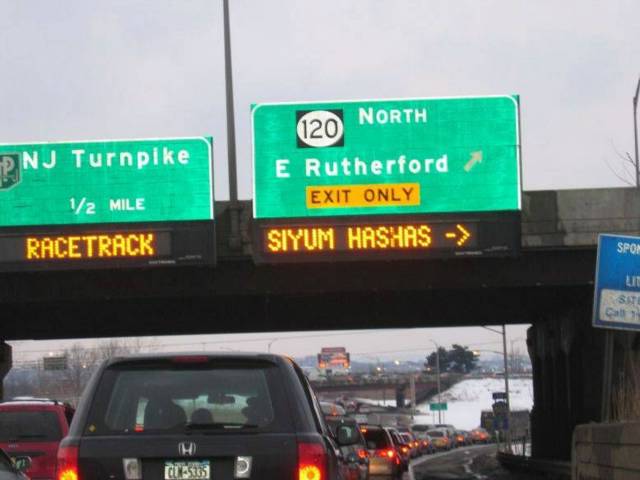
Tuesday, March 08, 2005
Thank You Roberta Flack!
Israeli 'survivor' flower boasts cells in shape of Star of DavidBy Leora Eren Frucht March 06, 2005
Thank you Roberta Flack!
"We have never before seen a structure like this in the cell walls of plants," says Dr. Rina Kamenetsky. "This is a very rare structure - maybe even unique."
It's known as the ultimate survivor. It grows wild in Israel, thriving in the harsh dry conditions that would kill many other plants. And what do the cells of this hardy survivor - a native Israeli Persian buttercup - look like under a microscope? A Star of David. "It really is symbolic," says Dr. Rina Kamenetsky, a researcher at Israel's Volcani Institute, who made the surprising discovery while trying to understand the survival mechanisms of this resilient bulb, known in Hebrew as nurit, and in Latin as Ranunculus asiaticus. The flower from the Holy Land is also known in botanical circles as a type of 'resurrection plant' which, explains Kamenetsky, means that it can live without water, and is 'resurrected' when water becomes available. Kamenetsky brought samples of the native Israeli type of this Mediterranean species to study during a sabbatical leave at the University of Guelph in Canada last year. She and her Canadian colleagues discovered that the storage roots of this particular Persian buttercup have a special mechanism for resisting drought and heat that is found in no other plant to date - a finding they published recently in the journal New Phytologist. But Kamenetsky also found an additional surprise: under a microscope the cells of the root assume the form of interlocking Stars of David. "When my Canadian colleague Professor Larry Peterson saw it, he called me over right away and said: 'Look, Rina: here's something especially for you.' I was truly amazed," she told ISRAEL21c. It was the first time that Kamenetsky, a leading floriculturist, had seen a Star of David pattern on the cells of any plant. It turns out that the cell walls of the storage roots of this particular plant serve as a shield. In winter, when the first rain comes, the cell walls block the sudden influx of water which could cause the cells to burst. At the same time, they protect the cells from dehydration by absorbing water. The cell walls that serve as a year-round shield also happen to look like a shield - the shield of David. "We have never before seen a structure like this in the cell walls of plants," she says. "This is a very rare structure - maybe even unique." Kamenetsky heads the Volcani Institute's Department of Ornamental Horticulture - part of the research arm of the Israel Ministry of Agriculture responsible for planning, organizing and implementing the greater part of Israel's agricultural research effort. She's now planning collaboration with researchers from France, Italy and South Africa to understand the unique survival mechanism of the Israeli varieties of the Persian buttercup. The most common wild type is a red, five-petaled flower with a black center which bears some resemblance to an anemone. In summer, its roots are exposed to the scorching heat - up to 60 degrees centigrade - of the desert earth. The cultivated type - sold commercially as bulbs - has multiple layers of petals and comes in a variety of colors, including white, yellow, pink, red and magenta. Both wild and cultivated types have the same unusual survival mechanism, says Kamenetsky. "The value of this research is that if we can understand these mechanisms, we can endow other plants with these abilities - something that is of growing importance in a world undergoing desertification," she explains. Kamenetsky notes that there are various heat- and drought-resistant plants growing in Africa, all of which have a special mechanism in their leaves. But this is the first time that scientists have ever encountered a drought-resistant mechanism in the roots of a plant. "When I lecture about this research, I call it: 'How to cope with stressful life in Israel.' It could be that when it comes to survival, our own Nurit has something to teach the plants of the world." Kamenetsky, who was born in Kazakhstan, immigrated to Israel in 1990 and has since made an international name for herself in the field of ornamental horticulture - developing native plants into ornamental crops which can be grown commercially and sold as cut flowers or potted plants. Israel is at the cutting edge of this field. Some 20-40 percent of the flowers Israel markets every year are new varieties, notes Kamenetsky, adding that no other country but Holland has such a high percentage of novel varieties. Kamenetsky is also one of the world's leading experts on the Allium (garlic) species which can be grown as ornamental flowers and is being widely studied for its medicinal properties.

Thank you Roberta Flack!
"We have never before seen a structure like this in the cell walls of plants," says Dr. Rina Kamenetsky. "This is a very rare structure - maybe even unique."
It's known as the ultimate survivor. It grows wild in Israel, thriving in the harsh dry conditions that would kill many other plants. And what do the cells of this hardy survivor - a native Israeli Persian buttercup - look like under a microscope? A Star of David. "It really is symbolic," says Dr. Rina Kamenetsky, a researcher at Israel's Volcani Institute, who made the surprising discovery while trying to understand the survival mechanisms of this resilient bulb, known in Hebrew as nurit, and in Latin as Ranunculus asiaticus. The flower from the Holy Land is also known in botanical circles as a type of 'resurrection plant' which, explains Kamenetsky, means that it can live without water, and is 'resurrected' when water becomes available. Kamenetsky brought samples of the native Israeli type of this Mediterranean species to study during a sabbatical leave at the University of Guelph in Canada last year. She and her Canadian colleagues discovered that the storage roots of this particular Persian buttercup have a special mechanism for resisting drought and heat that is found in no other plant to date - a finding they published recently in the journal New Phytologist. But Kamenetsky also found an additional surprise: under a microscope the cells of the root assume the form of interlocking Stars of David. "When my Canadian colleague Professor Larry Peterson saw it, he called me over right away and said: 'Look, Rina: here's something especially for you.' I was truly amazed," she told ISRAEL21c. It was the first time that Kamenetsky, a leading floriculturist, had seen a Star of David pattern on the cells of any plant. It turns out that the cell walls of the storage roots of this particular plant serve as a shield. In winter, when the first rain comes, the cell walls block the sudden influx of water which could cause the cells to burst. At the same time, they protect the cells from dehydration by absorbing water. The cell walls that serve as a year-round shield also happen to look like a shield - the shield of David. "We have never before seen a structure like this in the cell walls of plants," she says. "This is a very rare structure - maybe even unique." Kamenetsky heads the Volcani Institute's Department of Ornamental Horticulture - part of the research arm of the Israel Ministry of Agriculture responsible for planning, organizing and implementing the greater part of Israel's agricultural research effort. She's now planning collaboration with researchers from France, Italy and South Africa to understand the unique survival mechanism of the Israeli varieties of the Persian buttercup. The most common wild type is a red, five-petaled flower with a black center which bears some resemblance to an anemone. In summer, its roots are exposed to the scorching heat - up to 60 degrees centigrade - of the desert earth. The cultivated type - sold commercially as bulbs - has multiple layers of petals and comes in a variety of colors, including white, yellow, pink, red and magenta. Both wild and cultivated types have the same unusual survival mechanism, says Kamenetsky. "The value of this research is that if we can understand these mechanisms, we can endow other plants with these abilities - something that is of growing importance in a world undergoing desertification," she explains. Kamenetsky notes that there are various heat- and drought-resistant plants growing in Africa, all of which have a special mechanism in their leaves. But this is the first time that scientists have ever encountered a drought-resistant mechanism in the roots of a plant. "When I lecture about this research, I call it: 'How to cope with stressful life in Israel.' It could be that when it comes to survival, our own Nurit has something to teach the plants of the world." Kamenetsky, who was born in Kazakhstan, immigrated to Israel in 1990 and has since made an international name for herself in the field of ornamental horticulture - developing native plants into ornamental crops which can be grown commercially and sold as cut flowers or potted plants. Israel is at the cutting edge of this field. Some 20-40 percent of the flowers Israel markets every year are new varieties, notes Kamenetsky, adding that no other country but Holland has such a high percentage of novel varieties. Kamenetsky is also one of the world's leading experts on the Allium (garlic) species which can be grown as ornamental flowers and is being widely studied for its medicinal properties.
Daf of the day: respect the elderly & why we like Persians
Berachot 8b:
Be careful to respect an old man who has forgotten his knowledge through no fault of his own, for it was said: Both the whole tables and the fragments of the tables were placed in the Ark(Baba batra 14b; cf Deut. 10:2).
It has been taught: R. Gamaliel says: For three things do I like the Persians: They are temperate in their eating, modest in the privy, and chaste in another matter (sex).
'Nuff said.
Be careful to respect an old man who has forgotten his knowledge through no fault of his own, for it was said: Both the whole tables and the fragments of the tables were placed in the Ark(Baba batra 14b; cf Deut. 10:2).
It has been taught: R. Gamaliel says: For three things do I like the Persians: They are temperate in their eating, modest in the privy, and chaste in another matter (sex).
'Nuff said.
Sunday, March 06, 2005
Peculiar Daf of the day #1
Having just started daf yomi (at least, started seriously to attempt to complete it), I'm getting to run up against some of my favorite aggadic passages in the Talmud. BErachot is full of wonderful, but also often incredibly weird sugiyot, so from time to time, I'm thinking of posting some of them. Today's snippet is weird, rather than awe-inspiring. YMMV:
Berachot 6a:
It has been taught: Abba Benjamin says, If the eye had the power to see them, no creature could endure the demons. Abaye says: They are more numerous than we are and they surround us like the ridge round a field. R. Huna says: Every one among us has a thousand on his left hand and ten thousand on his right hand. Raba says: The crushing in the Kallah lectures comes from them. Fatigue in the knees comes from them. The wearing out of the clothes of the scholars is due to their rubbing against them. The bruising of the feet comes from them. If one wants to discover them, let him take sifted ashes and sprinkle around his bed, and in the morning he will see something like the footprints of a cock. If one wishes to see them, let him take the after-birth of a black she-cat, the offspring of a black she-cat, the first-born of a first-born, let him roast it in fire and grind it to powder, and then let him put some into his eye, and he will see them. Let him also pour it into an iron tube and seal it with an iron signet that they should not steal it from him. Let him also close his mouth, lest he come to harm. R. Bibi b. Abaye did so, saw them and came to harm. The scholars, however, prayed for him and he recovered.
Berachot 6a:
It has been taught: Abba Benjamin says, If the eye had the power to see them, no creature could endure the demons. Abaye says: They are more numerous than we are and they surround us like the ridge round a field. R. Huna says: Every one among us has a thousand on his left hand and ten thousand on his right hand. Raba says: The crushing in the Kallah lectures comes from them. Fatigue in the knees comes from them. The wearing out of the clothes of the scholars is due to their rubbing against them. The bruising of the feet comes from them. If one wants to discover them, let him take sifted ashes and sprinkle around his bed, and in the morning he will see something like the footprints of a cock. If one wishes to see them, let him take the after-birth of a black she-cat, the offspring of a black she-cat, the first-born of a first-born, let him roast it in fire and grind it to powder, and then let him put some into his eye, and he will see them. Let him also pour it into an iron tube and seal it with an iron signet that they should not steal it from him. Let him also close his mouth, lest he come to harm. R. Bibi b. Abaye did so, saw them and came to harm. The scholars, however, prayed for him and he recovered.
Thursday, March 03, 2005
Too smart for whose good?
Basically what the article is claiming is that the job is more important than spouses or families, that men and women should ignore the messages that the women's movement has been striving to instill for forty years - and that companies that are expecting to demand ridiculous work hours from their employees are furious that the employees aren't thrilled to death to provide them. Well, I say, "Good for Gen Y!" Ms. Powell is right: after you make so much money, it IS enough!
We still have a long way to go, but refusing to assume that the attitude of articles like this one - that jobs take precedence over everything else- are right or good, is a great first step. Kol hakavod, Gen Y. Live long and prosper - with your families! I hope your "bad" attitude is highly contagious!
*******************************************************************
Law.com
Law Firms Mull the 'Gen Y' EquationWednesday March 2, 3:01 am ET Leigh Jones, The National Law Journal
Some call them slackers. Others are more diplomatic. But whatever the moniker, "Generation Y" associates are getting a bad rap for what some say is a flabby work ethic and an off-putting sense of entitlement.
Attorneys from Generation Y -- those born in 1978 or later -- are plenty smart and generally well educated, say firm leaders and industry experts. But these young attorneys also are lacking in loyalty, initiative and energy, so the criticism goes.
And though some associates sharply dispute the assessment, the perception is forcing managing partners to rethink their motivation strategies and their expectations for their firms' future.
Big money at large firms may be intoxicating for young lawyers with mounds of school debt, but new associates often are not willing to make the sacrifice that those salaries demand, said Bruce McLean, chairman of Akin Gump Strauss Hauer & Feld.
"It entices people to come to big firms who really don't want to do what we do," said McLean, adding that Akin Gump has a "significant number" of hardworking associates.
Generation Y associates often come from the nation's top schools and have other impressive credentials, McLean said, but what many do not have is unbridled ambition. "Just being successful and a partner in a firm is not enough of a motivating tool," he said.
But third-year associate Moe Keshavarzi at Sheppard, Mullin, Richter & Hampton in Los Angeles said that firms with unhappy Generation Y associates are not tapping into their potential.
"I have friends who are fourth-year associates at other firms who are sitting in the library researching," he said.
Studies indicate that young workers are less willing to put in long hours and instead are more focused on pursuing interests outside work than were their predecessors. A report issued by the Families and Work Institute in October, Generation and Gender in the Workplace, found that younger employees are less likely to be "work-centric." The study also found that young men and women are more interested in staying at the same rung on the career ladder in order to preserve their quality of life.
With regard to law firms specifically, a study conducted by Edge International, a professional services consulting firm, found that the 25- to 30-year-old group ranked the following factors as motivators at their jobs: time for personal life; opportunities for advancement; professional growth; achievement; intrinsic nature of work; security; leadership; and being a member of a team.
"This group wants to grow professionally and advance to partnership, but not while compromising their personal lives," said Karen MacKay, a partner with Edge International. The survey, "Motivating the Next Generation," was sent to about 4,000 members of the law firm network Multilaw. About 800 attorneys responded.
It may be that new associates simply are more vocal about what they perceive as meaningless work, even if they are handsomely paid, said Reed Smith fifth-year associate Alicia Powell.
"After you make so much money, it's enough," Powell said.
Part of what is fueling management's perception relates to the dot-com bust, said Morrison & Foerster chairman Keith Wetmore. Older partners may view any grousing by associates who receive assignments from them as a sign of being ungrateful for work that three years ago was scarce, he said.
"It may be more in the eyes of the observer than in the associate," he said.
THE 'PACK MENTALITY'
But other firm leaders are less forgiving. One managing partner at a New York firm cited a "failure to take charge of their career" as a common problem with young associates. "They are more willing to sit back and wait for things to happen to them instead of making them happen for themselves," the attorney said, adding that new associates today are more brazen than those in previous years. "They are willing to turn down work they don't want to do. They don't volunteer for committee or other firm work."
Another managing partner at a national firm said that many new associates, unlike associates before them, no longer "feel lucky" to have their jobs. The attorney also said that associates now operate under a pack mentality.
"[Newer associates] have a very strong connection with each other as opposed to the institution. If someone is treated badly, they all react to it," the attorney said.
"Vigorously" rejecting the Generation Y characterization, however, is Jonathan Cole, immediate past chairman of the American Bar Association's Young Lawyers Division. Associates today work harder, if not more effectively, than in previous generations, said Cole, who made partner in 2003 at the Nashville, Tenn., office of Baker, Donelson, Bearman, Caldwell & Berkowitz.
He acknowledged, however, that associates, who in the past may have blindly met a firm's demands, now more closely consider the tradeoff to their personal life. "People are looking more 'big picture,'" he said. "It's a good trend."
Generation Y workers may be too smart for their own good, which contributes to management's perceptions, said Carolyn Martin, co-author of "Managing Generation Y" (HRD Press, 2001).
Employees in that generation, especially those in professional positions, place a high value on education, something their parents drilled into them, she said. Consequently, young associates have a low tolerance for less-than-challenging tasks that management often relegates to them, she said.
In addition, the group has a greater degree of cynicism than in generations past, she said, stemming from the dot-com failure and 9/11 terrorist attacks. The result is diminished long-term loyalty to their employers.
"They're saying, 'I've looked at the world and there's no such thing as job security,'" she said.
We still have a long way to go, but refusing to assume that the attitude of articles like this one - that jobs take precedence over everything else- are right or good, is a great first step. Kol hakavod, Gen Y. Live long and prosper - with your families! I hope your "bad" attitude is highly contagious!
*******************************************************************
Law.com
Law Firms Mull the 'Gen Y' EquationWednesday March 2, 3:01 am ET Leigh Jones, The National Law Journal
Some call them slackers. Others are more diplomatic. But whatever the moniker, "Generation Y" associates are getting a bad rap for what some say is a flabby work ethic and an off-putting sense of entitlement.
Attorneys from Generation Y -- those born in 1978 or later -- are plenty smart and generally well educated, say firm leaders and industry experts. But these young attorneys also are lacking in loyalty, initiative and energy, so the criticism goes.
And though some associates sharply dispute the assessment, the perception is forcing managing partners to rethink their motivation strategies and their expectations for their firms' future.
Big money at large firms may be intoxicating for young lawyers with mounds of school debt, but new associates often are not willing to make the sacrifice that those salaries demand, said Bruce McLean, chairman of Akin Gump Strauss Hauer & Feld.
"It entices people to come to big firms who really don't want to do what we do," said McLean, adding that Akin Gump has a "significant number" of hardworking associates.
Generation Y associates often come from the nation's top schools and have other impressive credentials, McLean said, but what many do not have is unbridled ambition. "Just being successful and a partner in a firm is not enough of a motivating tool," he said.
But third-year associate Moe Keshavarzi at Sheppard, Mullin, Richter & Hampton in Los Angeles said that firms with unhappy Generation Y associates are not tapping into their potential.
"I have friends who are fourth-year associates at other firms who are sitting in the library researching," he said.
Studies indicate that young workers are less willing to put in long hours and instead are more focused on pursuing interests outside work than were their predecessors. A report issued by the Families and Work Institute in October, Generation and Gender in the Workplace, found that younger employees are less likely to be "work-centric." The study also found that young men and women are more interested in staying at the same rung on the career ladder in order to preserve their quality of life.
With regard to law firms specifically, a study conducted by Edge International, a professional services consulting firm, found that the 25- to 30-year-old group ranked the following factors as motivators at their jobs: time for personal life; opportunities for advancement; professional growth; achievement; intrinsic nature of work; security; leadership; and being a member of a team.
"This group wants to grow professionally and advance to partnership, but not while compromising their personal lives," said Karen MacKay, a partner with Edge International. The survey, "Motivating the Next Generation," was sent to about 4,000 members of the law firm network Multilaw. About 800 attorneys responded.
It may be that new associates simply are more vocal about what they perceive as meaningless work, even if they are handsomely paid, said Reed Smith fifth-year associate Alicia Powell.
"After you make so much money, it's enough," Powell said.
Part of what is fueling management's perception relates to the dot-com bust, said Morrison & Foerster chairman Keith Wetmore. Older partners may view any grousing by associates who receive assignments from them as a sign of being ungrateful for work that three years ago was scarce, he said.
"It may be more in the eyes of the observer than in the associate," he said.
THE 'PACK MENTALITY'
But other firm leaders are less forgiving. One managing partner at a New York firm cited a "failure to take charge of their career" as a common problem with young associates. "They are more willing to sit back and wait for things to happen to them instead of making them happen for themselves," the attorney said, adding that new associates today are more brazen than those in previous years. "They are willing to turn down work they don't want to do. They don't volunteer for committee or other firm work."
Another managing partner at a national firm said that many new associates, unlike associates before them, no longer "feel lucky" to have their jobs. The attorney also said that associates now operate under a pack mentality.
"[Newer associates] have a very strong connection with each other as opposed to the institution. If someone is treated badly, they all react to it," the attorney said.
"Vigorously" rejecting the Generation Y characterization, however, is Jonathan Cole, immediate past chairman of the American Bar Association's Young Lawyers Division. Associates today work harder, if not more effectively, than in previous generations, said Cole, who made partner in 2003 at the Nashville, Tenn., office of Baker, Donelson, Bearman, Caldwell & Berkowitz.
He acknowledged, however, that associates, who in the past may have blindly met a firm's demands, now more closely consider the tradeoff to their personal life. "People are looking more 'big picture,'" he said. "It's a good trend."
Generation Y workers may be too smart for their own good, which contributes to management's perceptions, said Carolyn Martin, co-author of "Managing Generation Y" (HRD Press, 2001).
Employees in that generation, especially those in professional positions, place a high value on education, something their parents drilled into them, she said. Consequently, young associates have a low tolerance for less-than-challenging tasks that management often relegates to them, she said.
In addition, the group has a greater degree of cynicism than in generations past, she said, stemming from the dot-com failure and 9/11 terrorist attacks. The result is diminished long-term loyalty to their employers.
"They're saying, 'I've looked at the world and there's no such thing as job security,'" she said.
Subscribe to:
Posts (Atom)